









Reference: conference Wi-Fi
Conference Wi-Fi for 1,000 Attendees: COY13 Bonn Reference
Three days, around 1,000 young people from 114 countries, livestreams going out and coming in: for the COY13 youth climate conference, Ascend set up eleven access points in a Bonn comprehensive school in a single day. Over the three conference days, attendees moved about 850 gigabytes over the network.
The principle at a glance
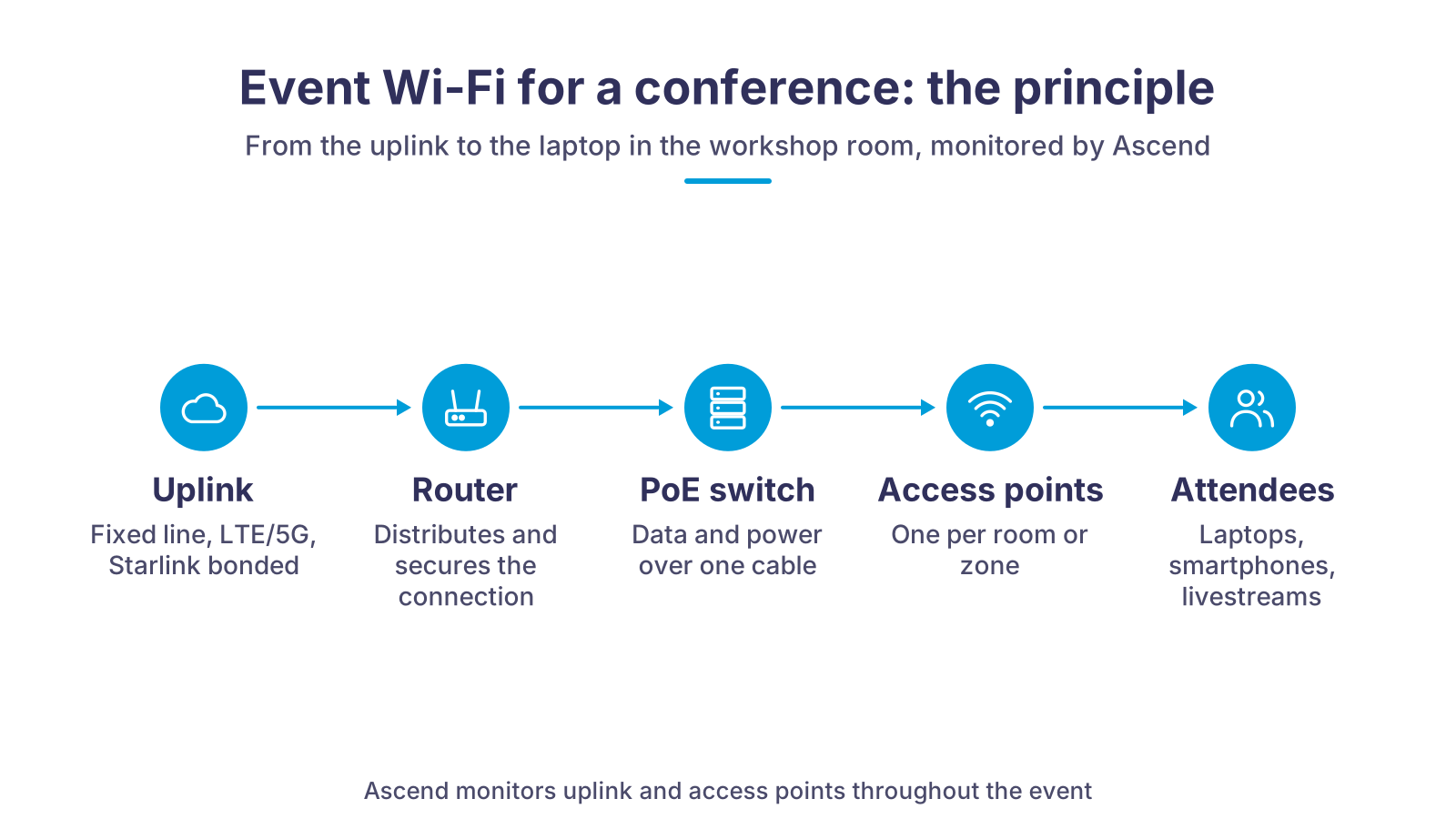
A conference Wi-Fi network is a small, temporary network infrastructure: one internet uplink, a router that distributes and secures the connection, PoE switches that supply the access points with data and power, and one access point per room or zone. Ascend plans the number of access points by room and attendee count, sets everything up, monitors the network during the event and removes it afterwards.
What can go wrong at a conference, and what we do about it
At the COY13, the decisive question was whether livestreams could be sent and received by all attendees at the same time. The same risks apply to every conference, and so do the same answers.
The livestream drops out
Hundreds of devices per room
Hardly any time for setup
Nobody can see whether the network holds
Unfamiliar buildings, unfamiliar technology
Questions in the middle of the event
From enquiry to teardown
- 1Clarify requirementsWe ask about rooms, number of attendees, programme and applications: livestreams, voting tools, video conferences or simply email and social media.
- 2Plan room by roomThe room plan and the distribution of attendees determine the number of access points, the position of the switches and the bandwidth the uplink needs.
- 3Pre-configureOur technicians set up SSIDs, client limits, bandwidth rules and monitoring before travelling. On site, everything only has to be mounted and plugged in.
- 4Set up in one dayAccess points, PoE switches and cabling are installed and tested, just as in 2017 at the Integrierte Gesamtschule Bonn-Beuel.
- 5Operate and monitorDuring the event we check the network continuously and react to load peaks, for example when several rooms stream at the same time.
- 6Tear downWith the full service, we take the equipment down again after the event. If the event network is to become a permanent installation, talk to us.
Starting point: the COY13 in Bonn
From 2 to 4 November 2017, the 13th Conference of Youth (COY13) took place in Bonn, organised by YOUNGO, the youth constituency of the United Nations Framework Convention on Climate Change (UNFCCC). The youth conference is held every year immediately before the UN climate summit (COP), which also opened in Bonn on 6 November 2017 under the presidency of the Fiji Islands. Under the motto “Talanoa Mada – Youth Driving Climate Action”, participants prepared for the upcoming climate negotiations in more than 225 individual events.
Around 1,000 attendees from 114 countries came to the Integrierte Gesamtschule Bonn-Beuel for it. With their laptops and smartphones, they wanted to watch livestreams and connect with young climate activists from all over the world, beyond the place and time of the conference. Ascend's assignment: comprehensive mobile internet access for all attendees, for three days.
Setup in one day: eleven access points for a three-day conference
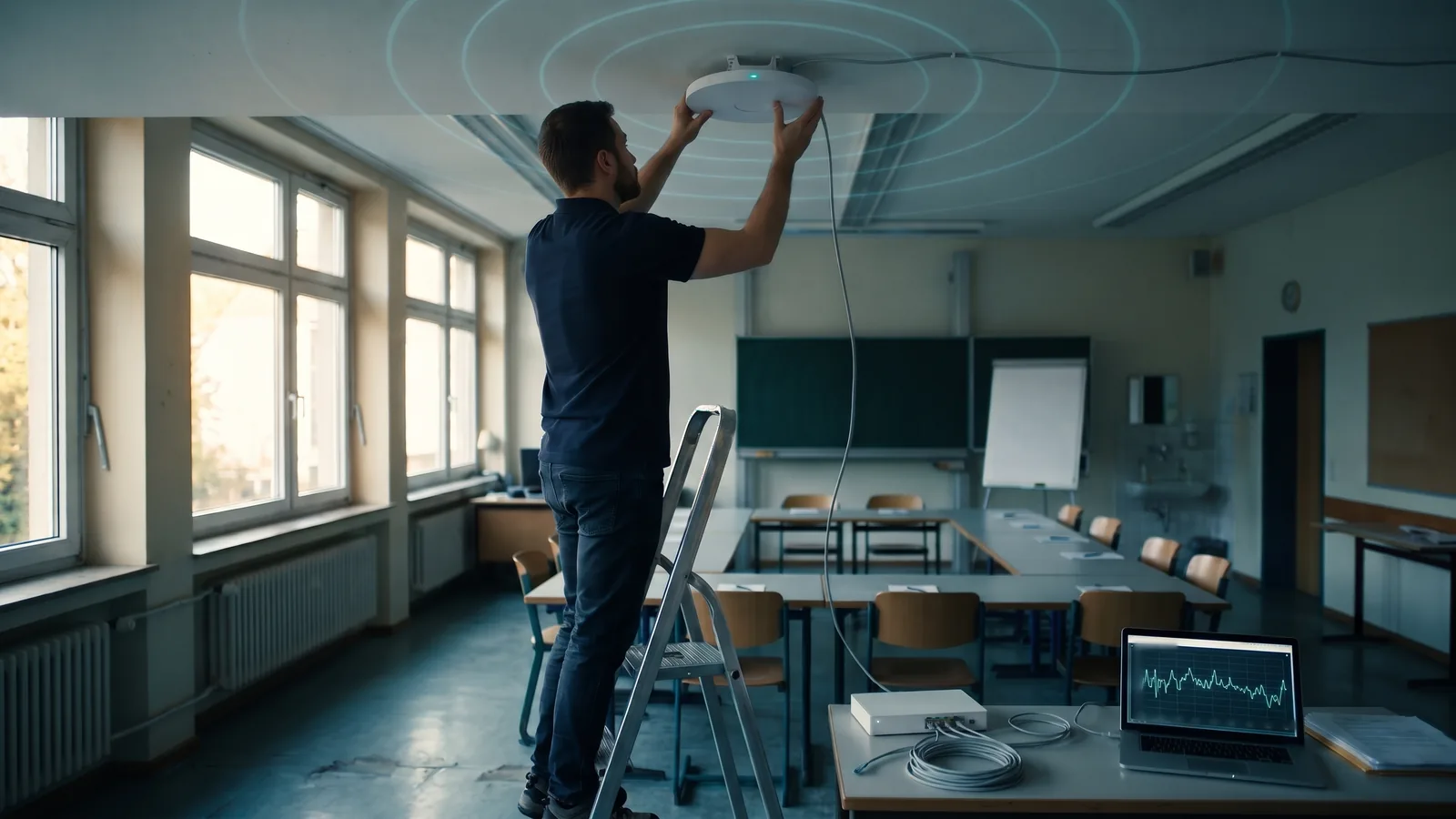
Within a single day, the Ascend team set up a total of eleven access points in the rooms of the Integrierte Gesamtschule Bonn-Beuel.
Attendees used the network with great enthusiasm: about 850 gigabytes were moved over the three days of the event. “What was critical to our success was above all whether sending and receiving several livestreams works smoothly for all attendees,” reported Johannes Fickeis, managing director of Ascend. Both the feedback from the young climate activists and the continuous monitoring of the network technology were positive across the board.
After the three days, the access points were taken down again as contractually agreed.
How we work today: you can rent Wi-Fi for events from Ascend as plug and play that you connect yourself, or as a full service with setup and teardown on site. We plan how much bandwidth your conference needs.
What conference Wi-Fi needs today
The hardware has evolved since the COY13, the principle has not. Today we use Wi-Fi 6 access points that serve several hundred simultaneous clients per radio and are powered through Power over Ethernet from a PoE switch. An access point therefore needs just a single network cable, which speeds up setup in unfamiliar buildings considerably. For each SSID you can define bandwidth, number of clients and the isolation of attendees from one another, so press, organisers and guests get separate networks with their own rules.
The uplink is the second lever. Where there is no adequate fixed-line connection, we bond several mobile networks, and if needed Starlink or microwave links as well, into one connection that survives the failure of one path. How this works for events from 50 to several thousand guests is described on our page Rent Wi-Fi for events; there you will also find other deployments, such as the Wi-Fi for 8,000 visitors at the Olympiahalle.
The third lever is monitoring. Ascend has been in business since 2010 and monitors event networks continuously while they run: uplink load, clients per access point, error rates. We see load peaks, for example when several rooms stream at the same time, before they become a problem. Our support is available to existing customers 24×7. Which access points suit which rooms is explained on the page WLAN access points; for large or complex buildings we recommend a Wi-Fi site survey beforehand.
Rule from practice: plan for the upload
At the COY13, it was not downloading but sending and receiving livestreams at the same time that was the critical point. Many internet connections are asymmetric and offer only a fraction of the download rate for uploads. If your conference streams sessions, connects hybrid participants or has attendees broadcasting live themselves, tell us when you enquire. We will then plan the uplink around the upload, not the download.
Suitable hardware in the Ascend shop
The same components we use for conference Wi-Fi are also available to buy, for example when the temporary installation is to become a permanent one.
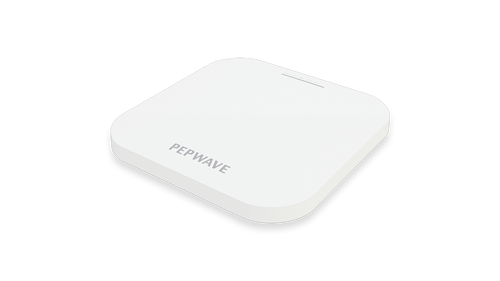
Peplink AP One AX
Dual-band Wi-Fi 6 access point with 4x4 MU-MIMO, 2.5 Gigabit port, PoE 802.3at and up to 256 recommended simultaneous clients per radio band.
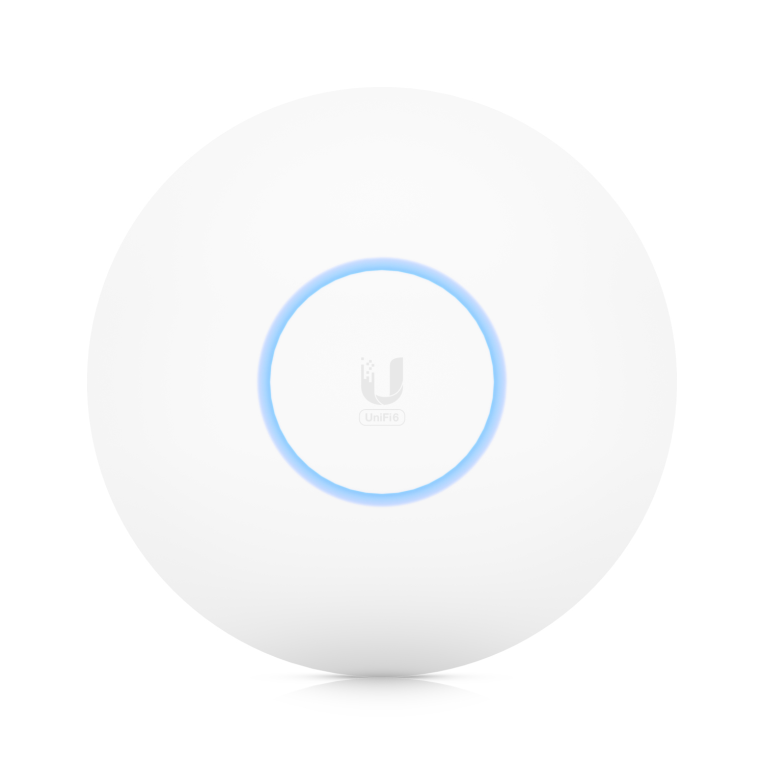
Ubiquiti UniFi U6 Pro
Wi-Fi 6 access point for dense rooms, rated by the manufacturer for around 300 clients, powered via PoE.
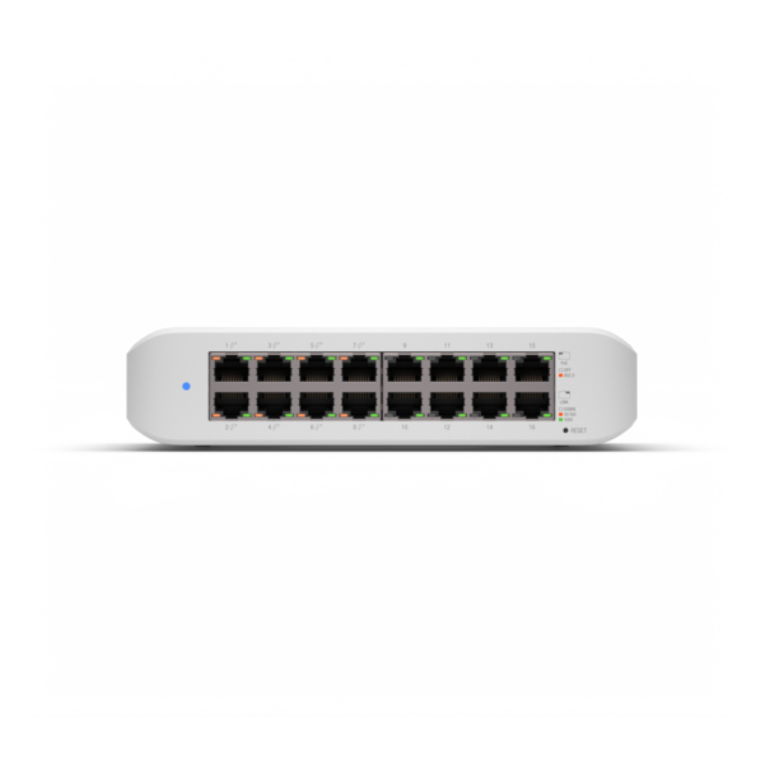
Ubiquiti UniFi Switch Lite 16 PoE
16 Gigabit ports, 8 of them with PoE+, 45 W PoE budget: supplies several access points with data and power over a single cable.
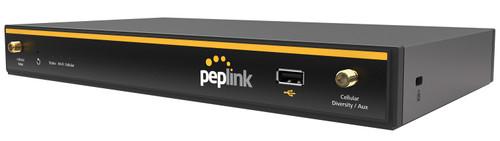
Peplink Balance 20X
Compact router with Gigabit WAN, LTE modem and SpeedFusion Hot Failover (with PrimeCare) for smaller conferences with 1 to 60 users.
Frequently asked questions about conference Wi-Fi
Further links
Does your conference need Wi-Fi that lasts all three days?
Send us the venue, date, number of attendees and programme. We plan access points, uplink and monitoring and tell you the effort for setup, operation and teardown.
We look forward to hearing from you!
Tell us the venue, date, number of attendees and whether you stream. We will get back to you shortly with personal advice.