






ASCEND Multi-WAN Bonding
Multi-WAN bonding with Viprinet: pool your bandwidth, don't just switch over.
Combine LTE, Starlink, and DSL into one logical connection. Genuine bandwidth aggregation at packet level — not just switchover in case of failure.
Request a consultationOne connection is no longer enough.
You run a remote site — a construction site, an outlying warehouse, a branch in a rural area. Available to you is a DSL connection with narrow bandwidth and an LTE plan whose throughput varies with network load. On top of that, your team needs to hold video conferences, transfer large files, and work in the cloud.
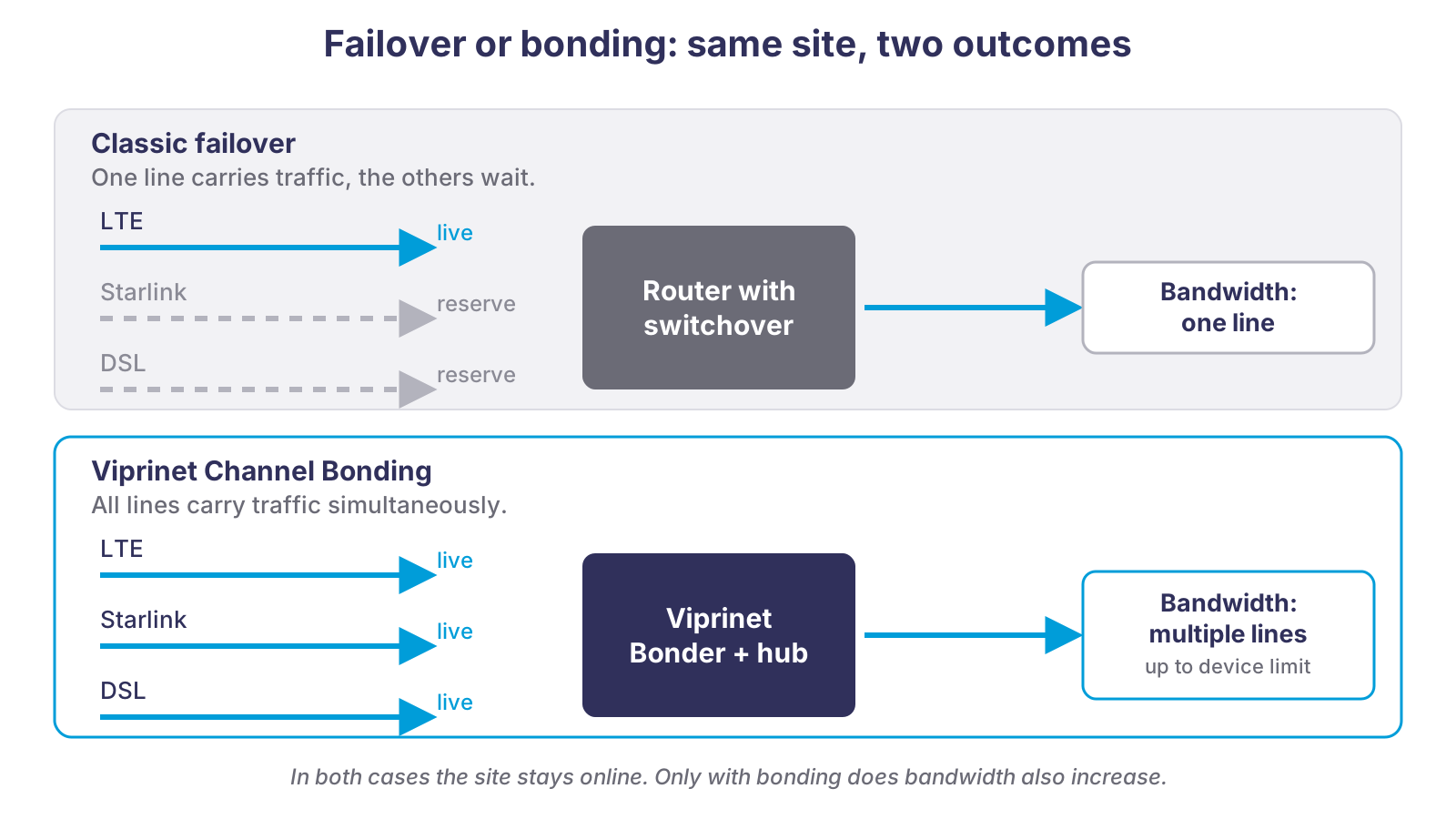
Failover doesn't solve this. Classic failover switches to the next line when one fails. You still only ever use the bandwidth of a single line — never the sum of several. Failover makes a site more resilient, but not faster.
Modern applications need more. Video conferencing, cloud backups, remote desktop sessions, and large file transfers all consume bandwidth — and at the same time. When several employees are in a conference call while a backup runs in the background, a single connection is overwhelmed.
Mobile or satellite alone rarely suffice either. Starlink delivers plenty of bandwidth, but it varies with weather and load; LTE is fast, but depends on cell load. What you need is both at once — all available lines working together instead of one after another.
Viprinet Channel Bonding: several lines, one logical connection.
Viprinet Channel Bonding is genuine bandwidth aggregation — not failover, and not load balancing that spreads individual sessions across different lines, but pooling at packet level.
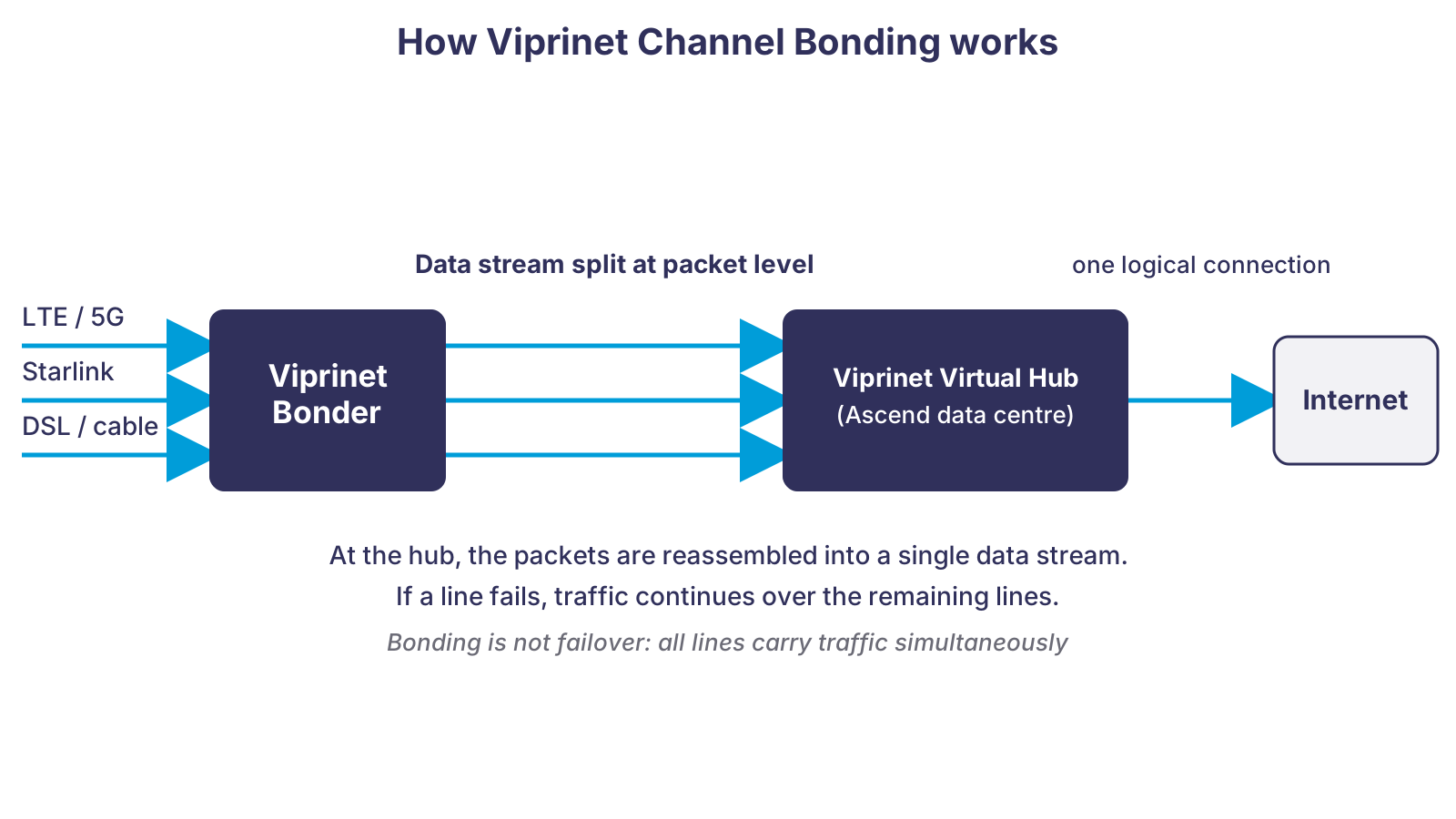
How it works. A Viprinet bonder at the site splits the data stream packet by packet across all active lines — LTE, Starlink, DSL, cable, whatever is available on site. At the other end, the Viprinet Virtual Hub reassembles the packets in the correct order and passes them on to the internet as a single logical connection.
What that gets you. The bandwidths of the bonded lines add up — even within a single download, which simple multi-WAN routers cannot do. That total is limited by the bonding capacity of the bonder model in use and by tunnel overhead: you won't get a mathematical 1:1 sum of all nominal rates, but significantly more than the fastest single line.
And if a line fails? The bond detects the failure and redistributes traffic across the remaining lines. As long as at least one line stays active, existing sessions generally keep running — usually with a brief dip in speed during the switchover, but without a dropped connection. Failover is therefore included; the real gain is the bandwidth in normal operation.
Plug and play. The bonder is delivered pre-configured: connect it, insert SIM cards, connect the Starlink dish and DSL. Ascend operates the counterpart as a hosted VPN hub with redundant connectivity — the aggregation runs there, not in your IT department. We procure and configure the appropriate Viprinet hardware on a project basis for your site — which bonder model and which connections make sense for that is something we determine together with you during the consultation.
Looking for a simple remote installation? If you don't need bandwidth bonding but just a reliable plug-and-play setup for remote devices, read more about our WiFi bridge solutions — NAT-based bridging with Wake-on-LAN forwarding.
Failover, bonding, and the path of the packets
Two diagrams: the difference between switching over and pooling, and the technical flow from the site to the hub. Click a diagram for the full view.
- Failover keeps the site online but only ever uses one line. Bonding keeps it online and adds up the bandwidth of the active lines.
- All lines carry traffic simultaneously; at the Virtual Hub, the packets are reassembled into a single data stream. If a line fails, traffic continues over the remaining ones.
Which connection types can be bonded — Viprinet Channel Bonding is technology-agnostic.
LTE / 5G
Several SIM cards from different providers are bonded together. Depending on the bonder model, several cellular modules can be used simultaneously — that delivers bandwidth as well as independence from any single network.
Starlink
Satellite connectivity for sites without usable fixed-line access. Several dishes can be combined with cellular and fixed-line connections in a single bond; how many lines are possible in total depends on the bonder model (typically four, up to six on modular enterprise routers).
DSL / cable
Existing fixed-line connections — DSL, VDSL, cable internet — are integrated seamlessly into the bond. No connection goes unused; every line contributes to the total bandwidth.
Why Viprinet bonding?
Six reasons why Viprinet Channel Bonding is more than classic multi-WAN or SD-WAN failover.
Genuine bandwidth pooling
Resilience
More stable latency under load
Remote sites
Live streaming
Plug and play
What sets bonding apart from failover.
- 4–6
- lines in the bond, depending on the bonder model
- 1
- logical connection to the outside
- 0
- lines sit unused as reserve
FAQ
Request a multi-WAN bonding consultation
Tell us about your site and your bandwidth requirements. We'll get back to you within one business day and check which lines can be bonded at your location.