





Internet on a Yacht: Connected Well Beyond the Coast
Picture communicating in real time with family, friends or business partners in the middle of the ocean, as easily as at home. Ascend bundles Starlink and 5G mobile networks into a single system that also switches to Starlink beyond 25 nautical miles (NM). To keep you connected worry-free at sea too, we deliver hardware, installation and support from a single source.
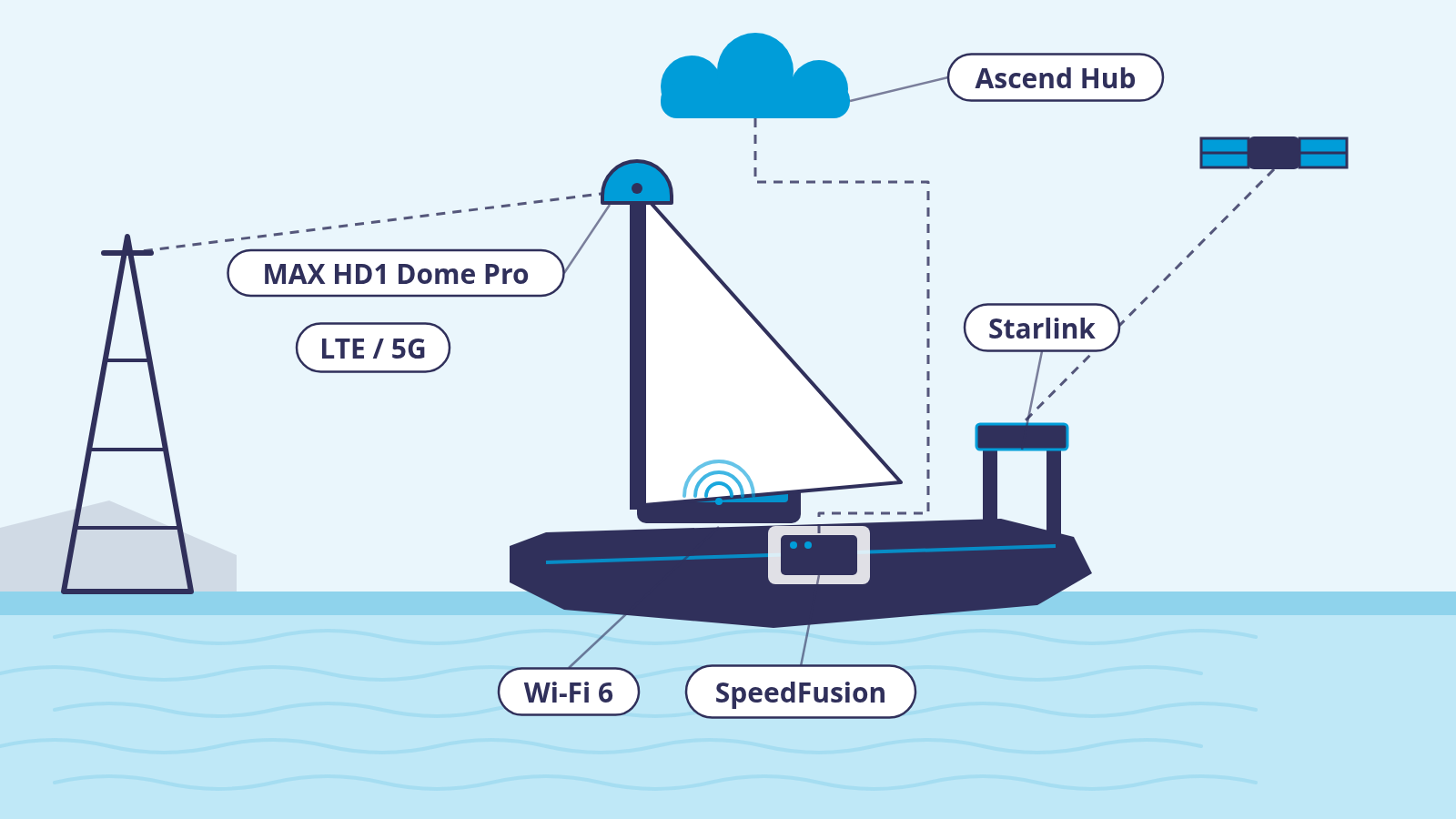
Why 25 Nautical Miles Is the Decisive Question
Anyone planning internet for a sailing yacht almost always asks the same question: does it still work 25 NM off the coast? The honest answer depends on the type of connection. Mobile networks and satellite behave fundamentally differently here.
A smartphone alone typically still picks up a usable network at sea up to roughly 10 to 15 NM off the coast, according to the trade press. The reason is physics: range is limited by the radio horizon, which depends on antenna height, not transmit power. An external marine antenna, mounted high and clear on the mast, reaches significantly further, according to manufacturers. Digital Yacht cites up to 25 NM; yacht.de and boote-magazin.de cite manufacturer figures of up to 30 NM, depending on network coverage, weather and antenna height.
The frequency band matters too: low bands such as LTE Band 20 (800 MHz) or 5G n28 (700 MHz) carry far, while the newer 5G high bands around 3.4 to 3.6 GHz are short-range. Simrad points out that effective range has tended to get shorter with each mobile generation. Cable loss adds to this: a long antenna cable eats into gain. That's why we mount antennas no higher than spreader height at most, or use a dome with an integrated modem on the mast, connected by a single Ethernet cable (Peplink: "minimal cable loss"). The antenna also shouldn't sit level with VHF or AIS antennas, as the devices can otherwise interfere with each other.
For the original request, that means: 25 NM is roughly the limit of what mobile networks with a mast antenna can still deliver, network-dependent. In this zone, only satellite is reliable. The consequence: Starlink takes over offshore and on passage, mobile networks near the coast and in port, both bundled with automatic switching.
Three Zones Off the Coast
| Mobile network (LTE/5G) | Starlink | Our recommendation | |
|---|---|---|---|
| Harbour and anchorage (up to 3 NM) | Usually full signal near the harbour, network-dependent. | Works, Ocean Mode not required. | Use the mobile network, keep Starlink on standby. |
| Coastal cruising (3–12 NM) | Usually stable with a mast antenna, decreasing with distance. | Available, Ocean Mode becomes mandatory from 12 NM. | Mobile network primary, prepare to switch to Starlink. |
| 12–25 NM | Network-dependent; antenna manufacturers cite 25 to 30 NM with a mast antenna. | Ocean Mode active, reliable independent of the coastal network. | Starlink primary, mobile network as additional capacity. |
| Beyond 25 NM / passage | No reliable reception, even the best mast antenna hits the radio horizon. | The only reliable option, covers international waters. | Starlink only, mobile network switches in automatically near the coast. |
Challenges at Sea, Our Solution
Internet on board only works when hardware, bundling and support come together. The same three challenges, the same three answers.
Poor internet at sea
Unreliable connection
Complex technology on board
Network bundling
Simple operation
Comprehensive support
How the System on Board Is Structured
A reliable 5G router for the boat is a small system, from the dome on the mast to the cabin. At its centre is a dome with an integrated 5G modem and antennas, mounted on the mast or an equipment carrier, as high and clear as possible. A single Ethernet cable with Power over Ethernet runs from the dome to the router below deck; a separate power supply is not needed. The Starlink antenna is also connected via Ethernet.
The router handles the bundling: via Peplink SpeedFusion it connects to a hub in the Ascend data centre and combines Starlink with mobile networks using Hot Failover. In our live test with Starlink, three mobile networks and a Peplink SDX Pro, the connection stayed up without interruption when one line was disconnected. A Peplink AP One AX over PoE provides Wi-Fi in the cabins and saloon. In port, the marina Wi-Fi can be connected as a Wi-Fi WAN, provided the signal is stable enough.
Peplink MAX HD1 Dome Pro: Key Specifications for Use on Board
| Mobile modem | 1× 5G/LTE modem with 4x4 MIMO antennas in the dome (Peplink datasheet). |
|---|---|
| SIM management | 2 SIM slots (one active), eSIM, RemoteSIM via SIM Injector (up to 10 SIMs), plus FusionSIM. |
| Mobile bands | LTE B1–B71 incl. B20/B28; 5G sub-6 n1–n79 incl. n20/n28. |
| Wi-Fi | Wi-Fi 6, dual-band 2.4/5 GHz, 2x2 MIMO, usable as an access point or Wi-Fi WAN. |
| Housing | IP67 (with splitter), metal, -40 to 65 °C, 15–95% relative humidity. |
| Power supply | One Ethernet cable: PoE 802.3at, maximum 20 W; no DC connection. |
| Ethernet splitter | Included, also provides an additional 1× 802.3af PoE output. |
| Dimensions and weight | 110 mm radius × 115 mm height; 1.2 kg, 1.7 kg with splitter. |
| Mounting | M35 threaded mount; with Peplink Premium Deck Mounts (ACW-650/651/653), SS316 stainless steel. |
| Included in delivery | Dome, Ethernet splitter, 2× ACW-112, mounting kit. |
| Software | SpeedFusion (Hot Failover, Bonding, WAN Smoothing, 256-bit AES), InControl 2 with GPS, load balancing, QoS, VLAN, captive portal. |
| SpeedFusion throughput | Up to 400 Mbit/s, 200 Mbit/s encrypted, recommended for up to 150 users. Up to 3.4 Gbit/s down / 900 Mbit/s up are modem specifications, not the rate at sea. |
Matching Hardware in the Ascend Shop
Everything for reliable Wi-Fi on the boat, from the dome to the access point. All products available (as of 17 September 2026).
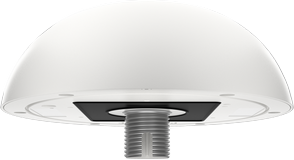
Peplink MAX HD1 Dome Pro
5G outdoor router with integrated antennas, a single Ethernet cable is enough.
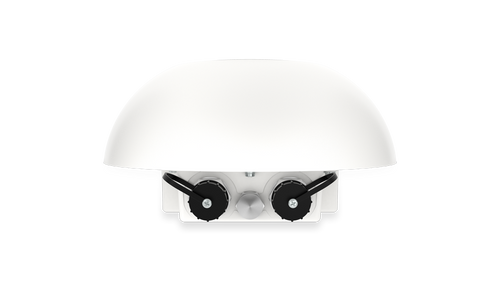
Peplink Dome Pro Duo
Two 5G modems in one IP67 dome, two networks at the same time.
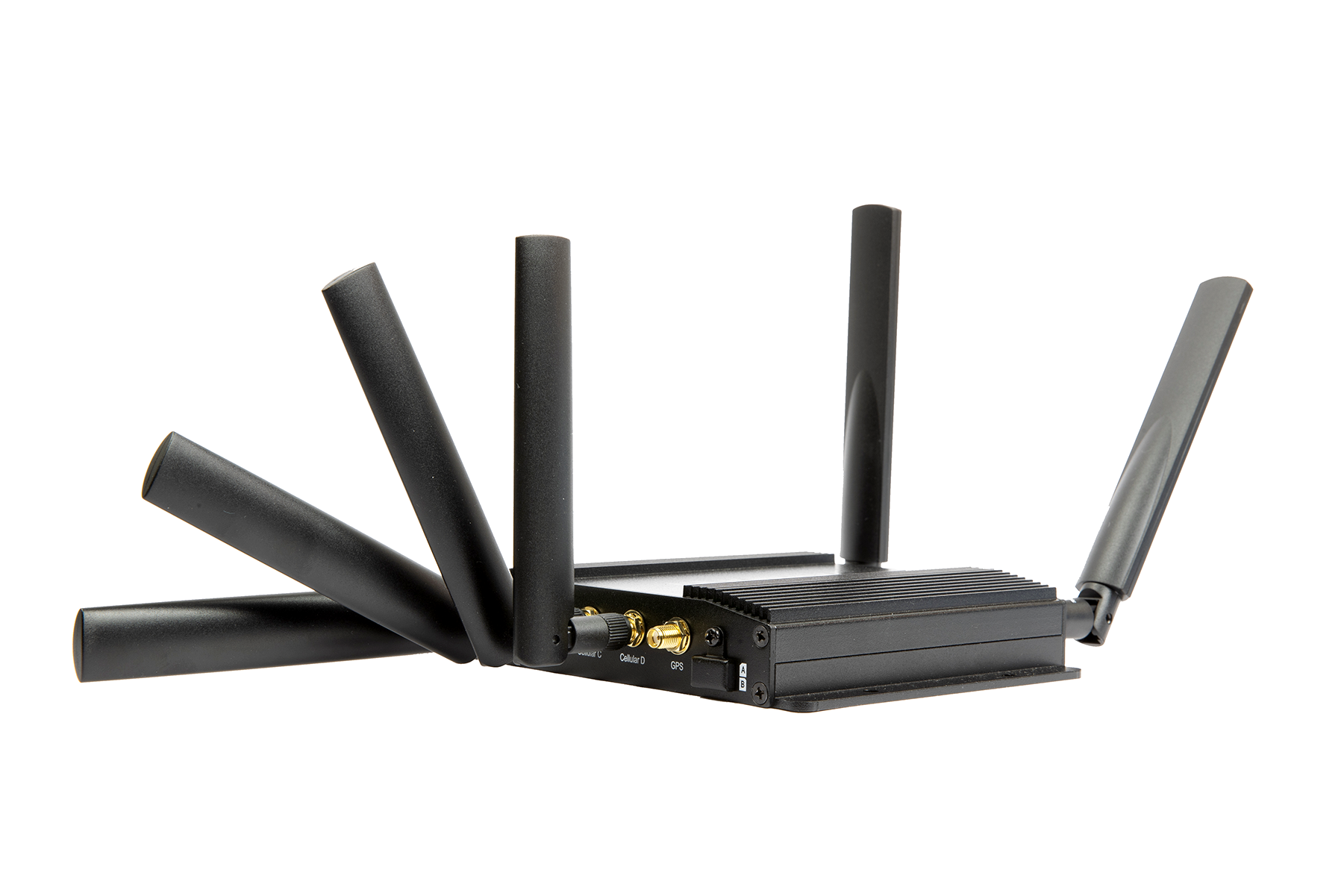
Peplink MAX BR1 Pro 5G
Compact 5G router for below deck, in the current variant with a Qualcomm X65 modem and PoE input (per Peplink), Ethernet WAN for the Starlink antenna.

Peplink Maritime 20G Antenna
LTE/5G antenna from the Peplink Maritime series with 2x2 MIMO, GPS and Wi-Fi, IP68 (listed in the shop under Poynting Antennas).

Peplink Maritime 40G Antenna
4x4 MIMO antenna from the Peplink Maritime series with GPS and Wi-Fi, IP68, wind-resistant up to 160 km/h according to Peplink (listed in the shop under Poynting Antennas).
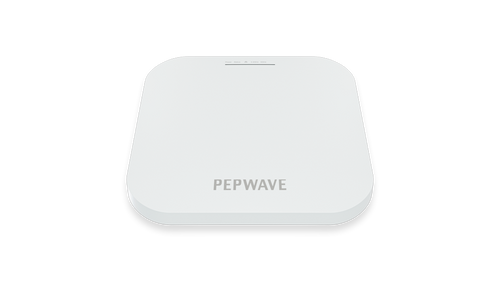
Peplink AP One AX
Wi-Fi 6 access point over PoE for every cabin.
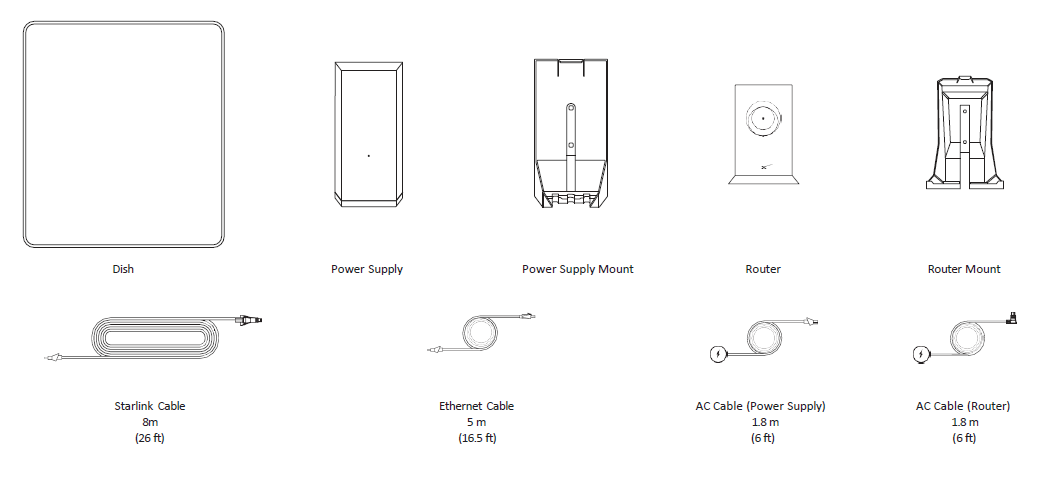
Starlink Flat High Performance Kit
Flat antenna for underway use.
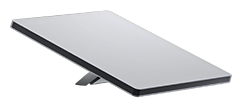
Starlink Mini Kit
Compact kit, space-saving on board.
Starlink at Sea: Rules to Know Before You Set Sail
Anyone using Starlink on a yacht should know a few rules before switching on Ocean Mode. According to the Starlink support article "What is Ocean Mode?" (updated 27 August 2026), it is required beyond 12 NM. It lifts the limit that otherwise applies to Roam in territorial waters, 5 consecutive days or 60 days per year, and gets higher network priority. Billing is per GB: Roam Unlimited costs 2 USD/GB, rising to 6 USD/GB from 27 September 2026; Personal Maritime costs 6 USD/GB. The mode stays active until you switch it off manually.
According to the trade press (as of September 2026, including boote-magazin.de, yacht.de, seabits, rvmobileinternet), Roam Unlimited may now only be used for 30 consecutive days outside your home country (new customers since 14 July 2026, existing customers since 17 August 2026). Roam Global has been discontinued, and the price for Roam Unlimited in Germany is around 95 €/month according to the trade press. Personal Maritime is described as its replacement: 185 USD net per month, unlimited in territorial waters, with no 30-day limit, for private boats up to 60 ft, not for charter, not yet listed in Germany. For commercial use, Global Priority (formerly Mobile Priority) applies, including Ocean Mode. The binding source is starlink.com.
Mobile Data Plan for the Coast: One SIM, Three German Networks, EU-Wide
For the zones where mobile networks reach, we recommend the Ascend data plan as a multi-network SIM. In Germany, one SIM automatically registers with Vodafone, O2 or Telekom (multi-IMSI), either by best network or a fixed network choice. The plan applies EU-wide at the same price, is prepaid and stops at €0. Usage is updated every 30 minutes. The SIM is available as a triple-cut SIM or eSIM, cancellable monthly, with an internet gateway in Frankfurt and a German IP address. For yachts, this is the simplest solution: one SIM for the North Sea and Baltic Sea, the Atlantic coast and the Mediterranean within the EU, with no contract commitment and no manual network switching. We supply the SIM together with the router, pre-configured and ready to use, with APN and network selection set up. You'll find the right router on our routers for SIM cards page; just ask us for the SIM at the same time: request a SIM card.
From Enquiry to Your First Cruise
- 1ConsultationWe clarify the cruising area, the number of people on board and applications such as video conferencing or navigation.
- 2Hardware selectionTogether we select the dome, antenna, router and access points to match your yacht and mast.
- 3Pre-configurationOur technicians set up SpeedFusion and SIM profiles in advance.
- 4Installation on boardWe mount the dome on the mast, run an Ethernet cable to the router below deck and install access points in the cabins.
- 5Support underwayOur technicians support ongoing operation, including while you're underway.
Proven on Board: Peplink References and Their Current Successors
Peplink documents several installations in its "Luxury Super Yachts" case study. On board M/Y Albatross (Europe, Mediterranean, Caribbean), 2× MAX BR1 LTE units with redundant SIM slots provide automatic provider switching, according to Peplink. 7× AP One AC mini units deliver Wi-Fi throughout the vessel. On M/Y Limitless, an HD4 bundles connections via encrypted SpeedFusion; on M/Y Veloce, a MAX HD2 with AP One supports VoIP, Sonos and Apple TV, among other things.
These models are no longer current. Their successors: MAX BR1 became the MAX BR1 Pro 5G; MAX HD2/HD2 Dome became the HD1 Dome Pro and Dome Pro Duo. HD4 became the MBX series, and AP One AC mini/Enterprise became the AP One AX. We implement the same principle today with current hardware.
Frequently Asked Questions About Internet on a Yacht
Further Reading
Ready for Reliable Internet on Your Yacht?
Tell us the installation location, cruising area and number of people on board. We'll advise you on the right combination of Starlink, mobile network and Peplink hardware.
We look forward to hearing from you!
Tell us your yacht type, cruising area and number of people on board. We'll get back to you shortly with personal advice.
You might also be interested in
- Future-proof Internet for solar parks - maximum efficiency thanks to state-of-the-art technologies
- High-availability Internet connections with Starlink
- Immediate help for companies in the coronavirus crisis - Ascend networks locations quickly and easily via high-performance, temporary Internet connections (VPN)
- Internet on the move: With ASCEND now also in emergency vehicles