





PEPLINK Solutions — Reliability for Business Connectivity
ASCEND operates as a Peplink Certified Gold Partner and Authorized E-Tailer, staffed by Peplink Certified Engineers Johannes Fickeis and Christian Heckel. Peplink hardware delivers unbreakable Internet through SpeedFusion bonding, SD-WAN, and multi-WAN failover across fiber, cellular, and satellite links.
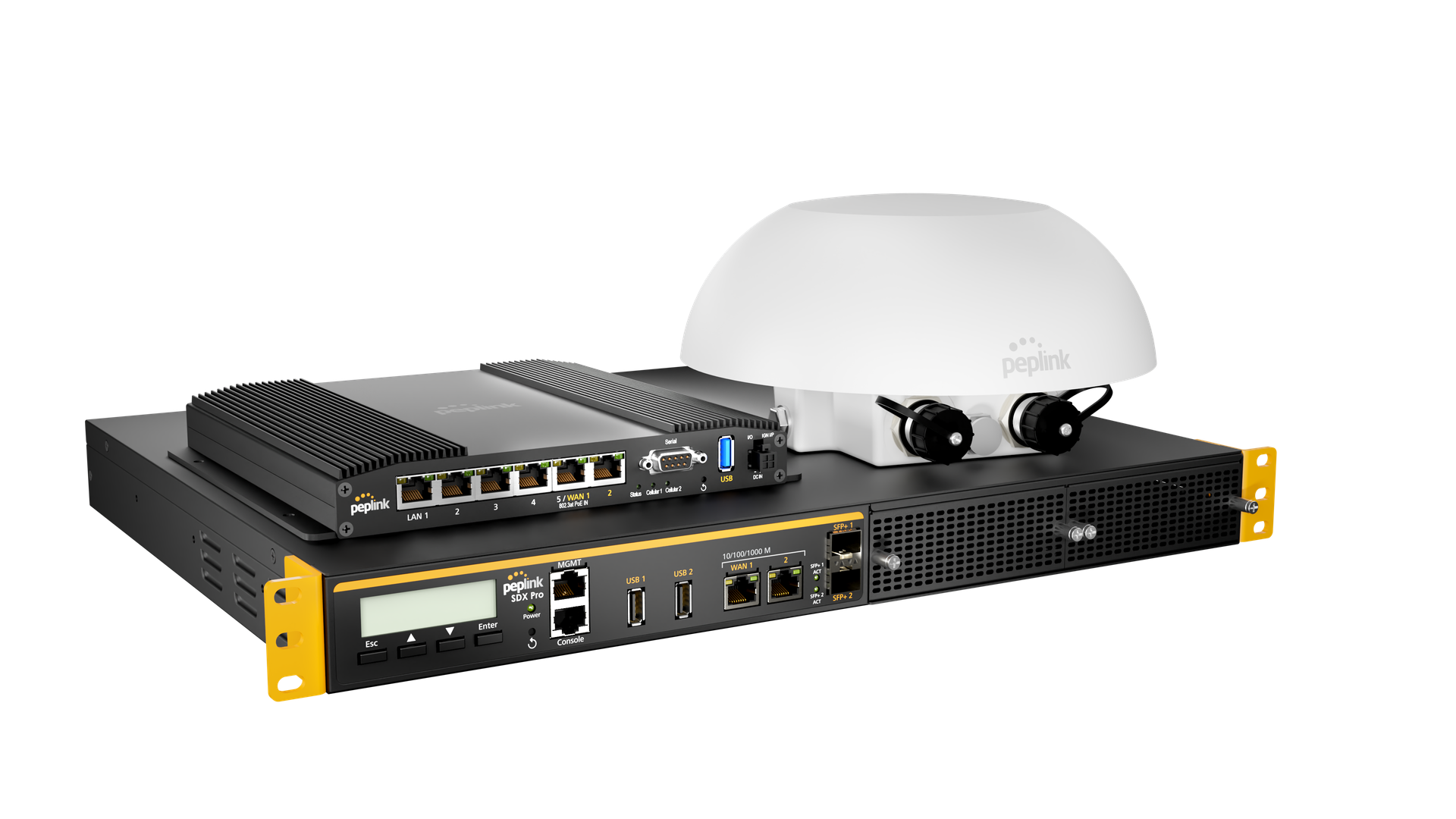
Who Peplink Is and What the Brand Stands For
Peplink positions itself as a reliability-first connectivity vendor, not a consumer networking brand. The Peplink slogan — "Reliability for Business Connectivity" — frames every product decision around preventing internet outages for organizations that cannot tolerate downtime. Peplink builds cellular modems, cellular routers, enterprise routers, and Wi-Fi access points as a unified hardware ecosystem, engineered to deliver what Peplink calls unbreakable Internet through multi-WAN failover and SpeedFusion bonding. This positioning separates Peplink from generic networking manufacturers that treat cellular as an afterthought; Peplink treats LTE, 5G, and satellite as first-class WAN transports alongside fiber. The product architecture reflects this: the FusionHub 4000 virtual appliance supports up to 4000 SpeedFusion peers, enabling cloud-to-edge bonded tunnels at a scale that consumer-grade SD-WAN platforms cannot match. For organizations evaluating Peplink connectivity, the brand archetype is the pragmatic engineer — hardware that works, bonding that holds, and failover that triggers before users notice a drop.
Engineering philosophy: unbreakable Internet for business
Peplink exists because a single WAN link is a single point of failure, and conventional routers treat backup connections as dormant resources that activate only after a primary link fails. That model breaks for organizations where every minute of downtime costs revenue, disrupts operations, or compromises safety. Peplink's engineering philosophy inverts the traditional approach: all available WAN transports — fiber, cellular, satellite — operate as active, concurrent paths from the start. SpeedFusion bonding aggregates bandwidth across those paths and applies session-level persistence, so a link failure does not drop active connections or require re-establishment. The EPX chassis exemplifies this design at hardware level, supporting up to 7 expansion modules so a single device can integrate multiple cellular modems, fiber WAN, and satellite uplinks without external aggregation hardware. The result is unbreakable Internet: not a marketing aspiration but an architecture where redundancy is continuous, not reactive.
From branch offices to multi-orbit satellite links
From branch offices to multi-orbit satellite links
Peplink enterprise connectivity spans six distinct hardware categories, each engineered for a specific deployment context rather than repackaged from a single generic router line. The Balance and SDX series serve enterprise routers in datacenters and campus environments. The B One series targets branch offices and retail chains requiring dependable multi-WAN without complex configuration. The Dome, MBX, and PDX series cover enterprise mobility for vehicles, vessels, and field deployments. The BR and Transit series handle mobile router duties for fleets. The Orbit series bonds multiple satellite constellations — including Starlink — into a single resilient transport. Cellular modems, Wi-Fi access points, PoE switches, and antennas complete the physical layer. This breadth means an organization can standardize on one vendor across headquarters, remote branches, mobile assets, and satellite-only sites without mixing management planes. The Balance 5000 EC delivers 110 Gbps throughput with up to 2 x 100G QSFP28 WAN/LAN ports, demonstrating that the same ecosystem scaling down to a branch router also serves datacenter-grade aggregation.
Peplink Product Families and Solution Areas
Peplink product families map to three connectivity domains: enterprise connectivity, edge connectivity, and integrations. Enterprise Routers (Balance and SDX series) serve headquarters and datacenter aggregation with multi-WAN fiber, cellular, and Wi-Fi inputs. Enterprise Mobility (Dome, MBX, PDX series) covers ruggedized vehicle and maritime deployments. Enterprise Branch Routers (B One series) target retail and branch sites needing dependable failover without complex configuration. Edge connectivity extends past fixed infrastructure: Mobile Routers (BR and Transit series) provide cellular primary or backup for fleets, while Multi-Orbit Routers (Orbit series) bond satellite constellations including Starlink. The integrations domain completes deployments with Cellular Modems & Adapters for plug-and-play 5G/LTE, Wi-Fi & PoE Switches for access-layer extension, and Antennas & Accessories for signal optimization. The Balance 2500 EC bridges enterprise and campus tiers with 8 Gbps throughput, 16x GE WAN/LAN ports including 2x LAN bypass, and 4x 10G SFP+ uplinks, positioned between branch-class hardware and the datacenter-grade Balance 5000 EC.
Enterprise Routers: Balance and SDX series
The Peplink Balance and SDX series deliver multi-WAN aggregation for datacenter and campus environments where single-link failure is unacceptable. Both series combine fiber, cellular, and Wi-Fi into one resilient network, maintaining active sessions across individual link failures.
The Balance 5000 EC ships in two throughput tiers. The 100G variant reaches 110 Gbps with dual 100G QSFP28 ports. The 40G variant delivers 70 Gbps throughput with up to 8 x 25G SFP28 WAN/LAN ports and dual 40G QSFP+ ports — targeting high-density 25G aggregation without 100G optics investment. Both variants include 2x 1TB SSD storage, up to 8 x 2.5G Ethernet WAN ports, and dual power supplies for redundant operation.
The SDX series extends the same multi-WAN architecture into scenarios requiring higher port density and advanced traffic management. All Balance and SDX models support Hot Failover, SpeedFusion Bandwidth Bonding, LACP (802.3ad) NIC bonding, and High Availability — features that matter when a datacenter cannot tolerate session drops during WAN transitions.
Enterprise Mobility: Dome, MBX, and PDX series
Peplink Enterprise Mobility covers rugged routers engineered for vehicles, vessels, and field deployments where fixed infrastructure is absent or unreliable. The product family spans three series: Dome, MBX, and PDX. Dome units integrate cellular and Wi-Fi antennas into a single weatherproof housing, reducing cable runs and installation complexity on buses, trains, and marine vessels. MBX routers target in-vehicle mounting with vibration resistance and multiple cellular modems for concurrent carrier connectivity. The PDX EC exemplifies the portable edge-computing end of the range, packing 4x LTE-A CAT-12 modems into a ruggedized chassis with 2x GE WAN ports and 7x GE LAN ports. PDX EC delivers 2.5 Gbps router throughput and includes 1 TB of internal SSD storage with LUKS encryption, supporting Docker and KVM edge computing platforms directly on the device. All three series integrate with InControl 2 for centralized fleet management and leverage SpeedFusion bonding to combine cellular links into a single persistent tunnel, maintaining session continuity during cell-tower handoffs or carrier outages.
Mobile Routers: BR and Transit series
Peplink mobile routers — specifically the BR and Transit series — deliver cellular connectivity for vehicles, fleets, and field teams where fixed infrastructure is absent or unreliable. The BR series targets compact deployments requiring a single cellular WAN with Wi-Fi and GPS, fitting into passenger vehicles, delivery vans, and small craft. The Transit series extends that model with dual-modem configurations, allowing simultaneous connections to two carriers for carrier diversity and automatic failover without session loss. Both series function as primary links in mobile deployments or as backup connections for fixed sites where cellular provides redundancy against wired WAN failure. Integration with InControl 2 enables centralized fleet management, firmware updates, and real-time monitoring across distributed vehicle fleets from a single console. SpeedFusion Connect ties BR and Transit deployments into bonded cellular tunnels, aggregating multiple LTE or 5G links into a single logical path with packet-level failover. Peplink eSIM data plans — such as the Pooled Plan J delivering 10 TB of cellular data valid for 365 days — provision connectivity across supported regions without per-device SIM logistics.
Why Ascend Distributes Peplink
Ascend operates as a Peplink Certified Gold Partner and Peplink Authorized E-Tailer, giving integrators and MSPs direct access to the full Peplink product catalogue — from Balance enterprise routers to FusionHub virtual appliances — with standard distribution availability. The partnership tier matters because Gold-level access unlocks licensing SKUs that lower-tier resellers cannot procure, such as the FusionHub MSP Edition license pack for one thousand additional SpeedFusion peers. Certification depth is equally concrete: two Ascend engineers, Johannes Fickeis and Christian Heckel, each hold Peplink Certified Engineer, Peplink Certified Associate, and Peplink Certified Sales Specialist credentials. Johannes Fickeis additionally holds the Peplink Certified Engineer Trainer qualification, meaning Ascend can train internal staff and client teams on Peplink deployment without relying on external instructors. This combination of procurement access and certified engineering capacity lets Ascend support Peplink deployments from specification through post-install configuration, including SpeedFusion bonding architecture and InControl 2 fleet management.
Authorised E-Tailer and Certified Gold Partner status
The specific certifications behind ASCEND's Peplink partnership credentials span three tracks: engineering, associate-level, and sales. Johannes Fickeis holds Peplink Certified Engineer, Peplink Certified Associate, Peplink Certified Sales Specialist, and Peplink Certified Engineer Trainer certifications. Christian Heckel holds Peplink Certified Engineer, Peplink Certified Associate, and Peplink Certified Sales Specialist certifications.
The Peplink Certified Engineer Trainer credential held by Fickeis authorizes ASCEND to conduct internal Peplink training sessions, covering SpeedFusion bonding configuration, InControl 2 deployment, and hardware-specific setup across the Balance, Enterprise Mobility, and Mobile Router product lines. This removes dependency on external Peplink training providers for staff onboarding.
Combined with Peplink Authorized E-Tailer and Peplink Certified Gold Partner status, these named certifications ensure that every hardware procurement through ASCEND is backed by engineers with current manufacturer-validated expertise across both technical implementation and sales advisory tracks.
In-house certified engineering team
ASCEND's in-house engineering team holds active Peplink Certified Engineer credentials, enabling technical pre-sales consultation and hands-on deployment support without outsourcing to third-party integrators. The team designs SpeedFusion bonding topologies, configures InControl 2 fleet management policies, and validates multi-WAN failover behaviour across Peplink hardware before shipment. For MSPs and enterprise customers, this means architecture decisions—such as selecting between a Balance 2500 EC for campus aggregation or a PDX EC for edge computing—come from engineers who configure the same platforms in production. Deployment support extends to SpeedFusion Connect tunnel provisioning, eSIM pooled data plan activation, and FusionHub virtual appliance sizing for cloud-to-branch connectivity. ASCEND engineers also handle post-deployment tuning, including WAN smoothing thresholds, bandwidth bonding profiles, and LACP NIC bonding configurations on enterprise routers. The FusionHub 4000 virtual appliance alone supports 4000 SpeedFusion peers, which requires careful peer-count planning during MSP-scale deployments—a task ASCEND's certified engineers handle directly during architecture reviews.
What this means for integrators and MSPs
Get Peplink Solutions Through Ascend
To buy Peplink solutions through ASCEND, contact the engineering team for pricing, hardware sizing, licensing, and deployment planning. ASCEND manages the full procurement cycle — from quoting Balance, SDX, and Mobility series hardware to procuring specialized licensing SKUs and Care Plans. EssentialCare+ 4-Year plans for Peplink EPX chassis include five coverage elements: 4-Year Hardware Warranty, 4-Year Advance Hardware Replacement, 4-Year Firmware Upgrades, 4-Year InControl 2 Access, and 4-Year 24/7 support. ASCEND activates these plans on the date of payment confirmation, with effect within approximately one hour. For deployment planning, ASCEND engineers review site requirements, recommend hardware models, and specify appropriate Care Plans and eSIM data plans. Request a bill of materials, schedule a configuration review, or initiate licensing procurement directly through ASCEND.
Selection and Buying Guide
Matching Peplink hardware to a deployment starts with three variables: aggregate WAN throughput, number of physical WAN links, and environmental constraints. For datacenter environments requiring multi-10G uplinks, the Balance 5000 EC 100G variant delivers 110 Gbps throughput with up to 2 x 100G QSFP28 WAN/LAN ports and 4 x 25G SFP28 WAN/LAN ports — suitable for core routing where fiber density and redundant power are non-negotiable. Mid-tier campus sites map to the Balance 2500 EC for GE-density WAN/LAN with 10G SFP+ uplinks. For portable edge deployments, the PDX EC supports 50 to 500 recommended users with 4x LTE-A CAT-12 modems, making the PDX EC appropriate where cellular serves as the primary WAN path. Modular chassis deployments should use the EPX barebone chassis, which supports up to 7 expansion modules — allowing FlexModule Plus selection to match the exact WAN mix per site. Pair each hardware selection with the correct EssentialCare+ plan SKU and verify eSIM data pool sizing against expected monthly cellular consumption before finalizing the Bill of Materials.
Matching throughput and WAN count to site size
Sizing a Peplink router correctly means matching aggregate WAN throughput against the combined bandwidth of every uplink the site will bond, then verifying physical port density supports those links without leaving expansion headroom unused. A branch office aggregating two fiber circuits and one LTE backup rarely needs more than 1 Gbps of routed throughput, making the Balance 20X or B One series appropriate. Campus and mid-tier datacenter sites demand both higher Peplink throughput and greater port count. The Balance 2500 EC addresses this tier with 8 Gbps throughput, up to 16x GE WAN/LAN ports including 2x LAN bypass ports, and up to 4x 10G SFP+ WAN/LAN ports — enough density to terminate multiple fiber uplinks alongside cellular failover without external switching. For core datacenter roles where 10G and 25G uplinks are standard, the Balance 5000 EC variants scale to 70 or 110 Gbps respectively, with QSFP+ or QSFP28 ports for high-capacity trunking. The key sizing principle: total bonded WAN bandwidth should not exceed 70 percent of rated router throughput, leaving overhead for SpeedFusion encryption, WAN smoothing, and burst traffic.
Choosing between physical routers and FusionHub virtual appliances
Deploy FusionHub virtual appliances when SpeedFusion endpoints must terminate in cloud or datacenter environments without dedicating physical hardware to that role. FusionHub runs as a virtual SpeedFusion appliance on five hypervisor and cloud platforms — Amazon Web Services, VMware, Citrix XenServer, Oracle VirtualBox, and Microsoft Hyper-V — letting engineering teams spin up bonding endpoints in existing infrastructure instead of shipping rack-mount routers to colocation facilities. FusionHub 2000 targets mid-scale deployments where peer counts exceed the entry-level FusionHub 100 but do not justify the FusionHub 4000 capacity. Physical Peplink routers remain the correct choice when a site requires WAN link termination, cellular modem integration, or specific port density that only hardware can provide. The decision matrix is straightforward: if the endpoint sits in a virtualized datacenter or cloud VPC and only needs to participate in SpeedFusion tunnels, FusionHub eliminates shipping, power, and rack-space costs. If the endpoint must physically connect fiber, LTE, or backup links, a hardware router such as the Balance or EPX chassis is mandatory. FusionHub also scales horizontally — additional instances can be provisioned on demand as peer counts grow, without lead times associated with hardware procurement.
Care Plans and warranty coverage
Peplink EssentialCare+ plans cover the specific chassis or appliance model listed on the license — the EPX barebone chassis and its FlexModule Plus expansion modules carry separate warranties and must be purchased individually. EssentialCare+ is non-transferable and non-refundable, so verify the exact MPN against your hardware configuration before ordering.
Core Technologies Behind Peplink Solutions
Peplink SD-WAN differentiates itself through SpeedFusion, a proprietary WAN bonding technology that combines multiple physical links into a single encrypted logical tunnel. SpeedFusion delivers three core capabilities: Hot Failover for sub-second link switching, Smoothing to eliminate packet loss across uneven WAN paths, and Bandwidth Bonding to aggregate throughput across dissimilar connections. These features operate at the packet level — a session established over SpeedFusion survives individual link failures without TCP reconnection. On the standards-based side, Peplink routers support LACP (802.3ad) for NIC bonding, enabling link aggregation with managed switches. Drop-In Mode allows transparent deployment without reconfiguring existing network topology or IP addressing. The Balance 5000 EC demonstrates the processing scale behind SpeedFusion, delivering 110 Gbps throughput while maintaining Hot Failover, Smoothing, and Bandwidth Bonding simultaneously across up to 8 Ethernet WAN and 4 SFP28 interfaces. InControl 2 provides centralized cloud management across all Peplink devices, supporting remote configuration, firmware upgrades, and real-time monitoring. Peplink's Defense in Depth security model adds content filtering, AP series management, and high availability as integrated features rather than licensed add-ons.
SpeedFusion: bandwidth bonding and hot failover
SpeedFusion bonding distributes individual packets across multiple WAN links inside a single encrypted VPN tunnel, not at the flow level. Traditional multi-WAN routers assign each session to one link; if that link degrades, the session drops or reconnects. Peplink SpeedFusion splits traffic at the packet level across all available WAN connections — fiber, cellular, satellite — and reassembles the stream at the remote endpoint. When a WAN path fails, SpeedFusion Hot Failover redirects remaining packets to surviving links without tearing down the TCP session. SpeedFusion Smoothing buffers and reorders packets at the destination to compensate for latency variance between asymmetric links — critical when bonding a low-latency fiber circuit with a high-latency Starlink connection. The PDX EC demonstrates this at the edge: the ruggedized portable router achieves 500 Mbps PepVPN throughput with 256-bit AES encryption active across its 4x LTE-A modems and 2x GE WAN ports.
SD-WAN, Virtual WAN, and cellular bonding
Peplink cellular bonding aggregates multiple heterogeneous WAN links — fiber, LTE-A, 5G, and satellite — into a single logical tunnel using SpeedFusion packet-level bonding, enabling traffic steering decisions based on latency, jitter, and packet loss rather than simple round-robin distribution. Traffic steering in Peplink SD-WAN operates through Outbound Policy rules that map application flows to specific WAN links or bonded tunnels, allowing engineering teams to prioritize latency-sensitive traffic such as VoIP over high-latency satellite paths while routing bulk transfers across cheaper cellular links. Peplink Virtual WAN extends this model across cloud-hosted FusionHub appliances, letting organizations terminate bonded tunnels in data center or cloud environments without deploying physical hardware at the aggregation point. The Balance 5000 EC 40G variant (MPN bpl-5000-ec-40g-prm) delivers 70 Gbps throughput with up to 8x 25G SFP28 WAN/LAN ports and 2x 40G QSFP+ WAN/LAN ports, providing the port density needed to terminate multiple high-speed WAN links simultaneously while SpeedFusion Bonding remains active across all connected links.
InControl 2, InTouch, and eSIM management
InControl 2 provides cloud-based centralised management for Peplink device fleets, enabling remote configuration, firmware upgrades, and monitoring across distributed sites from a single interface. Peplink InTouch extends remote administration to out-of-band scenarios, allowing engineers to reach devices even when primary WAN paths are unavailable. For deployments requiring on-premises control, the InControl 2 Virtual Appliance delivers self-hosted management with 1000 client licenses per license pack, suited to MSPs operating under data sovereignty constraints. eSIM management integrates directly into the same platform: administrators can provision, switch, and manage cellular data plans across Peplink routers without physical SIM swaps, reducing truck rolls for remote sites. Peplink eSIM Data Plans offer pooled data allocation — Pooled Plan J includes 10 TB of cellular data valid for 365 days across supported regions. Together, InControl 2, InTouch, and eSIM management eliminate the need for separate tools for device configuration, remote access, and cellular connectivity lifecycle management.
Matching products
- Flagship
MAX BR1 Pro 5G
€999.00excl. VATAvailable 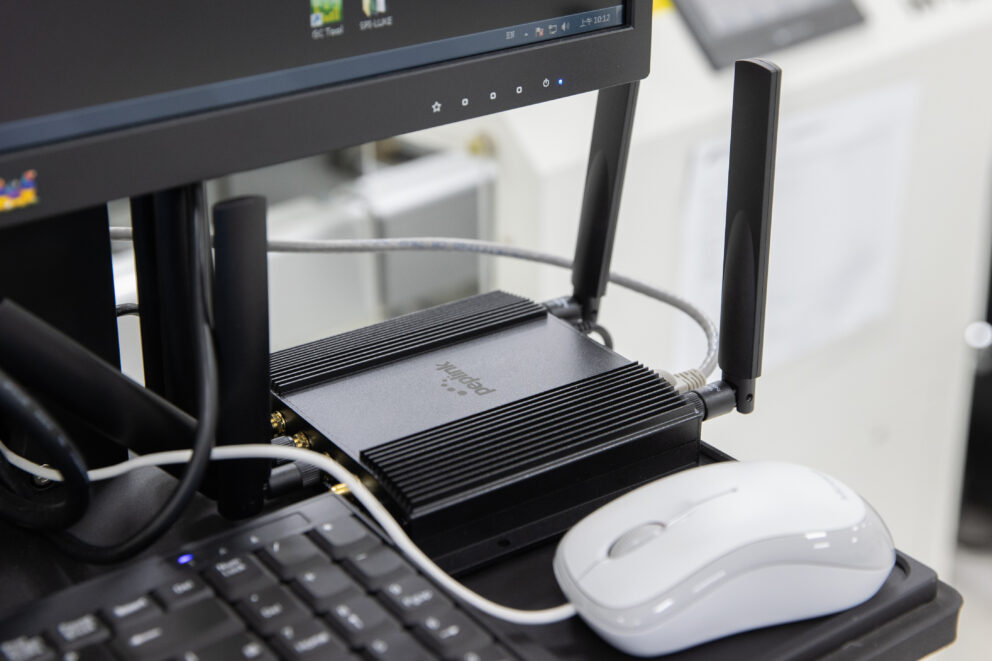
MAX BR1 Pro 5G | MAX-BR1-PRO-5GK-T-PRM
€999.00excl. VATAvailable
MAX BR2 LTEA (CAT-7)
€799.00excl. VATAvailable
BR2 Micro
€749.00excl. VATAvailable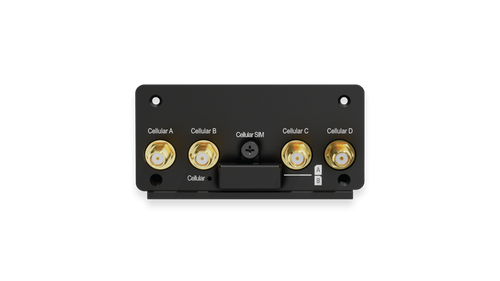
Peplink FlexModule Mini 5G Erweiterungsmodul mit 5G-Modem
€699.00excl. VATAvailable
Peplink eSIM Data - Pooled Plan J
€70,000.00excl. VATAvailable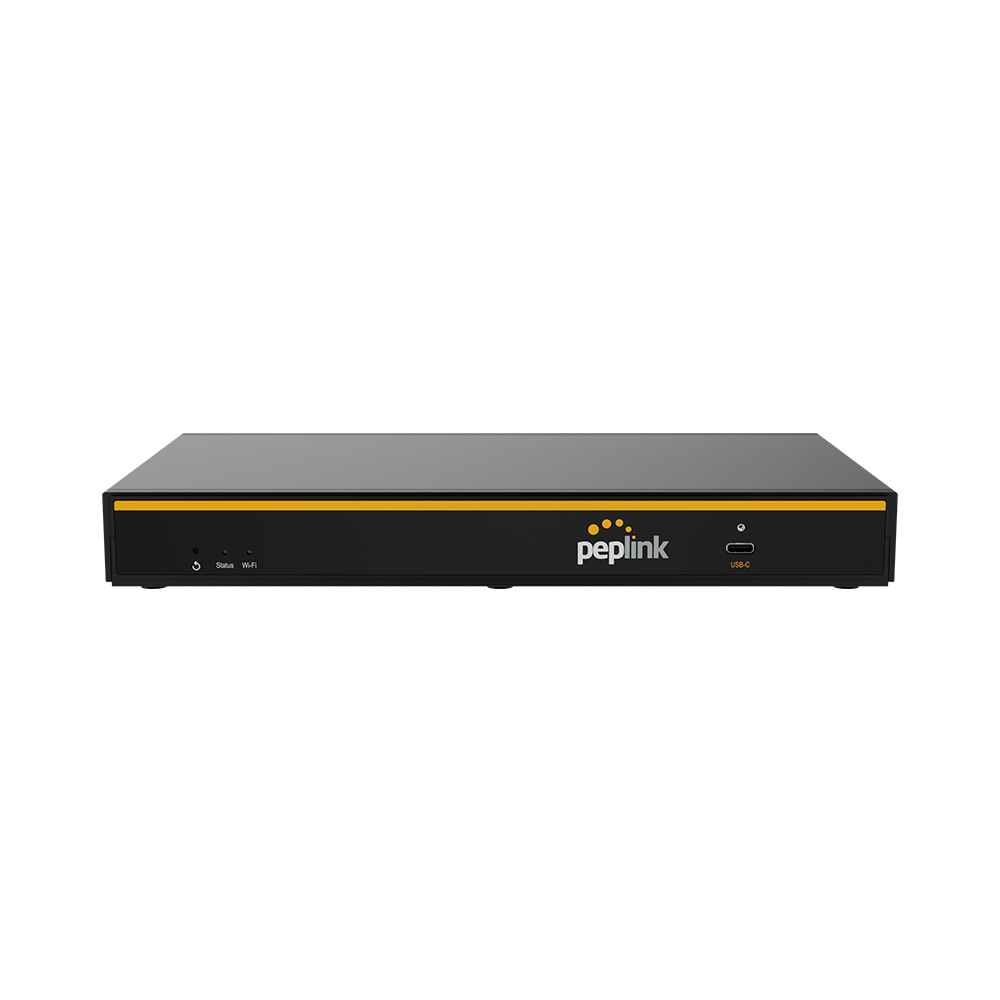
One thousand (1000) client licenses for FusionHub MSP Edition
€20,000.00excl. VATAvailable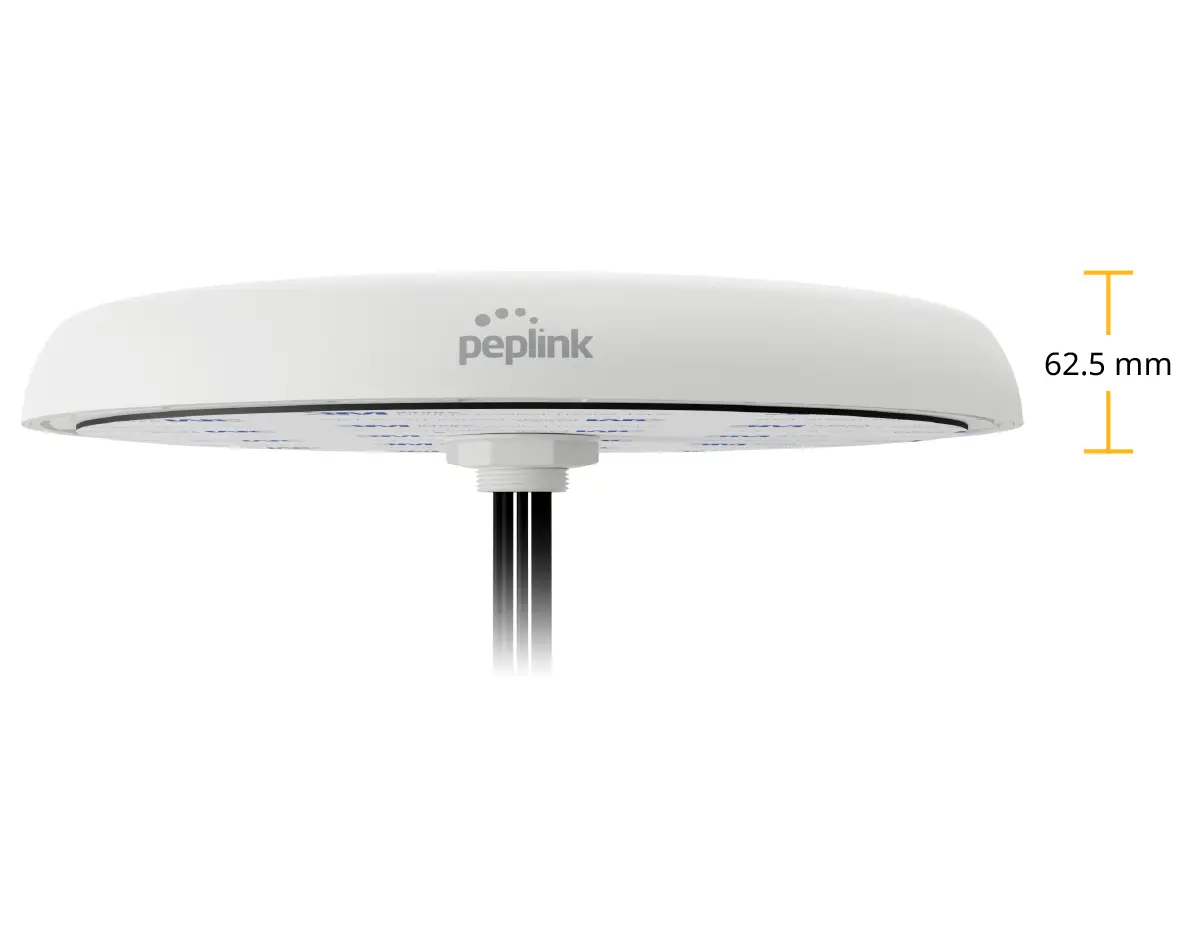
Mobility 82G 11-in-1 Mobilfunk- und Wi-Fi-Antenne mit GPS-Empfänger
€699.00excl. VATAvailable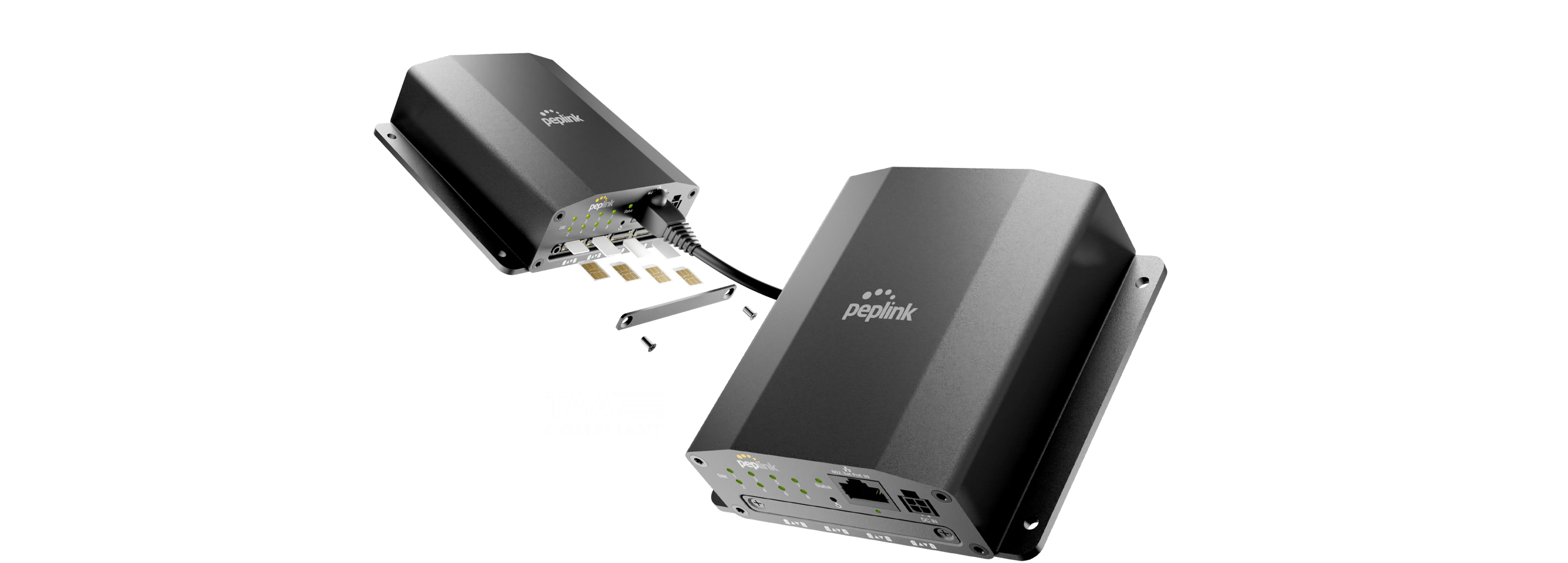
SIM Injector Mini
€499.00excl. VATAvailable
Frequently Asked Questions
What is SpeedFusion and how does it differ from standard SD-WAN?
Can Peplink routers bond Starlink with cellular and fibre?
What Peplink certifications does the Ascend team hold?
Specify, Deploy, and Manage PEPLINK Solutions with a Certified Gold Partner
ASCEND holds Peplink Certified Gold Partner and Authorized E-Tailer status, with certified engineers on staff to support SpeedFusion bonding, SD-WAN, and multi-WAN deployments from branch to datacenter.
Request free advice on PEPLINK Solutions
Tell ASCEND about your connectivity requirements and receive a vendor-neutral PEPLINK Solutions recommendation from a Peplink Certified Gold Partner. No obligation — you get a tailored hardware shortlist, licensing guidance, and a deployment outline for your specific WAN environment.