









Mobile and Starlink instead of waiting for the connection
Alternative to Fiber: Fast Internet Before the Diggers Arrive
The fiber rollout has been promised, but not scheduled. Until then, your business still has to run. Ascend bonds 4G/5G from several networks and Starlink into a virtual leased line: no civil works, no waiting for the diggers, with failover and 24×7 support.
The principle at a glance
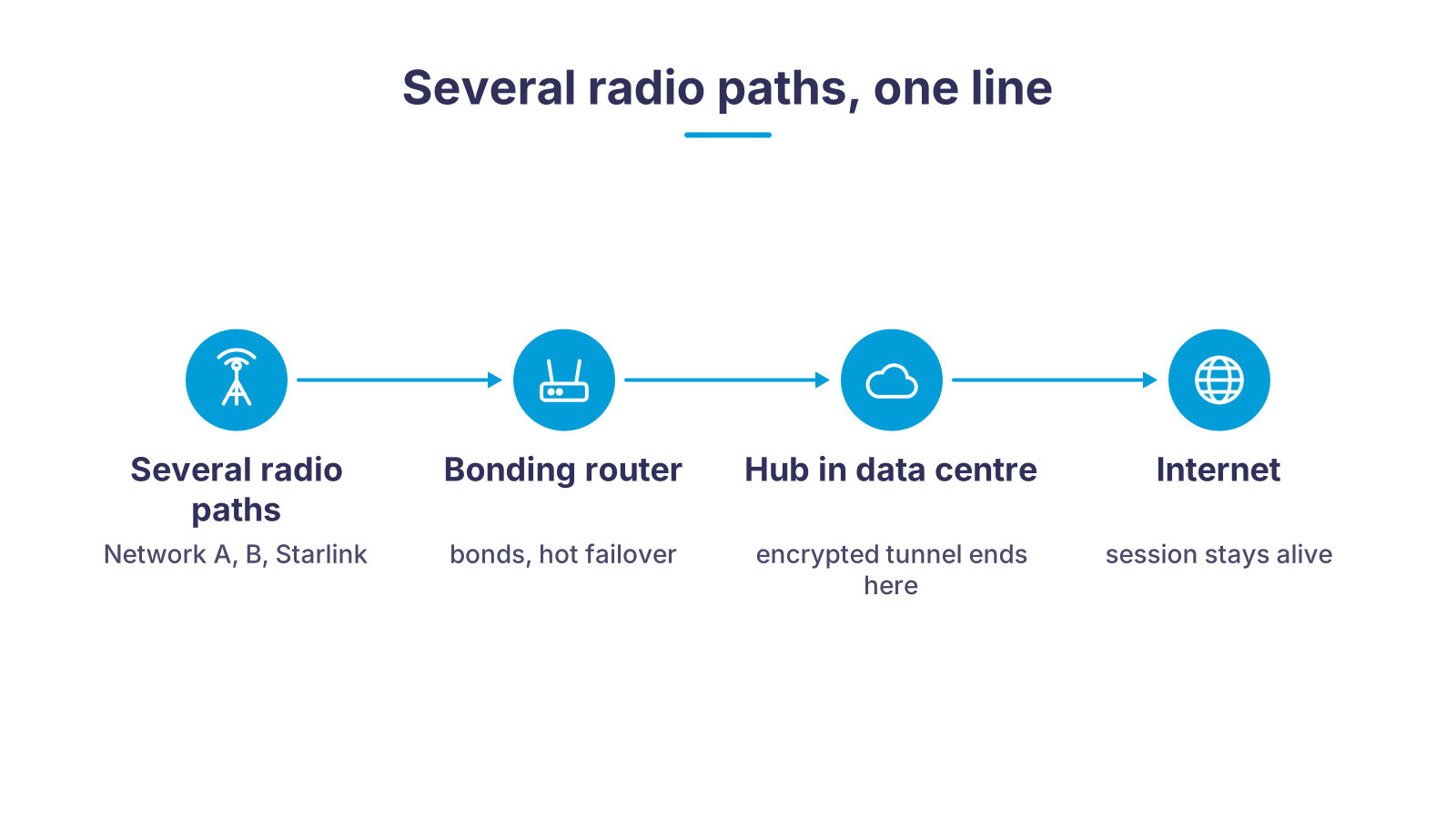
Instead of a cable in the ground, your site uses several radio paths at the same time: two mobile networks and, where the sky is clear, Starlink. A bonding router combines these paths into one encrypted tunnel. The tunnel ends at a hub in the data center, which reassembles the packets and passes them on to the internet. If one path fails or weakens, video calls, the till and cloud applications keep running over the others.
What you still get without fiber
Fiber is fast and stable, but it has to be laid first. The wireless alternative solves these points today.
Online without civil works
Even where no cable runs
No single point of failure
Bandwidth that grows with you
Take it with you when fiber arrives
Managed around the clock
Fiber, mobile and Starlink compared
| Fiber | Mobile 4G/5G | Starlink | Bonded with Ascend | |
|---|---|---|---|---|
| Availability | Only where it has been built out | Almost everywhere, depending on network coverage | Anywhere with a clear view of the sky | Uses whatever is available on site |
| Provisioning | Civil works, often a long wait | Immediately with SIM card and router | Immediately with antenna and power supply | No civil works, installation on site |
| Resilience | One cable, one point of failure | One network, one point of failure | Weather and obstacles affect reception | Several independent paths, hot failover |
| Bandwidth | Very high and constant | Varies with load and reception | Varies with load and line of sight | Sum of the paths, fluctuations are evened out |
| Usable on the move or temporarily | No | Yes | Yes | Yes, the router moves with you |
From site check to a stable connection
- 1Clarify site and requirementsYou give us the address, the number of workstations and the applications that must run: video calls, till, cloud, cameras, remote maintenance.
- 2Check receptionWe check the mobile coverage of several networks at your site and whether Starlink has a clear view of the sky. That determines the combination of paths.
- 3Select hardwareDepending on your needs, a compact dual-SIM router or a bonding router with several 5G modems, plus matching outdoor antennas and Starlink.
- 4Installation and hubWe deliver preconfigured, mount the antennas, insert the SIM cards and connect the router to the hub in the data center.
- 5Operation and monitoringFrom day one we monitor each path individually. If one weakens, we see it in our monitoring and respond.
Why wireless is a real alternative today
Fiber is the fastest and most stable way to connect a site. The problem is not the technology but the road to get there: cables have to be laid, streets opened, building connections made. In rural areas and on the outskirts of towns, that often means long waits and high connection costs. A business that needs video conferencing, cloud software and card payments today cannot wait for that.
Mobile with 4G and 5G is now available almost everywhere, and Starlink fills in where the networks get thin. Starlink uses satellites in low Earth orbit (LEO) and needs only a clear view of the sky and power. On their own, each of these paths has weaknesses: mobile varies with the load on the cell, Starlink with weather and obstacles. Bonded, these weaknesses balance out.
Bonding instead of switching
A simple backup router only switches over once the main line is completely gone. This is called cold failover: the connection drops briefly, and running calls and sessions are cut. A bonding router with hot failover, by contrast, uses all paths at the same time. If one fails, the rest take over at the same moment, without a video call dropping. That is what turns several shaky wireless paths into a virtual leased line that a company can rely on.
Bonding needs a counterpart: the hub where the tunnel ends. Ascend operates this hub in the data center, either as a shared hub per tunnel or as a dedicated hub with a fixed IP address. Our page on VPN hub hosting explains exactly how this works.
Who the alternative to fiber is for
Agriculture and rural businesses
Farm shop with card payment, milking robot with remote maintenance by the manufacturer, office with cloud accounting: many farms and rural businesses have no fiber connection within reach. Mobile from two networks plus Starlink gets them online without construction work.
Construction sites and temporary locations
Site cabins, pop-up stores, a substitute office during a renovation: a fiber connection is not worth it here, because the location disappears again after weeks or months. The router simply moves with you. More on this on our page about Wi-Fi on construction sites.
Trade fairs, events and mobile teams
Anyone who changes location often needs a connection that travels with them. A mobile router with several SIM cards and, optionally, Starlink is quick to set up.
Companies waiting for the rollout
The fiber connection has been ordered, but the date is not fixed. The wireless solution bridges the wait and stays in use afterwards as a backup. What the failure of a single line costs is covered on our page about internet outages.
What Ascend takes care of for you
Ascend has been an IT systems house in Nuremberg since 2010 and specializes in fail-safe internet connections over mobile and satellite. We plan the combination of paths for your site, deliver preconfigured routers from Peplink or Teltonika, source suitable SIM cards and outdoor antennas, and integrate Starlink where it makes sense.
We operate the hub in the data center ourselves. Our monitoring watches each path individually, so that a weak mobile path is noticed before it becomes a problem. In case of faults you can reach us around the clock, 24×7. If fiber does arrive later, we reconfigure the router so that fiber carries the main load and mobile and Starlink stand by as backup.
Check reception before you buy
Whether mobile works at a site is often decided by a few meters: hardly any reception in the basement, several networks on the roof. So have reception checked before you buy, and plan for an outdoor antenna if the router sits inside the building. The same applies to Starlink and its clear view of the sky: trees and neighboring buildings should not be in the way.
Matching hardware in the Ascend Shop
Router, satellite and hub for an internet connection without fiber. We deliver everything preconfigured and tailored to your site.
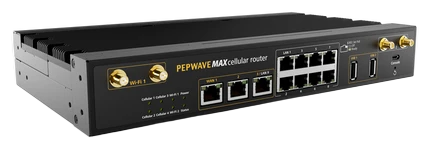
Peplink MAX HD4 MBX 5G
Four 5G modems in one device, 2.5 Gbit/s router throughput, fanless from -40 to 65 °C. For sites that bond several networks at the same time.
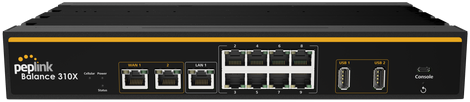
Peplink Balance 310X 5G
Fixed line or Ethernet plus 5G modem with redundant SIM slots, recommended for 50 to 500 users. Stays in use when fiber arrives later.
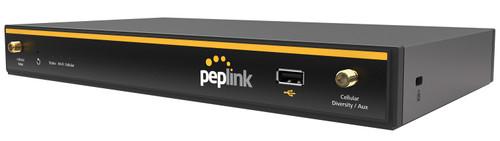
Peplink Balance 20X
Entry-level for small sites: gigabit WAN plus built-in LTE modem, recommended for 1 to 60 users.
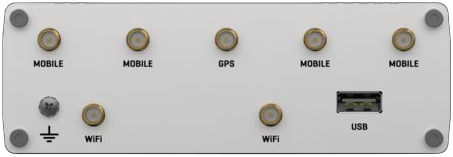
Teltonika RUTX50 eSIM
5G industrial router with dual SIM plus eSIM, 5 x Gigabit Ethernet and Wi-Fi 5, for farm, hall and control cabinet.
- Starlink Standard Kit V4
Starlink Standard Kit V4
Satellite dish with Wi-Fi router for sites with a clear view of the sky; as an additional path in the bonding router.
- Ascend Bonding Hub (shared hub)
Ascend Bonding Hub (shared hub)
Hosted counterpart in the data center, billed per active tunnel per month.
Frequently asked questions about the alternative to fiber
Further reading
Ready for fast internet without civil works?
Tell us your address and what has to run over the line. We check reception and propose the right combination of mobile and Starlink.
We look forward to hearing from you!
Tell us your location, the number of workstations and the applications that must run reliably. We will get back to you shortly with personal advice.