


RutOS 7.24, 7.24.1 & 7.24.2: All Teltonika Firmware Updates at a Glance
Introduction
For IT administrators and fleet operators, a RutOS firmware update is rarely an end in itself: it determines which security vulnerabilities get closed, which new protocol features arrive and how predictable the operation of dozens or hundreds of Teltonika routers remains. Back with RutOS 7.07 we summarized the most important new features — with the 7.24 series, Teltonika now delivers three releases within a few weeks, which we place in chronological order and assess for practical use in this article.
This article belongs to our Teltonika blog category. If you are new to the Teltonika ecosystem, we recommend starting with the fundamentals article What is RutOS? — there we explain the operating system and its device families in detail. Ascend distributes Teltonika and supplies hardware and RMS licenses from a single source; the update recommendations in this article come from exactly that practice.
Which RutOS versions were released in 2026? The release chronology
The 7.24 series consists of one feature release and two point releases. All dates are the firmware build dates from the device changelogs (including RUTX50, RUT241 and RUT956):
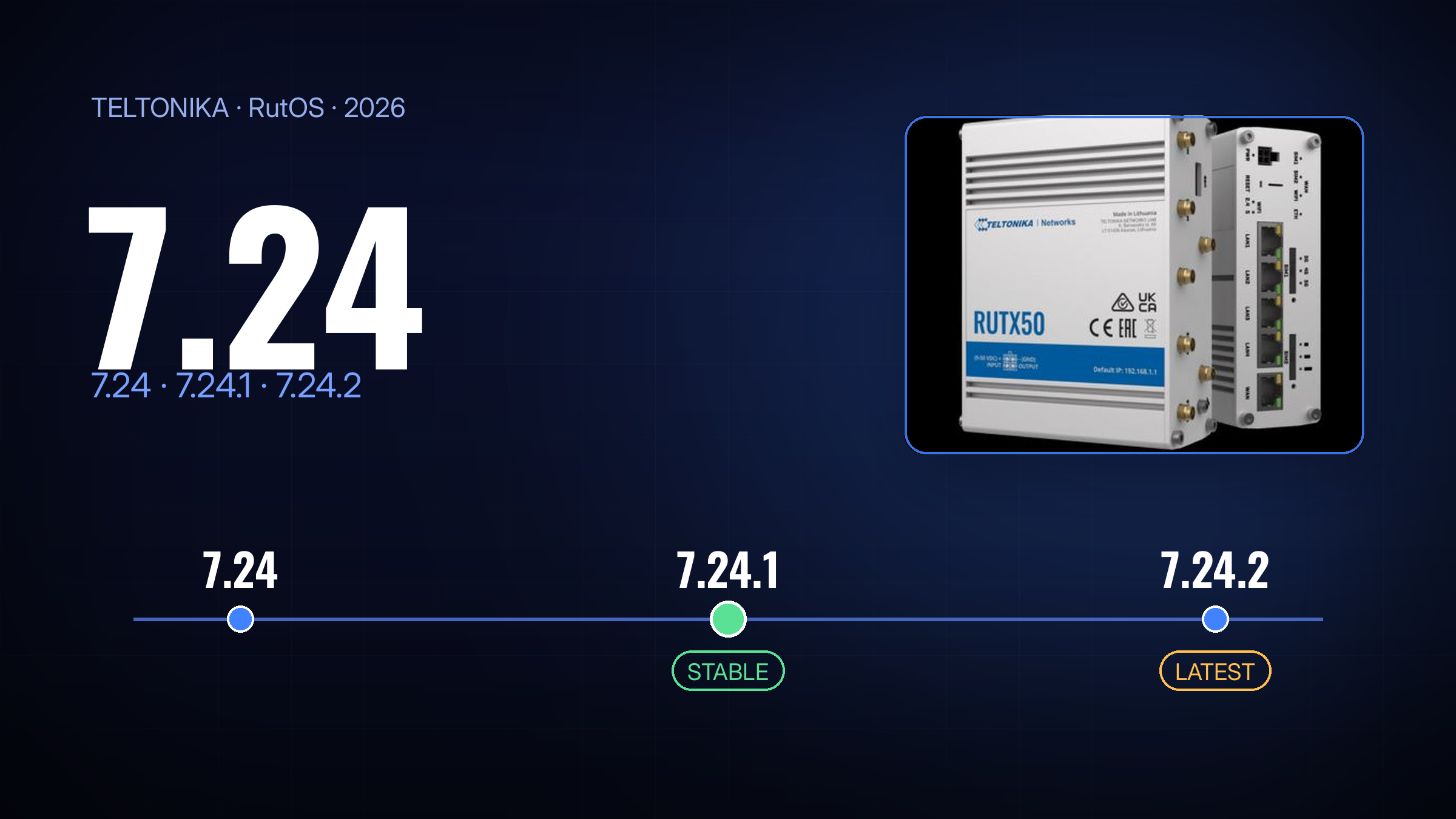
- RutOS 7.24 — 8 July 2026: the actual feature release of the series. In the Teltonika newsroom, 7.24 was announced as early as the beginning of July 2026 — together with TswOS 1.10 for the TSW switches.
- RutOS 7.24.1 — 20 July 2026: a lean maintenance release that is now listed as the “Stable FW”, i.e. the standard update and mass-production firmware (as of 28 August 2026).
- RutOS 7.24.2 — 13 August 2026: the most recent maintenance and security release, currently classified as “Latest FW” and therefore not yet in the Stable tier (as of 28 August 2026).
Officially, Teltonika bundled the series twice: the Product Firmware Update bulletin (PFU) of 23 July 2026 announced 7.24; the PFU bulletin of 27 August 2026 summarizes all three versions — 7.24, 7.24.1 and 7.24.2 — once again in a single overview. So if you only became aware of the series through the August communication, here is the complete chronology: two of the three releases date from July, and only 7.24.2 is actually an August release.
What does RutOS 7.24 deliver? The feature highlights
RutOS 7.24 is the feature release of the series. The most important new features from the device changelogs (documented, for example, at RUTX50 Firmware Downloads):
- Data to Server with SFTP and FTPS: Measurement data and files can now be transferred to external servers in encrypted form — including strict host key checking for SFTP. According to the Teltonika newsroom, both certificate-based and SSH-key-based authentication are supported.
- MQTT topic variables: Device name, serial number and LAN MAC are available as constants for topics in Data to Server, Event Juggler and Modbus client alarms. For fleet operators this means: one configuration template works unchanged across many devices.
- Cellular operator management: Block and allow lists are applied in a user-defined priority order; new additions are the “Ignore Home Operator Priority” switch, per-operator APN priorities and the ICCID display for an inserted but PIN-locked SIM — helpful in multi-carrier and failover scenarios.
- TR-069 significantly accelerated: According to Teltonika, the time to establish a connection to the Auto Configuration Server drops from around two minutes to roughly 15 seconds. In addition, there are new and improved TR-181 objects, among others for TraceRoute diagnostics as well as Wi-Fi SSID and radio parameters.
- Industrial protocols expanded: The IEC 60870-5 client and server gain configurable application-layer, link-layer and APCI parameters plus new time-tag data types; the DNP3 client and Modbus client get IP/port filters for database API requests.
- System maintenance: The SSH server dropbear is updated to 2025.89, SQLite to 3.50.4; in addition, the type of backup generation can now be selected.
Among the bug fixes, the fix for low TCP throughput with software flow offloading on certain interfaces, the corrected IEEE 802.11r validation for unsupported encryption modes and the 2FA OTP invalidation after successful login stand out — along with numerous SMS and OpenConnect corrections.
On the security side, RutOS 7.24 closes nine CVEs, four of them rated HIGH (figures according to the Teltonika changelog). We have compiled the complete list with all numbers and scores, plus the post-quantum additions from 7.24.2, in the article RutOS security updates: CVEs and post-quantum IPsec.
Important context: In the newsroom, Teltonika additionally announces for 7.24 a CANopen client, single sign-on (SSO), PPSK import/export including auto-generation, a “Third Party Packages” tab in the Package Manager as well as VXLAN, Docker and NetBird on the Wi-Fi 7 router Altos CAP700. These functions are announced by Teltonika but device- or package-dependent — they do not appear in the 7.24 changelogs of the RUTX50 and RUT956. Therefore, check the changelog of your specific model before planning.
What is in the Stable release RutOS 7.24.1?
Barely two weeks after 7.24, 7.24.1 followed as a maintenance release — exactly the version that forms the Stable tier as of 28 August 2026. The highlights:
- iperf and stress-ng in the Package Manager: Throughput and load tests now run directly on the router — practical for acceptance testing at new sites without carrying additional test hardware.
- Maintained APN database: new entries for Telenor (“internet.telenor.se”, “services.telenor.se”) and KPN (“comgate.m2m”); for T-Mobile (MCC-MNC 311-882), the priority of the APN “iot.t-mobile.com” was raised.
- Faster first boot: The integrity database is generated more quickly on first boot.
Added to this are targeted fixes: the incorrect display of cellular signal values under certain carrier aggregation configurations, the forwarding of received IEEE 802.11 action frames in Wi-Fi station mode, SMS sending errors of the Event Juggler with messages arriving in rapid succession, and the inclusion of flash logs in the troubleshoot file.
No dedicated CVE section is listed for 7.24.1 in the RUTX50 changelog — the value of this release lies in stabilizing the 7.24 code base for broad rollout.
What is new in RutOS 7.24.2?
The most recent release of the series, dated 13 August 2026, combines network features with tangible security hardening:
- OSPFv3: Dynamic routing over IPv6 arrives.
- DHCPv6 expanded: automatic creation of DHCPv6 servers for WAN interfaces plus a new “Relay uplink” option for the DHCPv6 server.
- Firewall connection limits: The firewall now supports per-port connection limits — an additional lever against resource exhaustion by individual services.
- Post-quantum IPsec: With the ML-KEM key exchange and the update to strongSwan 6.0.7, Teltonika prepares IPsec connections for the post-quantum era.
- Hardened local authentication: PAM account lockout for local logins, a password history in the password policy and NTP authentication for ntpd.
- Updated crypto and RADIUS base: OpenSSL 3.5.7, FreeRADIUS 3.2.8, wireless-regdb 2026.05.30 and open62541 (OPC UA) 1.4.18.
The bug fixes are operationally relevant as well: a memory leak of the Lua format plugin in Data to Server was closed, the SSH server correctly listens on IPv6 addresses again, transferring the RMS configuration via backups/profiles works again, and the SNMP SysObjectID now returns the Teltonika enterprise OID.
On the security side, 7.24.2 adds two further CVE fixes: CVE-2026-16455 (score 6.9) and CVE-2026-18368 (score 5.0), both rated MEDIUM (figures according to the Teltonika changelog). Why the ML-KEM key exchange in particular is interesting for regulated industries is covered in the security deep dive on the 7.24 series.
Stable or Latest: which firmware belongs on your fleet?
Teltonika maintains its firmware in two maturity levels. Stable is the firmware that, in addition to internal quality assurance, has also been through large-scale user deployments — it is offered as the standard update and installed in mass production. Latest has passed the internal tests but, according to Teltonika, has “not yet undergone wide distribution or user validation” and “may still contain undetected errors”; the manufacturer explicitly recommends testing it “on a small number of devices before considering broader updates” (paraphrased from the RUTX50 firmware downloads page).
For the 7.24 series, this means in concrete terms (as of 28 August 2026): 7.24.1 is Stable, 7.24.2 is Latest. A clear roadmap follows from this:
- Raise the production fleet to 7.24.1. This puts the 7.24 features and fixes on the validated Stable channel.
- Pilot 7.24.2 selectively. Choose a small, representative device group — ideally where the new features (ML-KEM IPsec, OSPFv3, DHCPv6 extensions, PAM lockout) deliver the greatest benefit — and observe the behavior before rolling out more broadly.
- Manage the rollout in stages. Central management — for example via Teltonika’s Remote Management System (RMS) — helps keep track of the fleet’s firmware versions and roll out updates in waves rather than all at once.
Practical tip: Before every rollout, save a current configuration backup for each device type and start with a site you can reach easily if something goes wrong. Only once the pilot has run without issues over an appropriate period should the rest of the fleet follow.
Which devices receive which version? The device matrix
The following overview is based on Teltonika’s “Product Firmware Updates” page and the device changelogs, as of 28 August 2026:
- RUT1xx (RUT140, RUT142, RUT145): 7.24, 7.24.1 and 7.24.2
- RUT2xx (including RUT200, RUT241, RUT260, RUT271, RUT286): 7.24, 7.24.1 and 7.24.2
- RUT3xx (RUT301, RUT361): 7.24, 7.24.1 and 7.24.2
- RUT9xx (including RUT901, RUT906, RUT951, RUT956): so far only 7.24. The point releases 7.24.1 and 7.24.2 are currently not listed for this family; the newest firmware on the RUT956 download page is RUT9M_R_00.07.24 of 8 July 2026.
- RUTX (RUTX08 to RUTX14, RUTX50, RUTXR1): 7.24, 7.24.1 and 7.24.2
- RUTM (RUTM08 to RUTM59): 7.24, 7.24.1 and 7.24.2
- RUTC: The lists vary by version — 7.24.1 names all five models (RUTC40/41/42/50/54), while the RUTC54 is missing from the 7.24.2 list.
- OTD outdoor routers (OTD140, OTD144, OTD500): 7.24, 7.24.1 and 7.24.2
- TRB gateways (TRB140 to TRB501): 7.24, 7.24.1 and 7.24.2
- ATRM50 and Altos CAP700 (Wi-Fi 7): 7.24, 7.24.1 and 7.24.2
- TAP access points (TAP100, TAP200, TAP400): 7.24 and 7.24.1 — they are not included in the 7.24.2 list.
- DAP access points (DAP140, DAP142, DAP145): 7.24, 7.24.1 and 7.24.2
Three points of context: First, it is currently not evident from the Teltonika sources whether and when RUT9xx and TAP will receive the respective point releases — as of today, they are simply missing from the lists. Second, the TCR series does not appear in any 7.24.x list. Third, RutOS covers routers, gateways and access points only: the TSW switches run on their own firmware line (TswOS, version 1.10 of 3 June 2026), and unmanaged devices such as the TSF010 flat switch have no administrable firmware at all — for buyers, the more relevant topic there is currently the change of the TSF010 order codes.
Conclusion: three releases, one clear update roadmap
The 7.24 series shows how Teltonika organizes firmware maintenance: a feature release (7.24) with substance from Data to Server through TR-069 to the industrial protocols, a quickly delivered Stable release (7.24.1) for broad deployment and a maintenance and security release (7.24.2) with forward-looking topics such as post-quantum IPsec, which currently still has to prove itself in the Latest tier. For fleet operators, this yields a calm, methodical strategy: set 7.24.1 as the standard, pilot 7.24.2 in a controlled way and keep a separate eye on RUT9xx devices until Teltonika lists new versions for them.
Request a consultation: If you want to update your Teltonika fleet in a structured way or add new devices, talk to Ascend. Ascend distributes Teltonika and supplies hardware and RMS licenses from a single source — from device selection in the Teltonika range of the Ascend Shop to the update strategy for your installed base.
Frequently asked questions
Request a consultation
Planning the next RutOS update for your Teltonika fleet or adding new devices? Ascend distributes Teltonika, supplies hardware and RMS licenses from a single source and supports you from update strategy to rollout.
Matching Teltonika products at Ascend
Matching Teltonika hardware directly from Ascend — all three devices are available; you will find details on the respective product page.
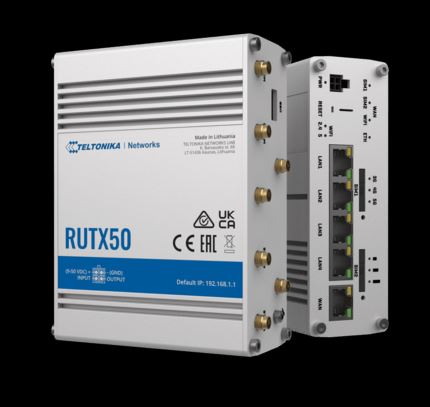
Teltonika RUTX50 eSIM
5G dual-SIM router with eSIM and Wi-Fi — the flagship for demanding fleets, available for 478,80 €.
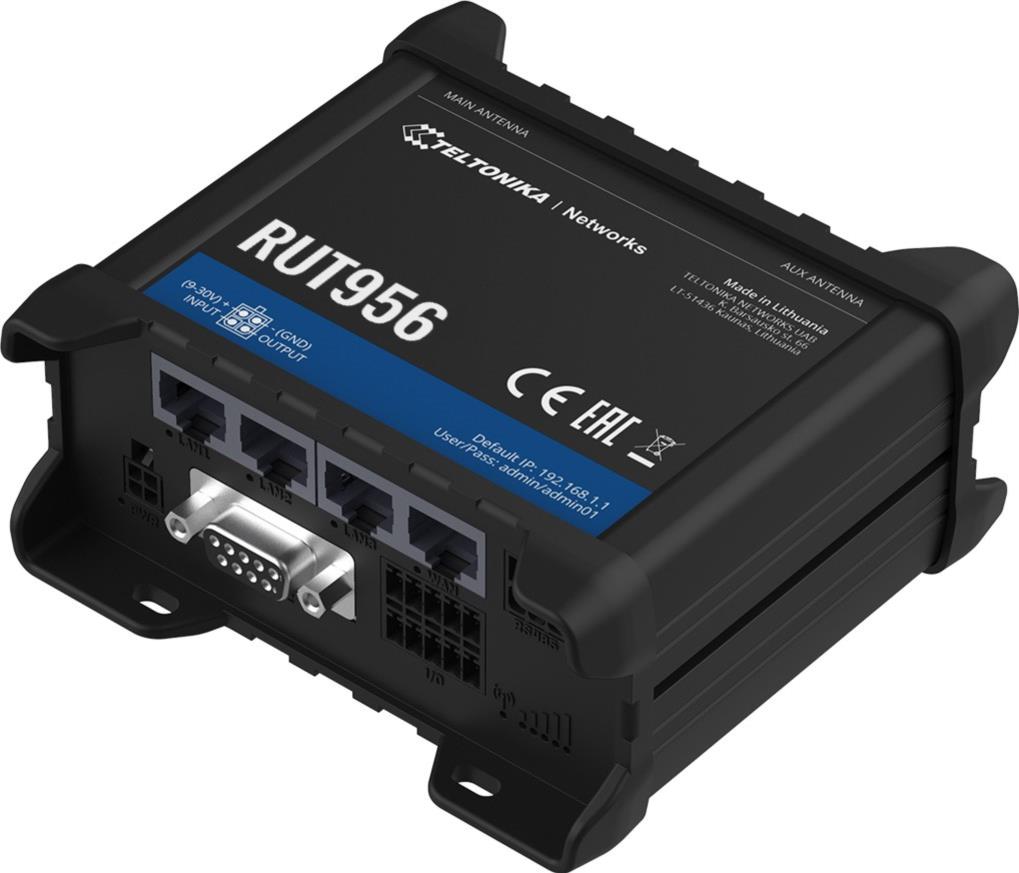
Teltonika RUT956
Industrial 4G/LTE dual-SIM router with Ethernet, I/O, GNSS and RS485/RS232 — available for 265,44 €.
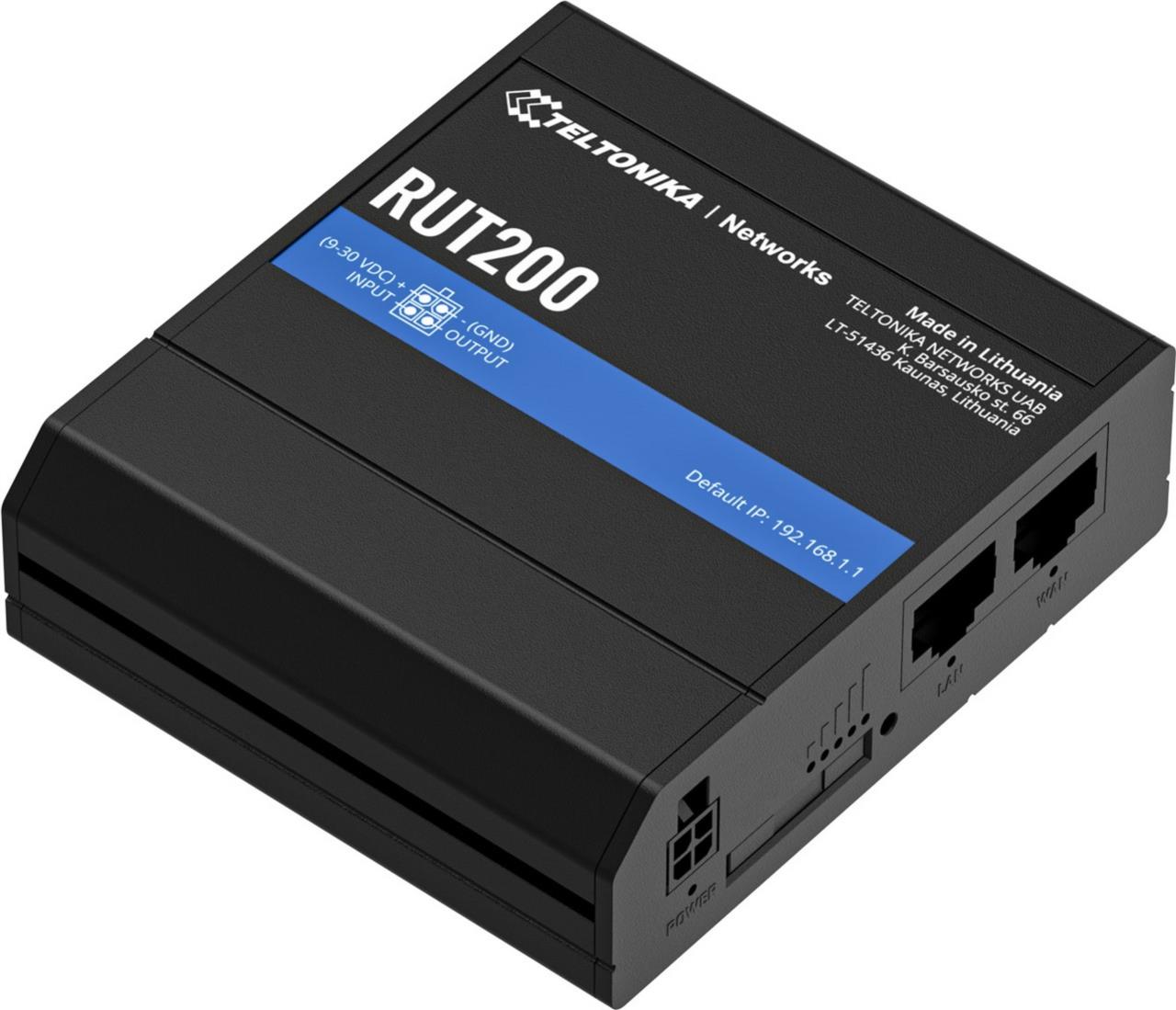
Teltonika RUT200
Compact industrial LTE router with Wi-Fi and two Ethernet ports — the entry point into RutOS, available for 115,18 €.
Further reading
- RutOS security updates: CVEs and post-quantum IPsec
- Teltonika TSF010: VDC-only order codes are being phased out
- What is RutOS? The Teltonika operating system explained
- Teltonika routers at Ascend
- Teltonika blog category
- Looking back: the new features and benefits of RutOS 7.07
- Teltonika bonding: reliable and highly available connectivity
- Teltonika in the Ascend Shop
This article was researched and written with AI support and reviewed by Ascend before publication.
Ready for your next project?
Talk to our team about your requirements.
Related posts
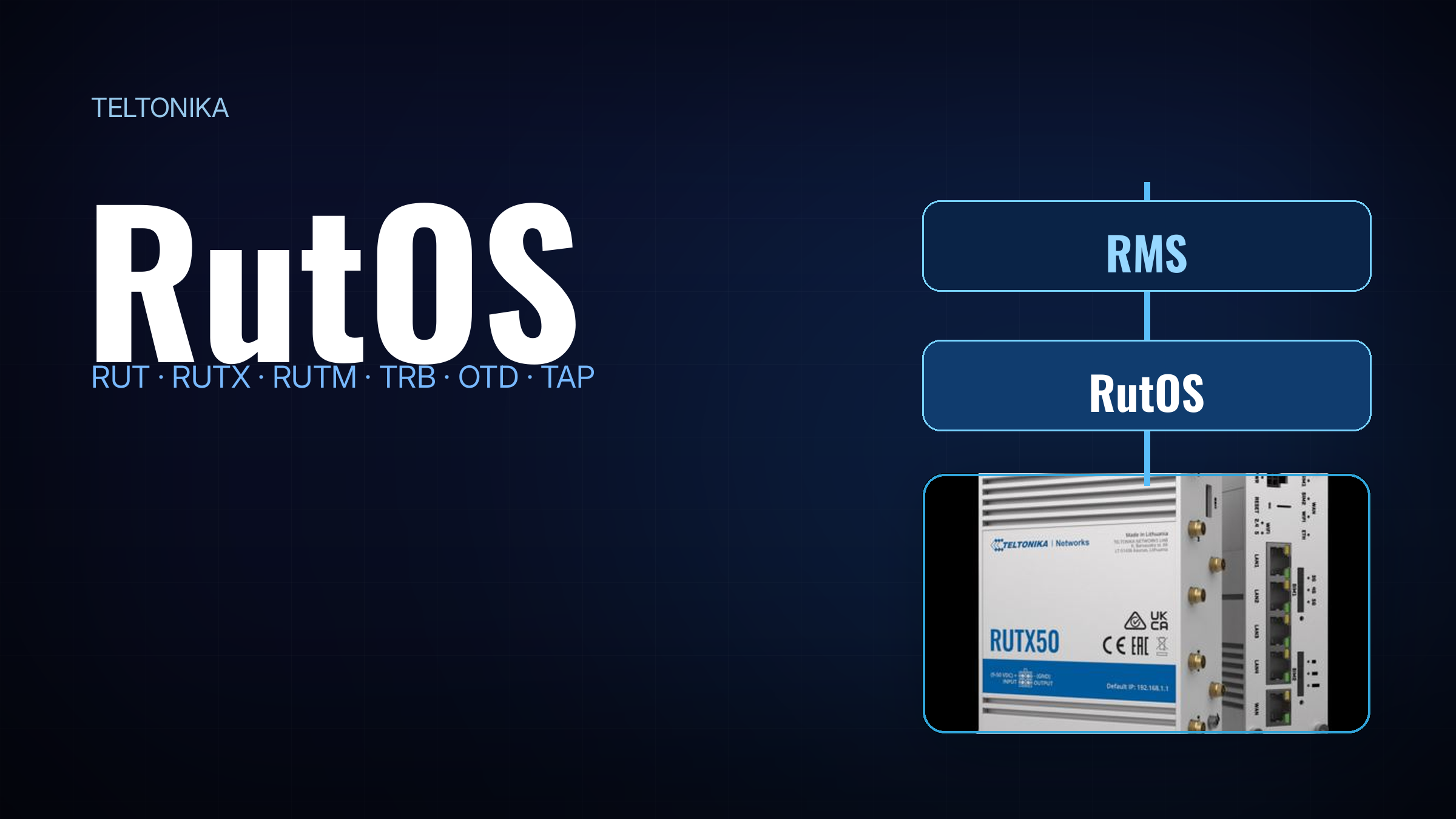
What Is RutOS? The Teltonika Operating System Clearly Explained
RutOS is the operating system of Teltonika’s routers and gateways. We explain device families, the Stable/Latest model, security maintenance and the feature set of version 7.24.
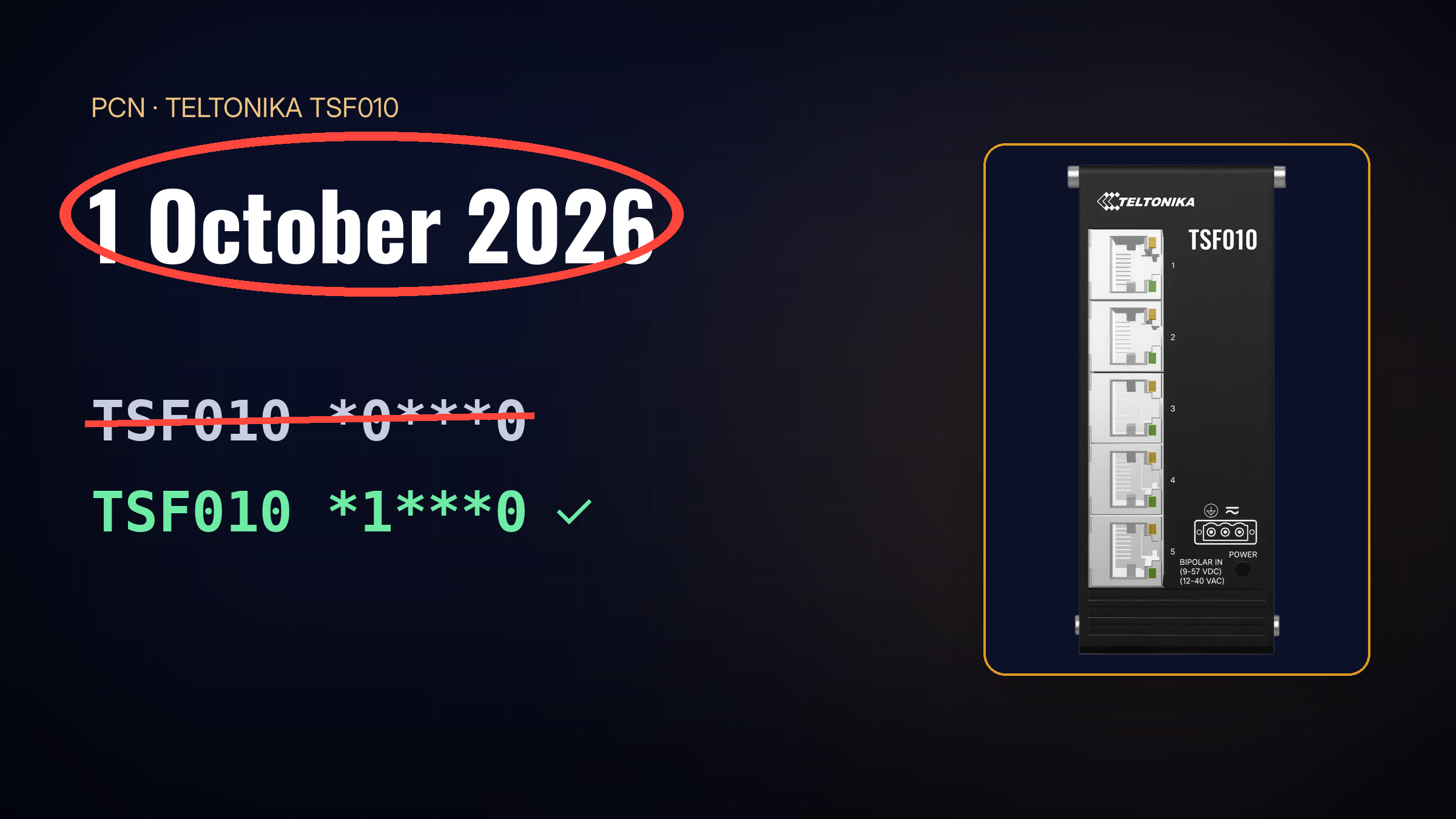
Teltonika TSF010: VDC-only Order Codes End on 1 October 2026 — What Buyers Need to Know
PCN of 7 August 2026: Teltonika discontinues the TSF010’s VDC-only order codes on 1 October 2026. What this means for procurement, BOMs and ongoing projects.
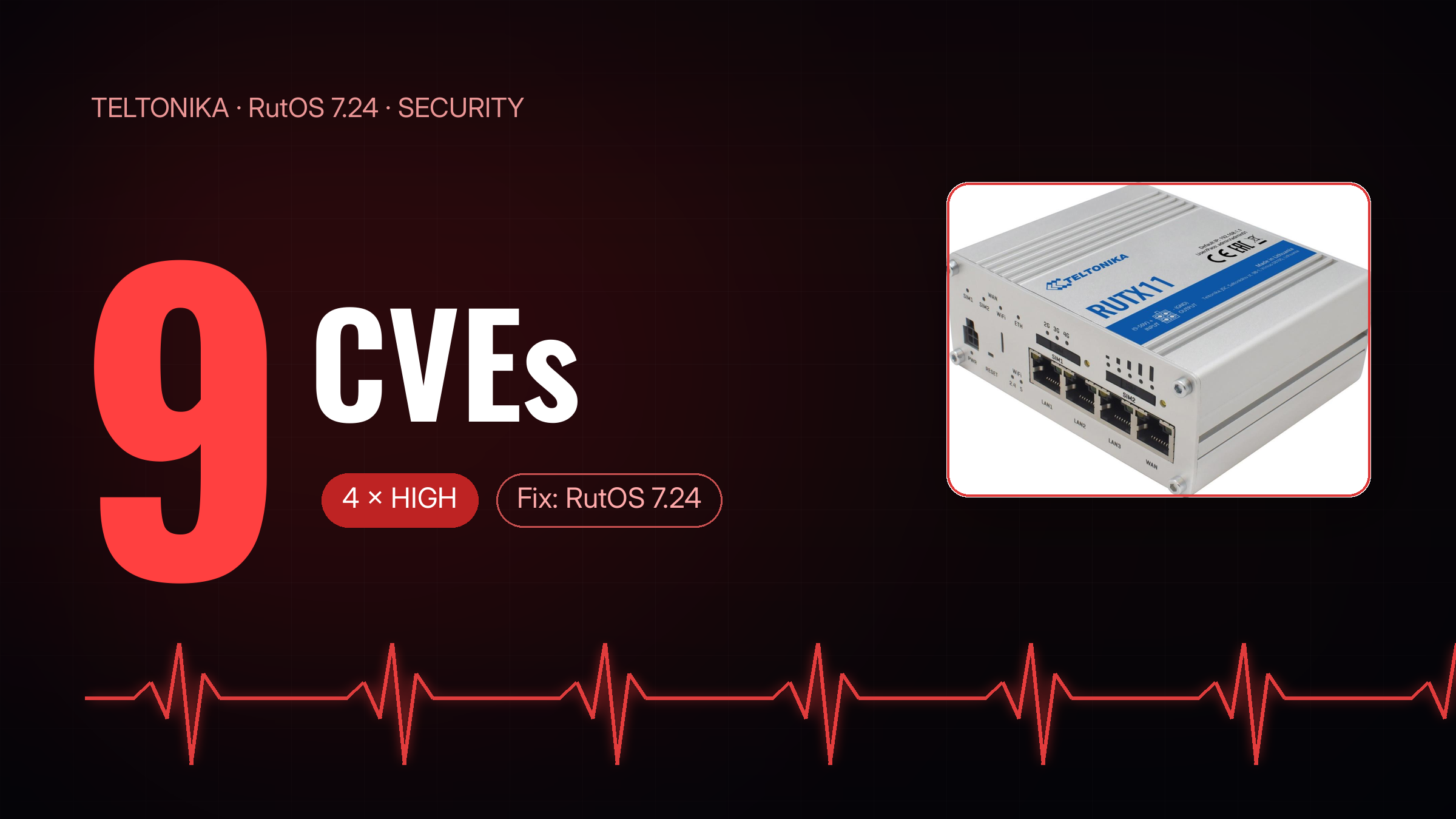
RutOS Security Updates: 9 CVEs Patched, Post-Quantum IPsec Arrives
Teltonika closes nine CVEs with RutOS 7.24; 7.24.2 adds post-quantum IPsec (ML-KEM), PAM lockout and NTP authentication. What security teams should prioritize now.