


Teltonika TSF010: VDC-only Order Codes End on 1 October 2026 — What Buyers Need to Know
Introduction
The basis is a Product Change Notification (PCN) that Teltonika published on 7 August 2026. PCNs are formal manufacturer notices about changes to products or their ordering channels — unspectacular in tone, but often consequential for procurement and project planning. If you carry the TSF010, a compact 5-port industrial DIN rail switch, in order templates, bills of materials or framework agreements, you may find yourself working with order codes from October onwards that no longer exist.
In this article you will read what the PCN specifically regulates, why Teltonika is standardizing the order codes, what the change means for devices already in the field — and which steps procurement and project planning should take now. Ascend distributes Teltonika and supplies hardware and RMS licenses from a single source; the TSF010 is available in our shop. Further articles on the brand are collected in the Teltonika blog category, and our Teltonika routers page provides an overview of the router portfolio.
What does the TSF010 PCN of 7 August 2026 say?
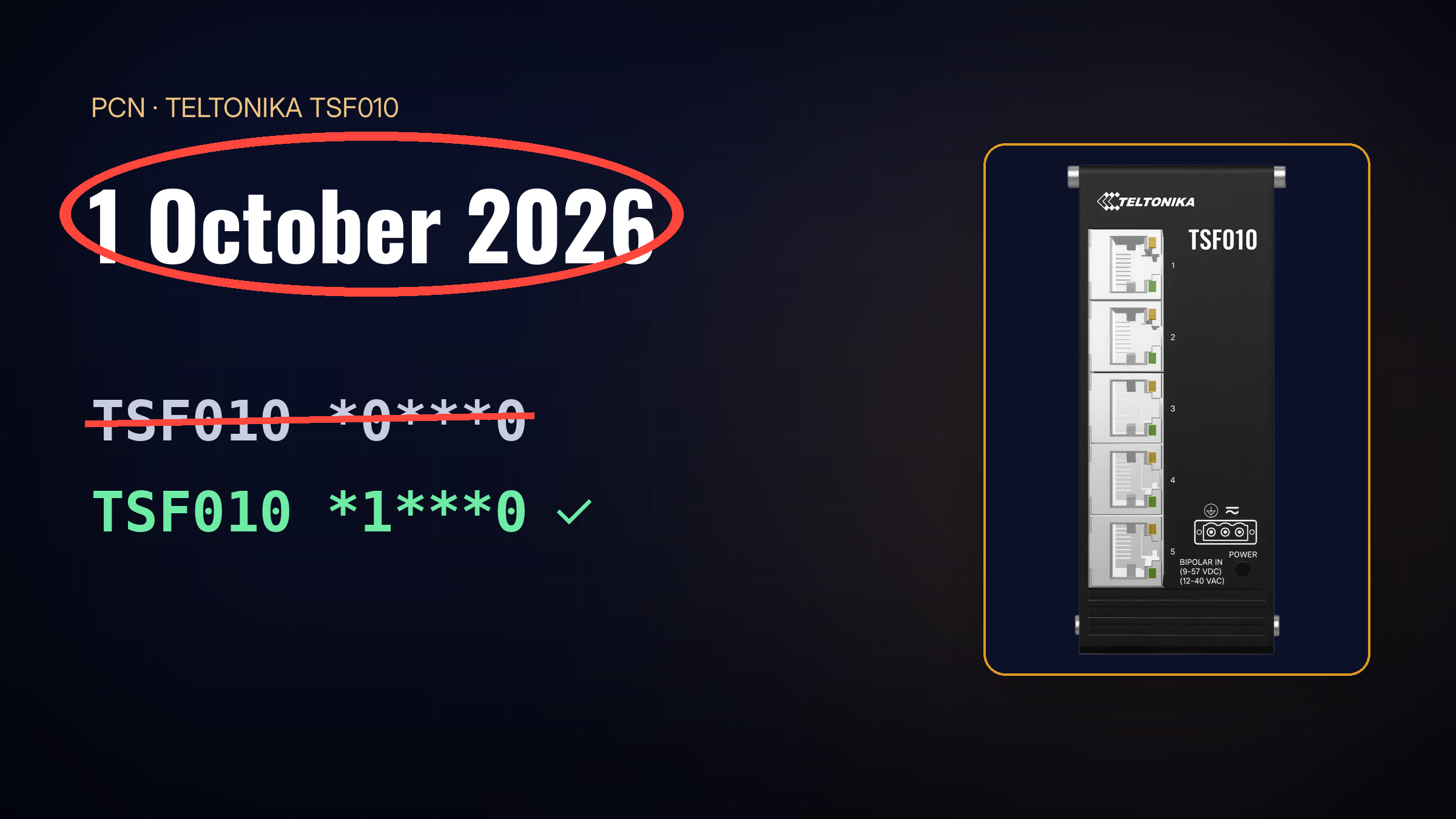
The PCN carries the identifier PCN_VDC_Only_Discontinued_TSF010_2026.08.07_EN and is published on the Teltonika wiki page TSF010 Product Change Notifications. The core of the notice, in brief: from 1 October 2026, TSF010 order codes with a VDC-only power input will be discontinued. From that date, there is no longer any way to order the device without VAC support — the remaining order codes support both VDC and VAC input. The functionality of the device remains unchanged.
Specifically, Teltonika names the affected code patterns (the asterisks stand for arbitrary characters in the order code):
- Discontinued as of 1 October 2026:
TSF010 *0***0andTSF010 *0***1— the variants with a pure VDC input - Remain orderable:
TSF010 *1***0andTSF010 *1***1— the variants with VDC and VAC input
Notable for practice: the order code TSF010000000, listed as the standard in the 2024 data sheet, falls exactly under the expiring pattern TSF010 *0***0. The common standard SKU is therefore itself affected. The PCN does not name which specific code takes its place — nor does Teltonika publish a table decoding the meaning of the individual suffix positions. So do not rely on replacement codes you have derived yourself; clarify the successor code explicitly with your supply source at the next order.
Teltonika sums up the customer impact in one sentence: customers will no longer be able to order the TSF010 with a pure VDC power input. If you want to file the notice for your own documentation, in addition to the wiki page there is also the one-page PCN PDF for download.
Why is Teltonika switching to VAC-capable order codes?
In the PCN, Teltonika justifies the change with the standardization of order codes on devices with VAC support: these offer simpler installation and require fewer external power supply components than pure VDC variants. From a manufacturer’s point of view, this is understandable — fewer variants maintained in parallel mean less complexity in production and logistics, and the customer receives a device that covers both supply worlds.
There is no new, untested hardware behind this: the certification page in the Teltonika wiki (TSF010 CB) already lists separate versions “TSF010 VDC” and “TSF010 VDC/VAC” — both tested and certified to IEC 62368-1:2018. The dual-power version is thus an established, safety-certified variant, not a new development that would first have to prove itself in the field.
There is one detail planners should know, however: Teltonika does not name a specific VAC voltage range in the documents currently available. The official product page merely describes the 3-pin industrial power input as a combination of a flexible AC range and a wide DC voltage range. If your electrical planning must document an exact VAC value, wait for the updated data sheet or explicitly request the value before purchase — figures circulating in search engine snippets are currently not substantiated by the available Teltonika documents.
What does the change mean for existing devices and ongoing projects?
The most important message of the PCN: this is purely a change in orderability. Teltonika phrases the risk statement unambiguously — “No impact on product functionality or technical specifications”. And as is usual with Teltonika PCNs: devices already produced are not affected by the change.
In practice, this means:
- Installed TSF010 switches continue to run unchanged. There is no need for replacement, retrofitting or requalification.
- Warehouse stock with VDC-only codes remains usable; the PCN removes neither function nor certification.
- Ongoing projects do not need to re-evaluate anything functionally — the change shows up exclusively in ordering documents: from the cut-off date, VDC-only codes simply can no longer be ordered.
So it is not operators who need to pay attention, but everyone whose processes reference order codes: ERP master data, bills of materials, order templates, framework agreements and OEM documentation. That is exactly where friction arises from 1 October 2026 if a code that can no longer be ordered is on file — in the most harmless case a query from the supplier, in the less favorable case a delay in procurement because the order goes nowhere.
What should procurement and project planning do now?
Only a few weeks remain until the cut-off date. These four steps can be worked through without much effort:
- Check order templates and bills of materials: Search for TSF010 order codes whose suffix matches the pattern
*0***0or*0***1— above all the standard code TSF010000000. - Update order codes in the ERP: Enter the VDC/VAC-capable successor code as soon as it is confirmed for your supply source, and mark the old codes as being phased out instead of deleting them without comment.
- Adapt framework agreements and call-off orders: Where order codes are contractually fixed, the codes should be switched before the cut-off date or supplemented with a substitution rule.
- Schedule demand: Deliberately plan orders that still run on old codes before 1 October 2026 — or switch directly to the VDC/VAC codes.
Practical tip: Use the opportunity for a brief master-data check across your entire Teltonika range. Teltonika maintains PCNs per product on dedicated wiki pages, and since October 2024 every newly created order code receives its own EAN (PCN of 18 September 2024). If you keep order codes and EANs clean in your ERP, you will spot such changes considerably earlier in the future.
If you are unsure which variant belongs in your project: talk to us — we clarify order code, availability and delivery date before you order, so the change does not surface for the first time at goods receipt.
The TSF010 in brief: what does the 5-port DIN rail switch offer?
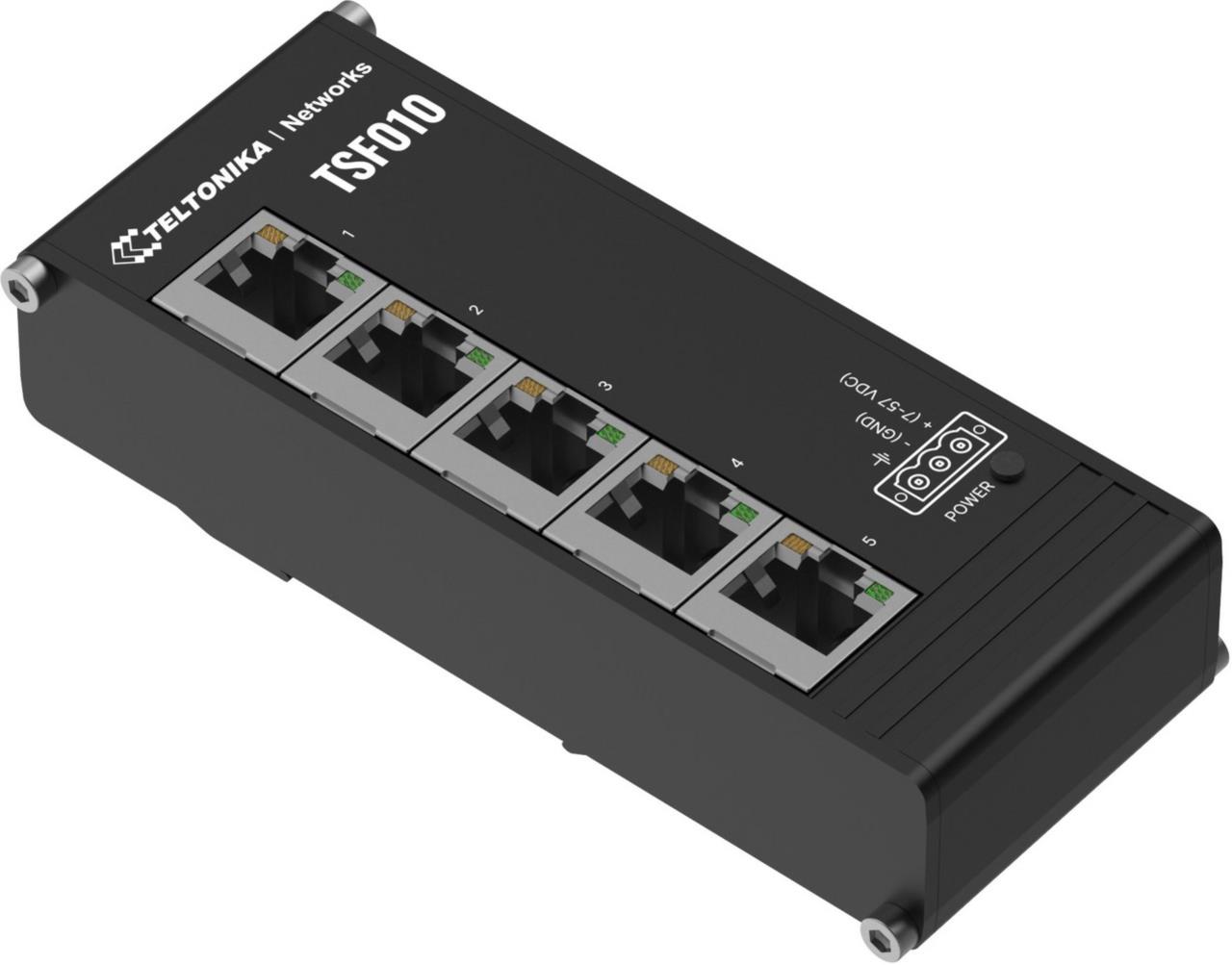
The TSF010 (“Flat Ethernet Switch”) is an unmanaged industrial switch in a flat form factor. In the wiki, Teltonika positions it as a particularly cost-effective way to connect several Ethernet devices where high throughput is not required — typical for control cabinet and OEM installations. The key data:
- Ports: 5 × 10/100 Mbps RJ45 with auto MDI/MDIX
- Form factor: flat design with integrated bracket for the DIN rail, 113 × 28 × 50 mm, 142 g
- Housing: anodized aluminum, IP30 protection rating
- Operating temperature: −40 °C to +75 °C
- Power supply: 3-pin industrial input, 9–57 VDC (updated specification) plus VAC support; power consumption per the data sheet (2024 edition) 1 W idle, 1.5 W maximum
- Management: none — the TSF010 is deliberately unmanaged
The last point has a pleasant side effect: as an unmanaged switch, the TSF010 runs neither RutOS nor TswOS — there is simply no firmware that would need maintaining. The update topics we cover in RutOS 7.24, 7.24.1 & 7.24.2 at a glance and in the RutOS security updates on CVEs and post-quantum IPsec concern Teltonika’s routers and gateways, not this switch.
At Ascend, the TSF010 is available for 31,46 € — go to the product page in the shop. You will find the brand’s complete range on the Teltonika brand page in the Ascend Shop.
Which other TSF010 PCNs should you keep an eye on in 2026?
The order code change is not the only current change notification for this device. Two further PCNs of 19 June 2026 also affect the TSF010:
- Engraving change (from July 2026): The input voltage engraving on the top of the housing changes from “7–57 VDC” to “9–57 VDC” — according to Teltonika, to align the marking with the updated product specification. The official product page now also states 9–57 VDC. In practical terms this means: the lower limit of the specified DC range has been raised from 7 to 9 V. Whether the changed figure also applies retroactively to older hardware revisions is not evident from the published documents — so plan power supplies conservatively from 9 VDC.
- Packaging change (from September 2026): In the shipping boxes, crumpled paper replaces the previous plastic filling. According to Teltonika, the changeover takes place gradually over a two-month transition phase during which deliveries may arrive with either packaging variant — relevant for goods-receipt checks that verify packaging characteristics.
For context: there were already two PCNs for the TSF010 in 2024 — a marking change on the housing stickers (PCN of 22 November 2024, implemented from December 2024 with a one-month transition phase) and the introduction of a dedicated EAN for each newly created order code (from October 2024). Teltonika documents all of this centrally on the PCN page in the wiki. Anyone who procures the TSF010 regularly should make this page a fixed part of their procurement workflow.
Conclusion
The TSF010 PCN of 7 August 2026 is a textbook example of a change that affects no one technically and many organizationally: nothing changes on the device, but orderability certainly does. On 1 October 2026, the VDC-only order codes disappear — including the widespread standard code TSF010000000 — leaving the VDC/VAC-capable variants. If you adapt bills of materials, ERP master data and framework agreements in time, you will not notice the change at all; if you do not, you risk orders going nowhere from October.
Added to this are two smaller PCNs from the same year — the engraving adjustment to 9–57 VDC and the packaging change to paper filling — which primarily affect documentation and goods receipt. Together, they paint a clear picture: the TSF010 remains unchanged in the product range; only the conditions of procurement are changing.
Talk to us: If you want to clarify which TSF010 variant belongs in your projects, or check your Teltonika order codes before the cut-off date, contact Ascend via our Teltonika page. Ascend distributes Teltonika and supplies hardware and RMS licenses from a single source — from the compact DIN rail switch to the 5G gateway.
Frequently asked questions
Request a consultation
Check order codes, clarify variants, cover demand before the cut-off date: we support you with the TSF010 changeover and across your entire Teltonika range — from BOM review to delivery.
Matching Teltonika products at Ascend
Matching hardware directly from the Ascend Shop — you will find availability and prices on the product detail page.
Teltonika TSF010
5-port 10/100 unmanaged industrial switch for the DIN rail — the device covered by the PCN.
Teltonika TRB140
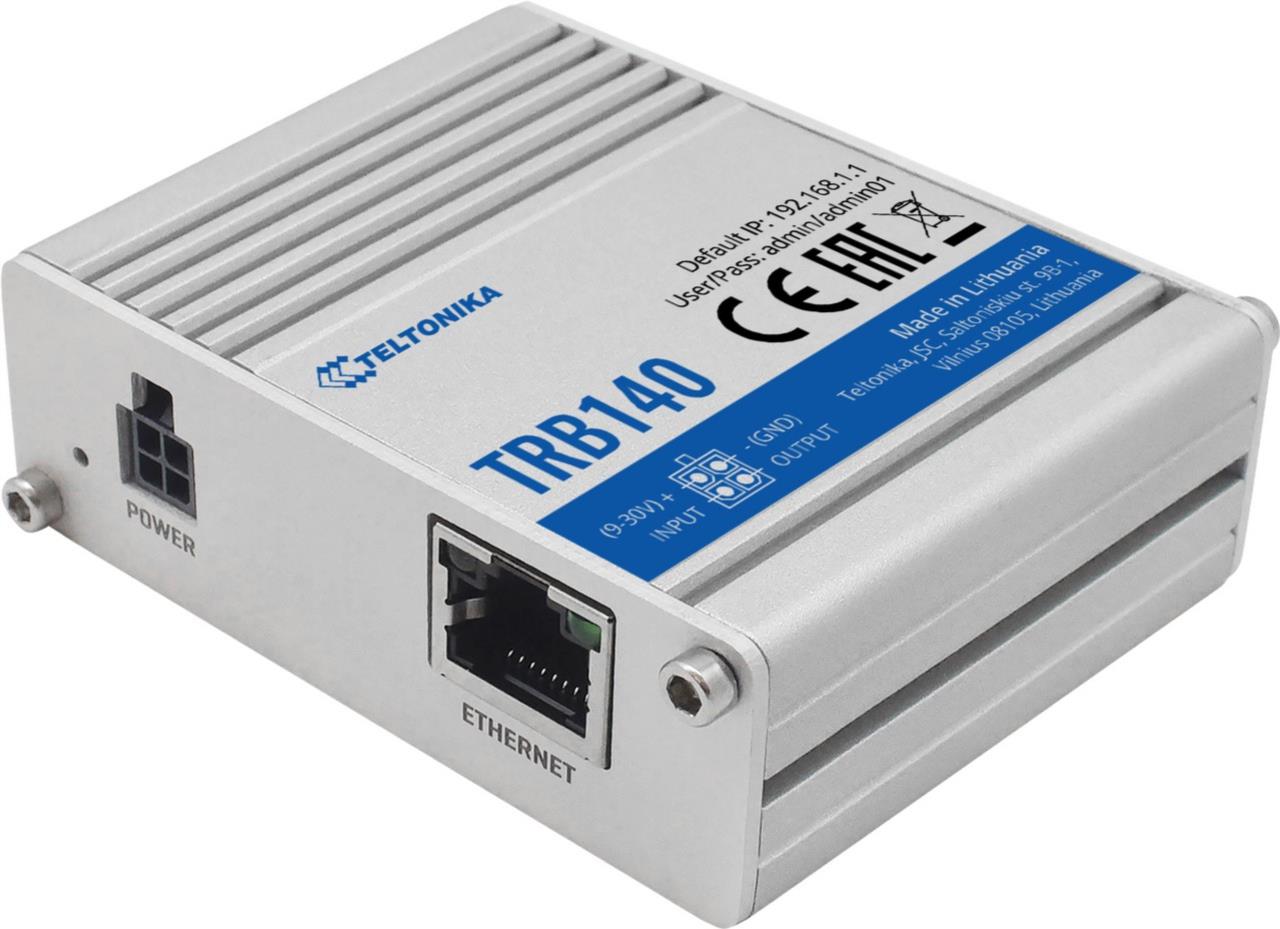
Industrial LTE Cat 4 gateway board with digital inputs/outputs and USB.
Teltonika OTD140
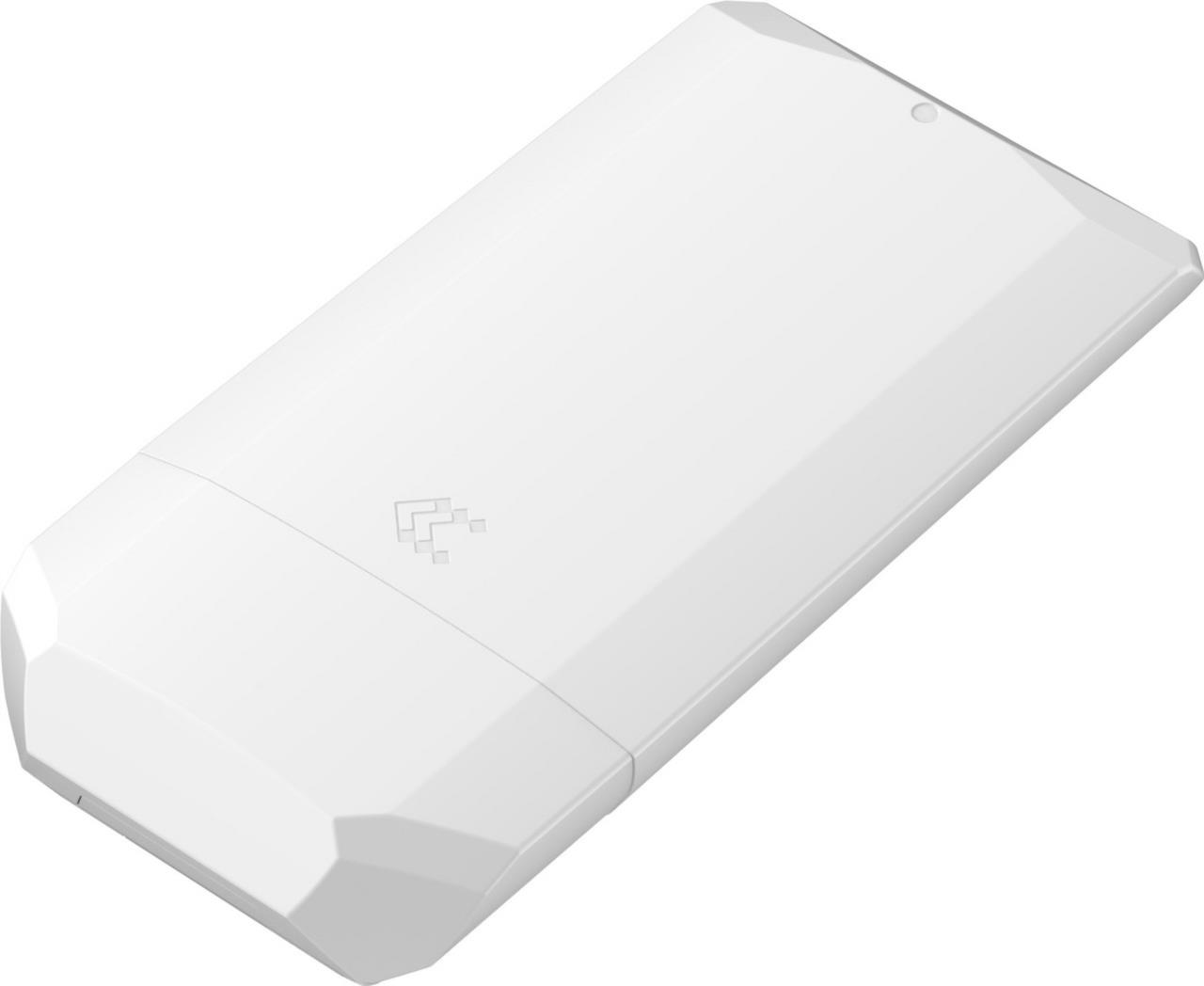
Outdoor LTE Cat 4 router in an IP55 housing — for installations outside the control cabinet.
Further reading
- RutOS 7.24, 7.24.1 & 7.24.2: all firmware updates at a glance
- RutOS security updates: CVEs and post-quantum IPsec
- What is RutOS? The Teltonika operating system explained
- Teltonika routers at Ascend
- All Teltonika articles in the blog
- RutOS 7.07: optimizing network services with Teltonika
- Teltonika in the Ascend Shop
This article was researched and written with AI support and reviewed by Ascend before publication.
Products mentioned in this article
Ready for your next project?
Talk to our team about your requirements.
Related posts
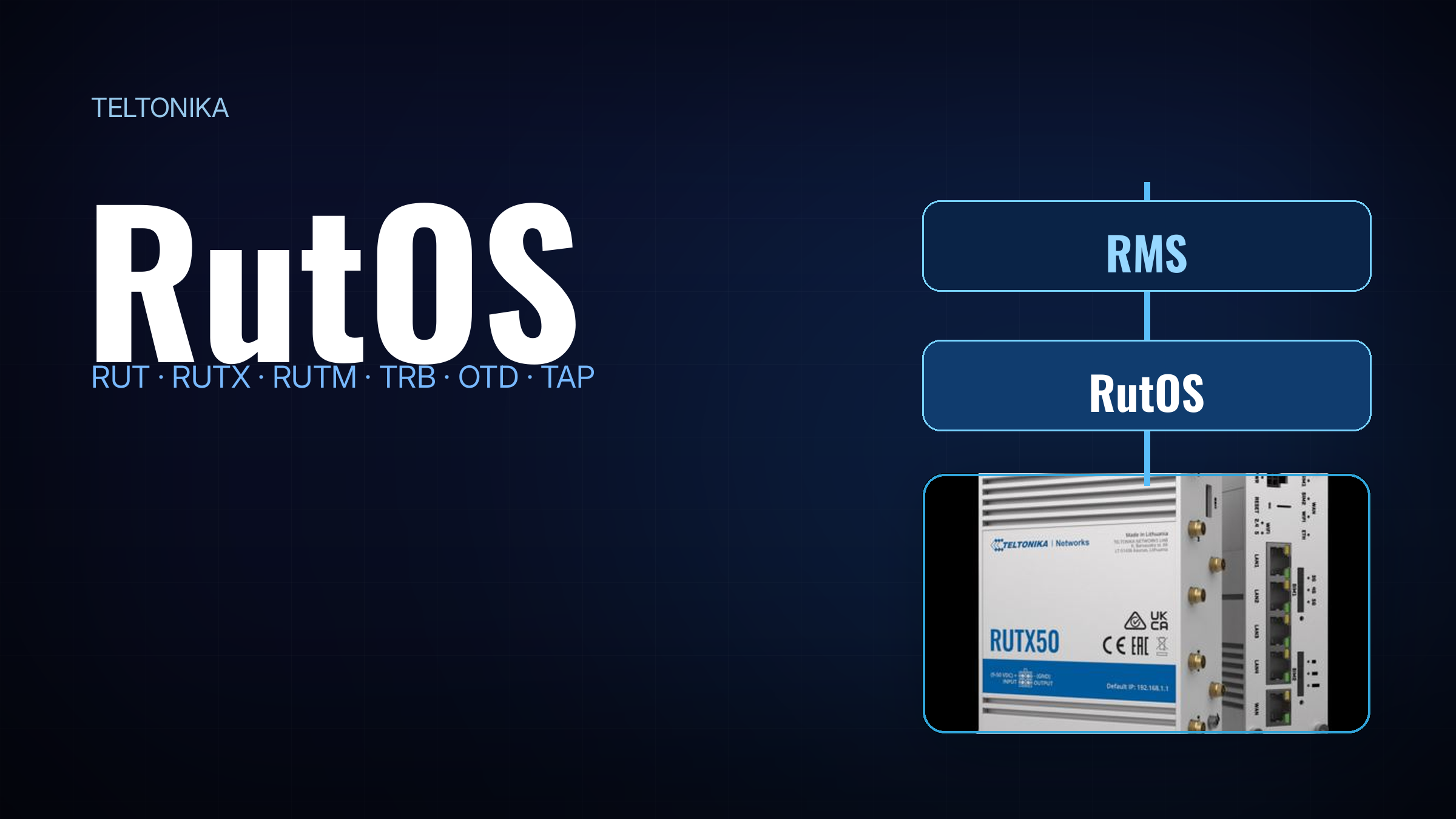
What Is RutOS? The Teltonika Operating System Clearly Explained
RutOS is the operating system of Teltonika’s routers and gateways. We explain device families, the Stable/Latest model, security maintenance and the feature set of version 7.24.
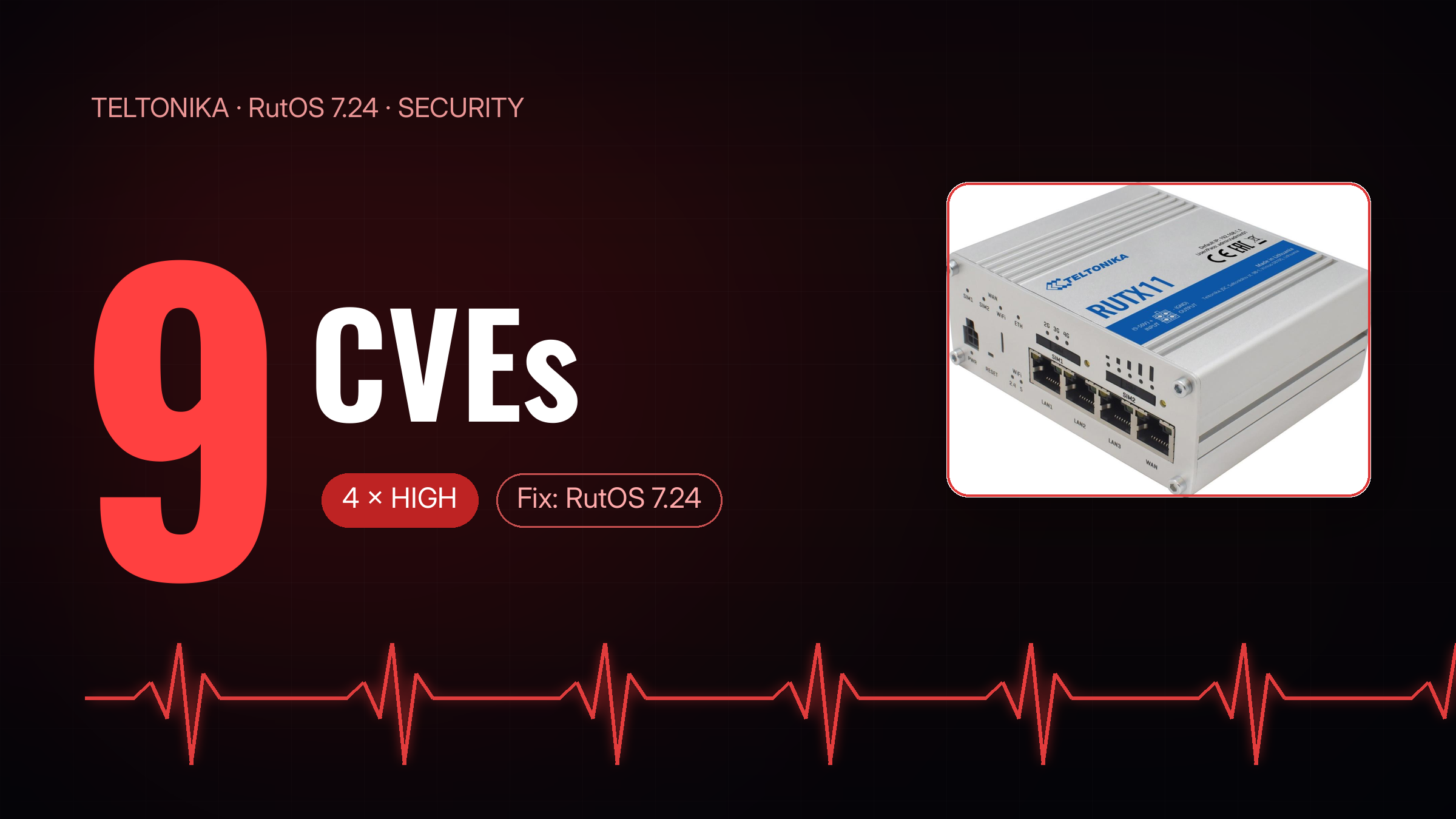
RutOS Security Updates: 9 CVEs Patched, Post-Quantum IPsec Arrives
Teltonika closes nine CVEs with RutOS 7.24; 7.24.2 adds post-quantum IPsec (ML-KEM), PAM lockout and NTP authentication. What security teams should prioritize now.
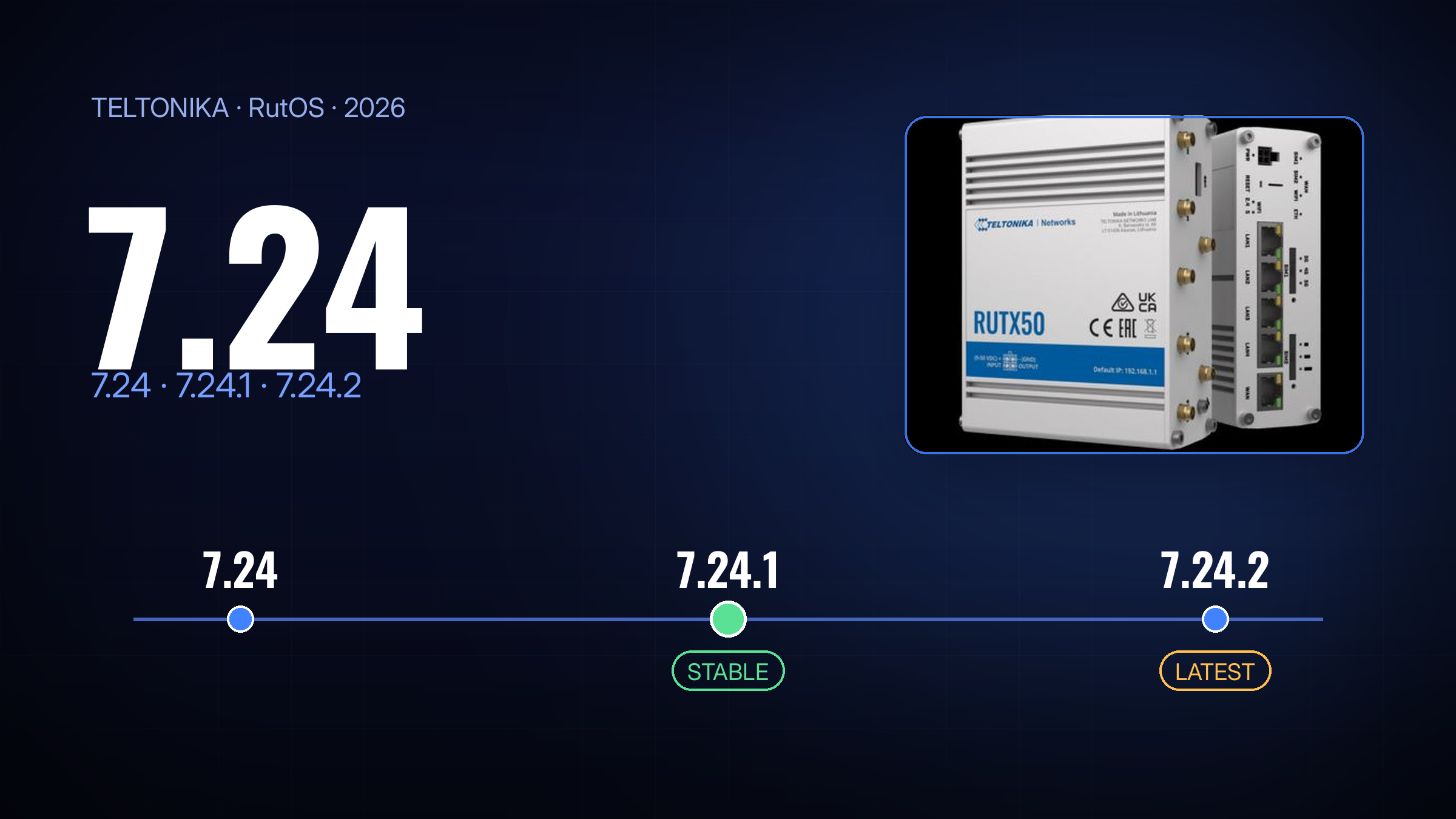
RutOS 7.24, 7.24.1 & 7.24.2: All Teltonika Firmware Updates at a Glance
RutOS 7.24, 7.24.1 and 7.24.2 at a glance: release chronology, feature highlights, device matrix, Stable vs. Latest tier and a clear update recommendation for your fleet.