


What Is RutOS? The Teltonika Operating System Clearly Explained
Introduction
Anyone evaluating Teltonika hardware encounters the term RutOS at every turn: in the data sheet, in the firmware changelog, in many product descriptions. Yet it often remains unclear what exactly is behind it. Is RutOS just a brand name for the firmware — or a fully fledged operating system with its own release policy, its own security process and its own roadmap? The answer has direct consequences for procurement and operations: a router is a one-off investment, but its operating system accompanies you over the entire service life.
This article answers the question systematically: we explain which device families run RutOS, how Teltonika organizes updates, what security maintenance looks like and what the operating system can actually do, using the current version 7.24 as an example. The article belongs to our Teltonika blog category, where we regularly report on firmware releases and new products. You will find an overview of the Teltonika portfolio at Ascend on our Teltonika routers page; we have summarized all the details of the current releases in the article RutOS 7.24, 7.24.1 & 7.24.2 at a glance.
What is RutOS, exactly?
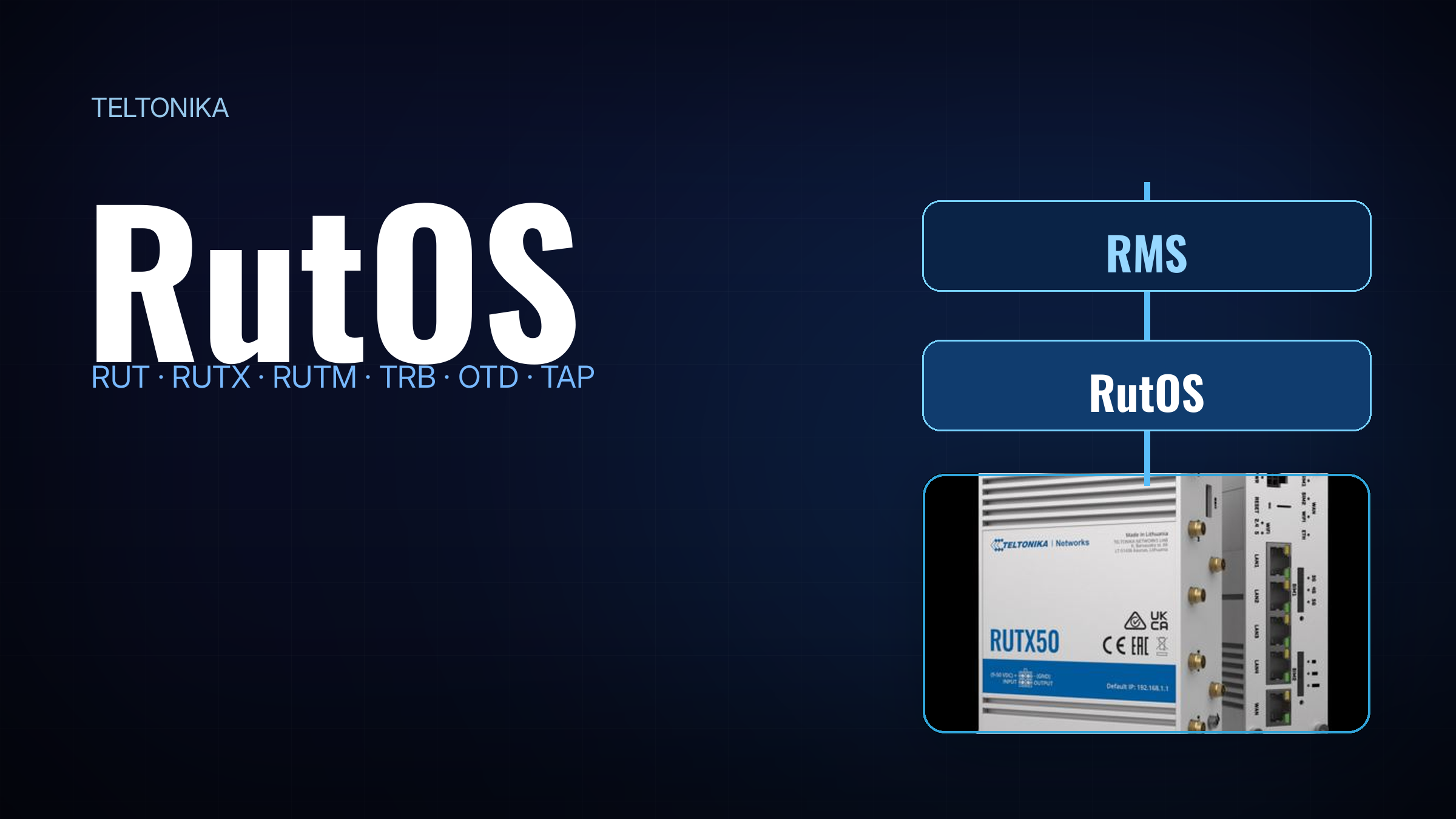
RutOS is Teltonika Networks’ operating system spanning its device families. It runs on the manufacturer’s cellular routers, IoT gateways and access points and bundles everything a network device needs in professional use: routing and firewall, VPN stacks such as IPsec and DMVPN, cellular and SIM management, industrial protocols, a package manager for additional tools and central certificate management.
The name is even embedded in the firmware designations themselves: the current firmware of the industrial router RUT956, for example, is called RUT9M_R_00.07.24 — the digit sequence at the end is RutOS version 7.24. Teltonika develops RutOS in feature releases (such as 7.24) and subsequent point releases (7.24.1, 7.24.2) that deliver bug fixes, security patches and smaller features.
Decisive for practice: a RutOS release does not appear for a single device but is coordinated across the device families. The 7.24 feature release carries the identical build date of 8 July 2026 on the wiki changelog pages of different devices — for example RUTX50, RUT241 and RUT956. For you this means: new features, protocol extensions and security fixes reach the compact entry-level router in the same release cycle as the 5G flagship and follow the same update logic — although individual features remain hardware-dependent.
That this continuity is not a new phenomenon is shown by a look back: as early as version 7.07, we examined the new features of the time in a dedicated article — The new features and benefits of RutOS 7.07. Since then, Teltonika has expanded the system release by release, most recently up to the 7.24 generation.
Which Teltonika devices run RutOS?
The list of RutOS devices reads like the Teltonika portfolio itself. For the current 7.24 generation, Teltonika’s own “Product Firmware Updates” overview page in the wiki lists the following families (as of 28 August 2026):
- RUT1xx — compact cellular routers: RUT140, RUT142, RUT145
- RUT2xx — entry-level and mid-range LTE routers, including RUT200, RUT241, RUT260, RUT271, RUT286
- RUT3xx — RUT301 and RUT361
- RUT9xx — the established industrial series: RUT901, RUT906, RUT951, RUT956, RUT976, RUT981, RUT986 (see below for a caveat)
- RUTX — the performance series: RUTX08 to RUTX14, RUTX50 and the rack router RUTXR1
- RUTM — RUTM08 to RUTM59, including the 5G model RUTM50
- RUTC — RUTC40, RUTC41, RUTC42, RUTC50, RUTC54
- OTD — outdoor routers: OTD140, OTD144, OTD500
- TRB — industrial gateways: TRB140 to TRB501, including the 5G gateway TRB500
- TAP and DAP — access points: TAP100, TAP200, TAP400 as well as DAP140, DAP142, DAP145
- ATRM50 and the Wi-Fi 7 router Altos CAP700
There are two caveats you should know. First: as of 28 August 2026, the RUT9xx series is only listed for the 7.24 feature release, not for the point releases 7.24.1 and 7.24.2 — whether these will follow later is something Teltonika has not yet communicated. Second: the TAP access points are also missing from the device list for 7.24.2.
Equally important is the distinction: Teltonika’s TSW switches do not run RutOS but their own firmware line called TswOS — version TswOS 1.10 was released on 3 June 2026, and Teltonika announced “RutOS 7.24 & TswOS 1.10” together. The compact flat switch TSF010, in turn, is an unmanaged switch and accordingly does not run RutOS at all; why it currently deserves attention nonetheless is covered in our article on the TSF010 order code change. The TCR home routers, finally, do not appear in the 7.24 device lists either.
How does the RutOS update model work?
Teltonika maintains a two-tier release model for RutOS, as known from enterprise software:
- Stable firmware is the standard update and mass-production firmware. According to Teltonika’s own definition, it has been through both internal quality assurance and broad real-world use by customers.
- Latest firmware is the newest version in each case. It has passed the internal tests but — in Teltonika’s own wording — has “not yet undergone wide distribution or user validation” and “may still contain undetected errors”. Teltonika explicitly recommends testing Latest firmware on a small number of devices first before rolling it out more broadly.
What this looks like in practice is shown by the current 7.24 generation:
- RutOS 7.24 (firmware build of 8 July 2026) — the feature release with new functions from Data to Server through TR-069 to the industrial protocols.
- RutOS 7.24.1 (20 July 2026) — the maintenance release that, among other things, brought the network test tools iperf and stress-ng into the package manager, extended the APN database and fixed bugs. As of 28 August 2026, 7.24.1 is the current Stable firmware.
- RutOS 7.24.2 (13 August 2026) — the most recent release with OSPFv3, DHCPv6 improvements and notable security hardening. It is currently in the Latest tier: pilot first, then roll out.
For fleet operators, a clear strategy follows: keep production devices on the Stable tier (currently 7.24.1), evaluate new Latest releases such as 7.24.2 on a few test devices and only bring them to the wider fleet after your own validation — or once Teltonika declares them Stable. This model takes the element of surprise out of firmware updates: you know at all times which version is intended for mass rollout and which is still maturing. You will find the complete release chronology including feature lists and device matrix in our firmware overview of 7.24, 7.24.1 and 7.24.2.
How does Teltonika keep RutOS secure?
An operating system is only as good as its security maintenance — and for routers that often run unattended at exposed sites for years, that goes double. RutOS releases therefore regularly contain dedicated CVE patches, which Teltonika lists openly in the changelogs.
The 7.24 feature release closed nine CVEs, four of them rated HIGH — including CVE-2026-31431 with a score of 7.8 (figures according to the Teltonika changelog; the scores are the ratings published by the manufacturer). In parallel, Teltonika updated security-relevant system components: the SSH server dropbear to version 2025.89 and SQLite to 3.50.4.
The 7.24.2 point release followed up in August 2026 — with a remarkable focus on hardening:
- Post-quantum cryptography: ML-KEM key exchange for IPsec, strongSwan updated to 6.0.7
- Crypto stack updates: OpenSSL 3.5.7 and further components
- PAM account lockout for local login plus a password history in the password policy
- NTP authentication for the ntpd time service
- Firewall connection limits per port
- Two further CVE fixes: CVE-2026-16455 (score 6.9) and CVE-2026-18368 (score 5.0) — figures according to the Teltonika changelog
That a manufacturer brings post-quantum key exchange to industrial routers via a maintenance release says a lot about the importance of security maintenance in the RutOS cycle. For regulated industries, the transparency also matters: CVE numbers and severity ratings are openly listed in the changelog and can be referenced directly in audits. We have compiled the complete CVE list, the assessment of the individual vulnerabilities and a patch strategy for device fleets in a dedicated article: RutOS security updates: CVEs and post-quantum IPsec.
What can RutOS do in practice? The feature set shown on 7.24
The best way to gauge the feature set of RutOS is to look at a specific release. According to the device changelogs, RutOS 7.24 brought, among other things:
Industrial protocols: The IEC 60870-5 client and server gained configurable parameters for the application layer, link layer and APCI as well as new time-stamped data types; the DNP3 client and Modbus client received IP and port filters for database API requests. For energy utilities, telecontrol systems and OT environments, RutOS is thus far more than a router operating system — it natively speaks the protocols of the industrial world.
Data to Server: Since 7.24, measurement and device data can also be transferred to external servers in encrypted form via SFTP and FTPS, including strict host key checking. In addition, new variables are available for MQTT topics — device name, serial number and LAN MAC. That sounds inconspicuous but is worth its weight in gold when hundreds of devices feed into the same data pipeline and must be uniquely addressable.
TR-069 device management: According to Teltonika, establishing a connection to the Auto Configuration Server (ACS) was accelerated from around two minutes to roughly 15 seconds; on top of that come new and improved TR-181 objects for diagnostics and Wi-Fi.
Cellular operator management: Block and allow lists are now processed in a user-defined priority order, APN priorities can be controlled per operator, an “Ignore Home Operator Priority” switch was added, and with an inserted, PIN-locked SIM the system displays the ICCID — details that noticeably simplify multi-carrier and failover setups.
Fleet management with RMS: RutOS devices can be managed centrally via Teltonika’s Remote Management System (RMS). At Ascend, you get hardware and RMS licenses from a single source.
In addition, Teltonika announced further features for 7.24 in the newsroom: a CANopen client, single sign-on (SSO), PPSK import/export, a “Third Party Packages” area in the package manager as well as VXLAN, Docker and NetBird on the Wi-Fi 7 router Altos CAP700. Important context: these features are announced by Teltonika but device-dependent — they do not appear in the device changelogs of the RUTX50 and RUT956, for example. Before a purchase decision, therefore, check whether your device of choice actually receives the respective feature.
Why is RutOS an argument for B2B buyers?
For buyers and IT decision-makers, the operating system is often the underestimated decision criterion — even though it shapes operating costs over years more than many a hardware data sheet. Three points make RutOS attractive in a B2B context:
One operating system across the entire fleet. From the entry-level LTE router RUT200 (available at Ascend for 115,18 €) to the 5G router RUTX50 in the eSIM version (478,80 €), the same system base runs throughout. Once you have established a RutOS configuration and update routine, you apply it equally to outdoor routers, IoT gateways and access points. That reduces training effort, documentation and sources of error — and makes device changes within the portfolio predictable.
Predictable updates instead of surprises. The Stable/Latest model gives you a clear roadmap: production systems follow the Stable tier, new things are piloted in a controlled way. Firmware maintenance thus becomes a plannable process rather than an ad hoc decision under time pressure.
Traceable security maintenance. CVE lists with severity ratings are openly available in the changelogs — in tenders, security audits and risk assessments, that is a solid argument compared with manufacturers who communicate security fixes only vaguely.
Practical tip: Before procurement, check the “Product Firmware Updates” page in the Teltonika wiki. There you can see which device families actually receive a release — because the fact that a series gets the feature release does not automatically mean every point release follows. The RUT9xx series, for example, is listed only for 7.24 as of 28 August 2026, not for 7.24.1 or 7.24.2.
Ascend distributes Teltonika and supplies hardware and RMS licenses from a single source — from device selection through licensing to the update strategy for your fleet. Our Teltonika routers overview page offers an entry point into the portfolio.
Conclusion
RutOS is much more than “the firmware on the router”: it is a unified operating system across numerous Teltonika device families — from RUT1xx to Altos CAP700 — with a two-tier update model of Stable and Latest firmware, openly documented CVE patches all the way to post-quantum cryptography for IPsec, and a feature set covering industrial protocols, encrypted data pipelines and centralized fleet management. When you evaluate Teltonika, with RutOS you are therefore assessing not just a single device but a platform — including the question of how long and how reliably your own device family will be supplied with updates.
That assessment is exactly where we support you: whether the compact RUT200 as an entry point, the RUTX11 with LTE Cat 6, dual SIM and dual-band Wi-Fi or the RUTX50 as a 5G device in the eSIM version — our engineers help with device selection, RMS licensing and the right update strategy. Get in touch: Request a consultation via our Teltonika routers page or browse the Teltonika range in the Ascend Shop directly.
Frequently asked questions
Request a consultation
Evaluating Teltonika routers for your project or planning the update strategy for your fleet? Our engineers advise you on device selection, RutOS firmware versions and RMS licensing — hardware and licenses from a single source.
Matching Teltonika products at Ascend
Three RutOS devices for different requirements — from the entry-level LTE router to the 5G device, all available. You will find details on the respective product detail page.
Teltonika RUT200
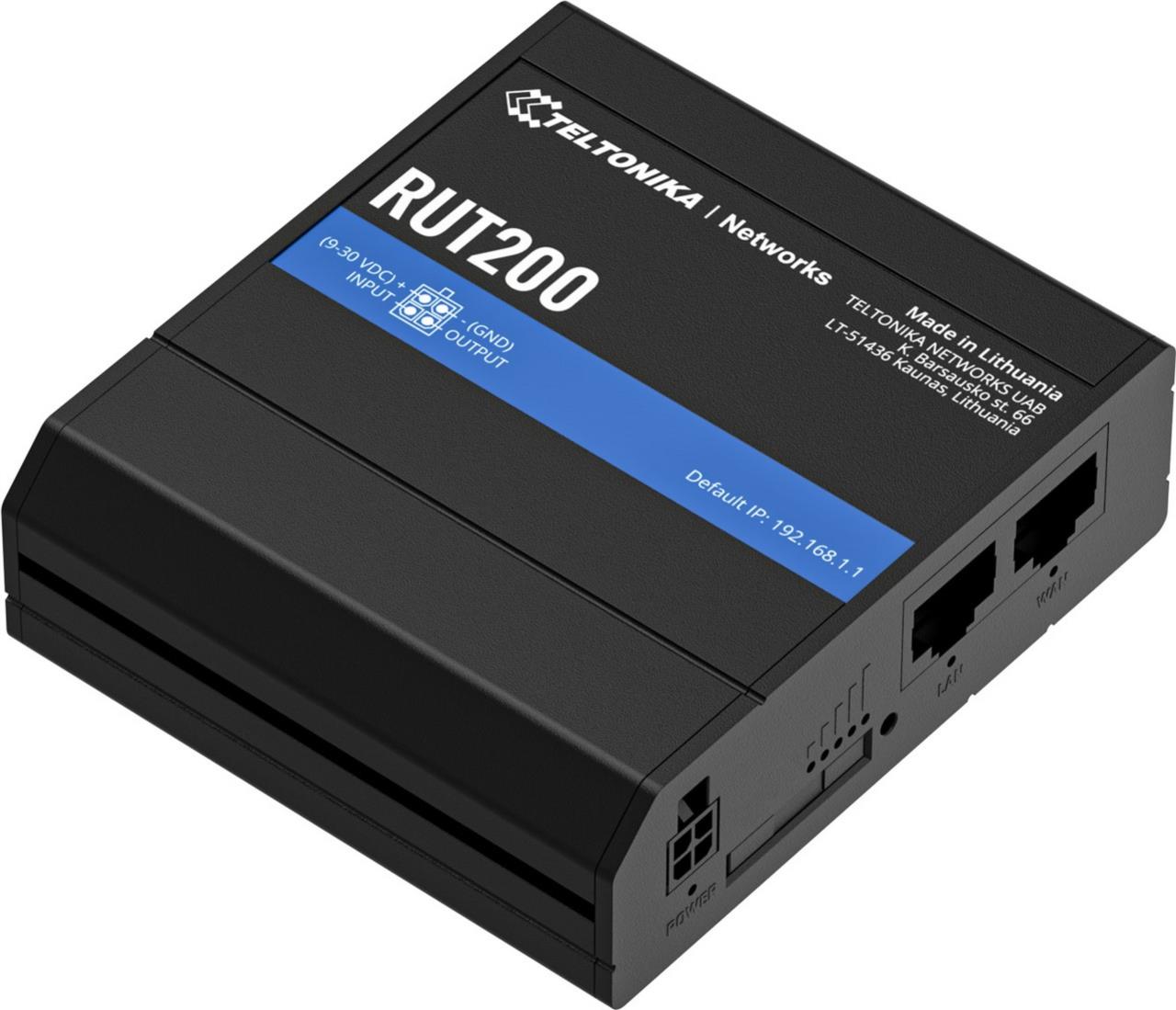
Compact industrial LTE router with Wi-Fi and dual Ethernet — the RutOS entry point, available for 115,18 €.
Teltonika RUTX11
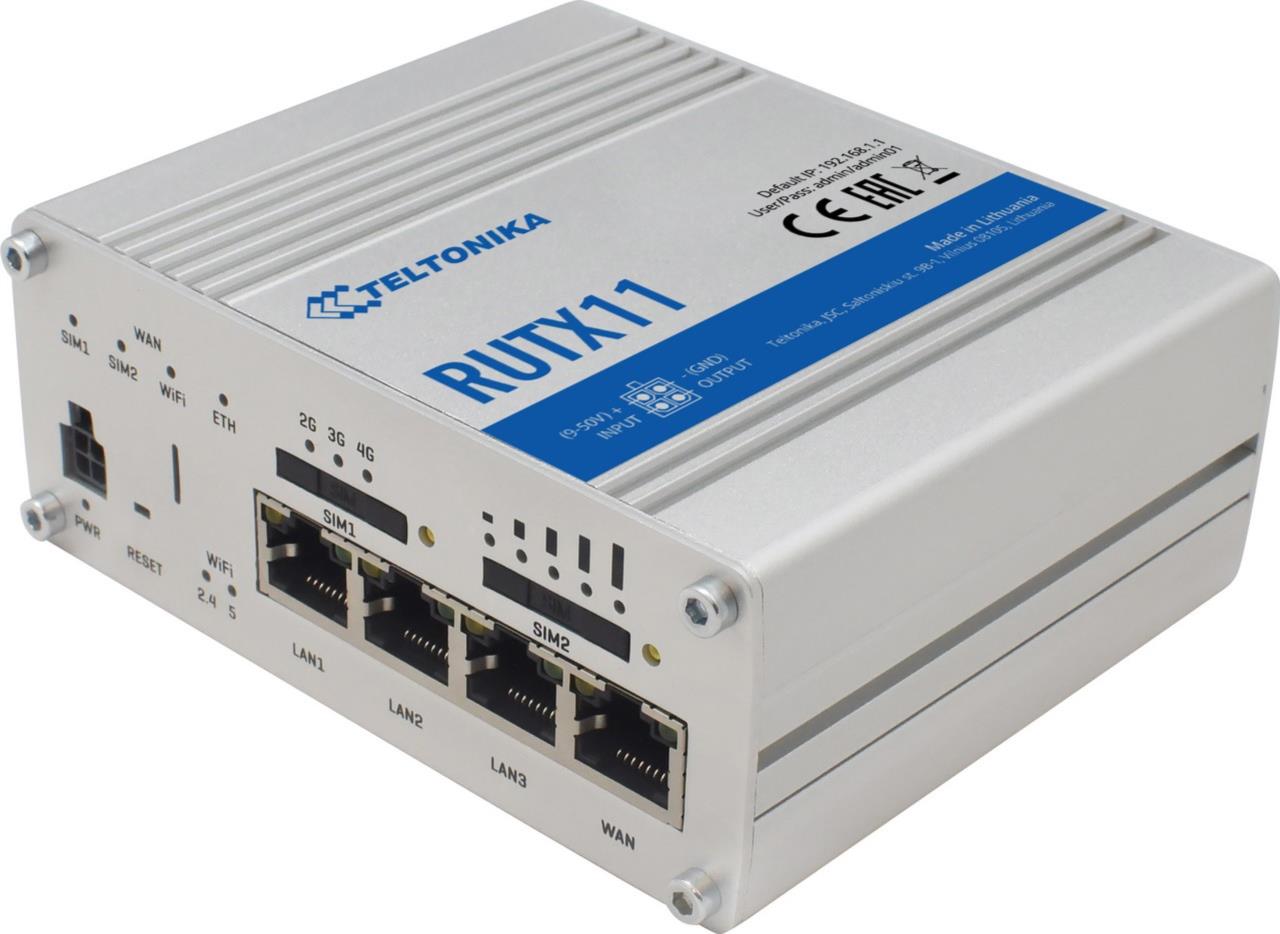
LTE Cat 6 dual-SIM router with dual-band Wi-Fi and GNSS — available for 300,90 €.
Teltonika RUTX50 (eSIM)
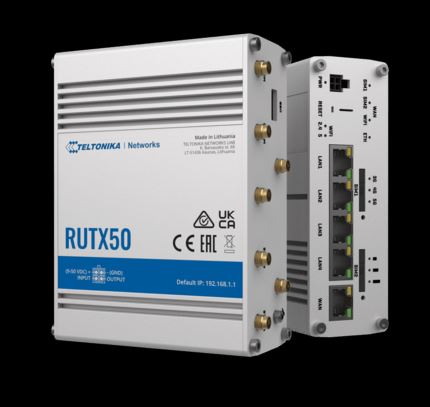
5G modem router with Wi-Fi in the eSIM version — available for 478,80 €.
Further reading
- RutOS 7.24, 7.24.1 & 7.24.2: all firmware updates at a glance
- RutOS security updates: CVEs and post-quantum IPsec
- Teltonika TSF010: VDC-only order codes are being phased out
- Teltonika routers at Ascend
- All Teltonika articles in the blog
- Looking back: the new features of RutOS 7.07
- Teltonika bonding: reliable, highly available connectivity
- Teltonika in the Ascend Shop
This article was researched and written with AI support and reviewed by Ascend before publication.
Ready for your next project?
Talk to our team about your requirements.
Related posts
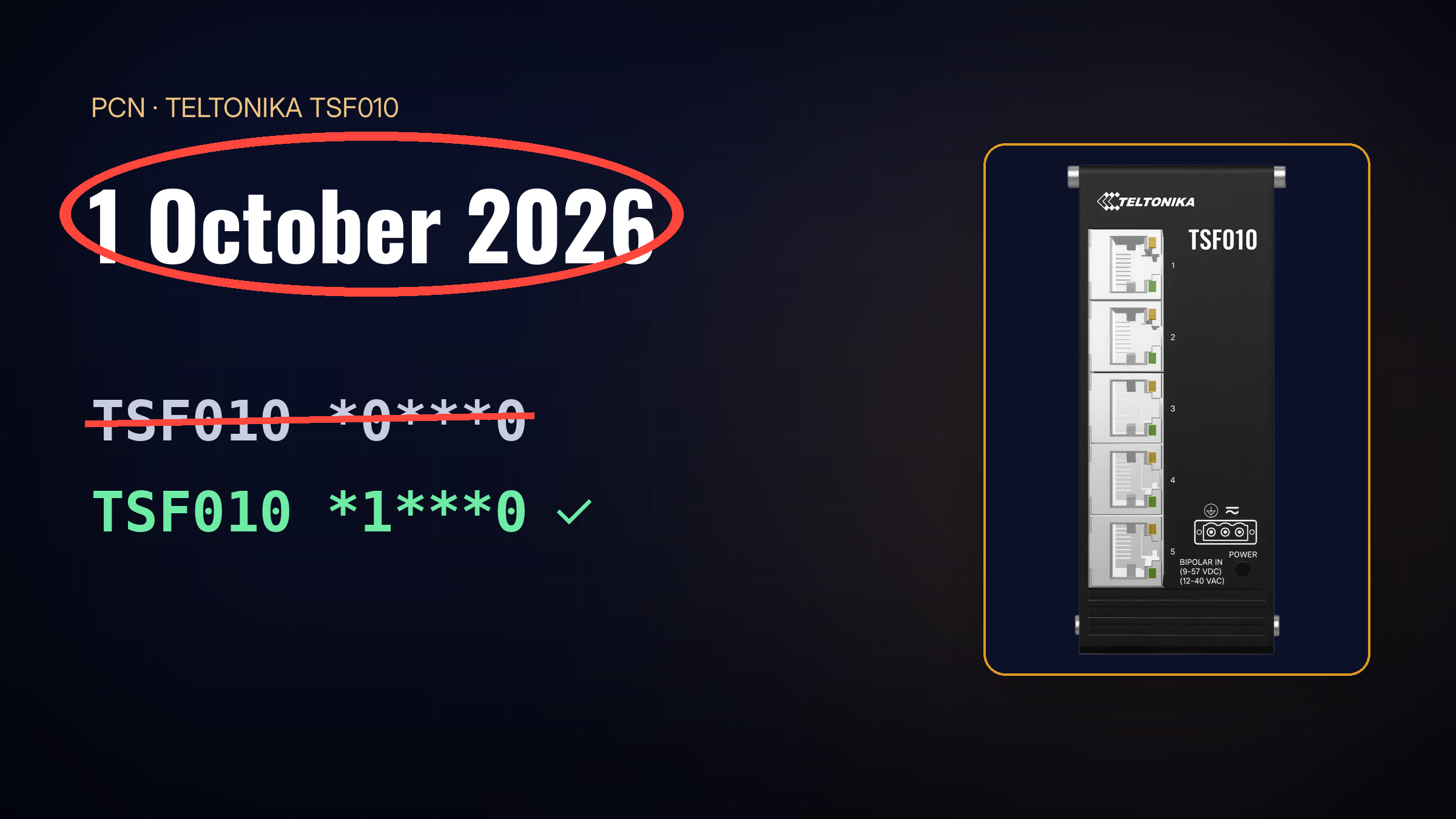
Teltonika TSF010: VDC-only Order Codes End on 1 October 2026 — What Buyers Need to Know
PCN of 7 August 2026: Teltonika discontinues the TSF010’s VDC-only order codes on 1 October 2026. What this means for procurement, BOMs and ongoing projects.
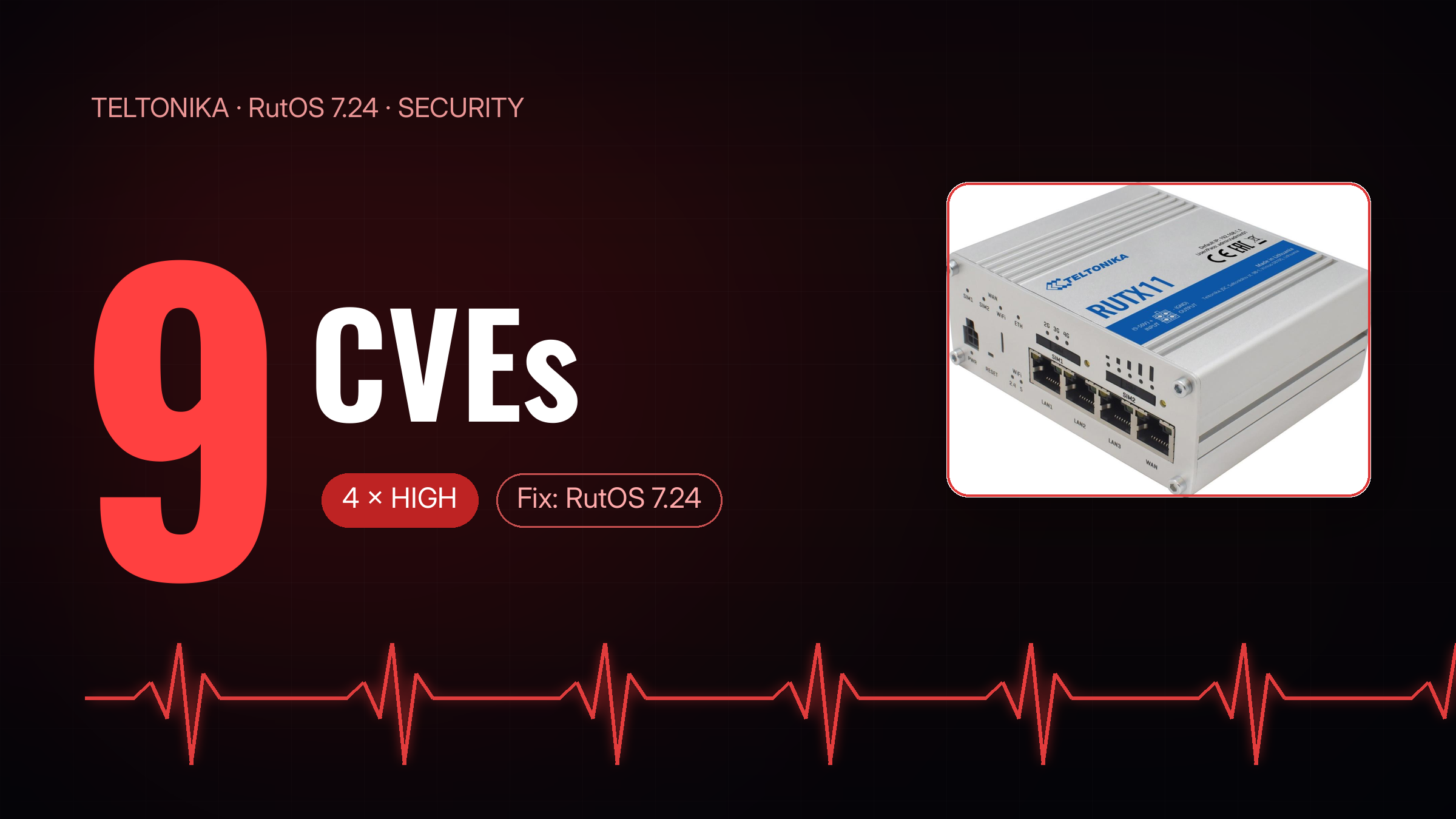
RutOS Security Updates: 9 CVEs Patched, Post-Quantum IPsec Arrives
Teltonika closes nine CVEs with RutOS 7.24; 7.24.2 adds post-quantum IPsec (ML-KEM), PAM lockout and NTP authentication. What security teams should prioritize now.
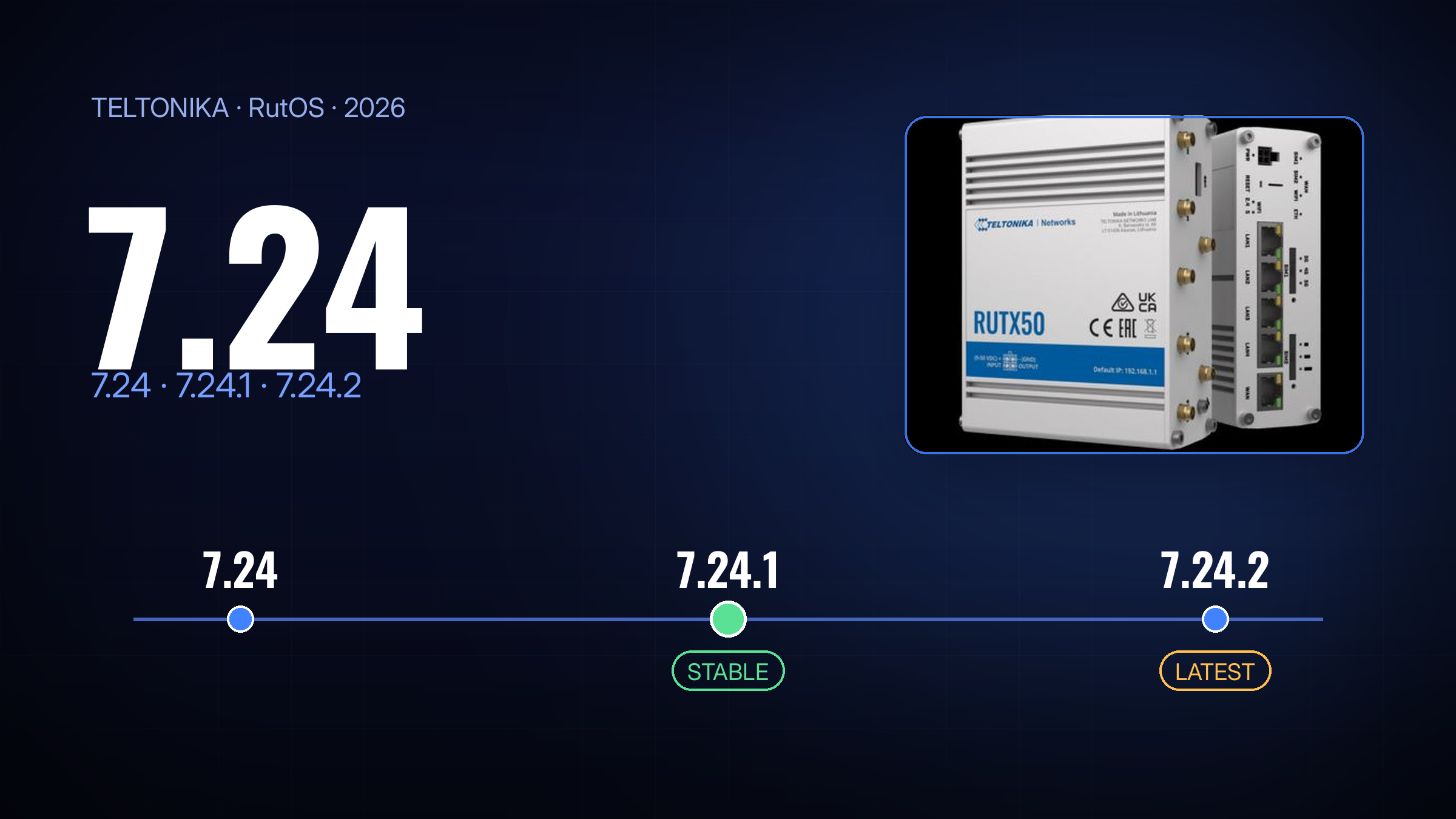
RutOS 7.24, 7.24.1 & 7.24.2: All Teltonika Firmware Updates at a Glance
RutOS 7.24, 7.24.1 and 7.24.2 at a glance: release chronology, feature highlights, device matrix, Stable vs. Latest tier and a clear update recommendation for your fleet.