


Peplink 8.6.0 Cellular & 5G: Multi-APN, 5G SA and Four eSIM Profiles
Introduction
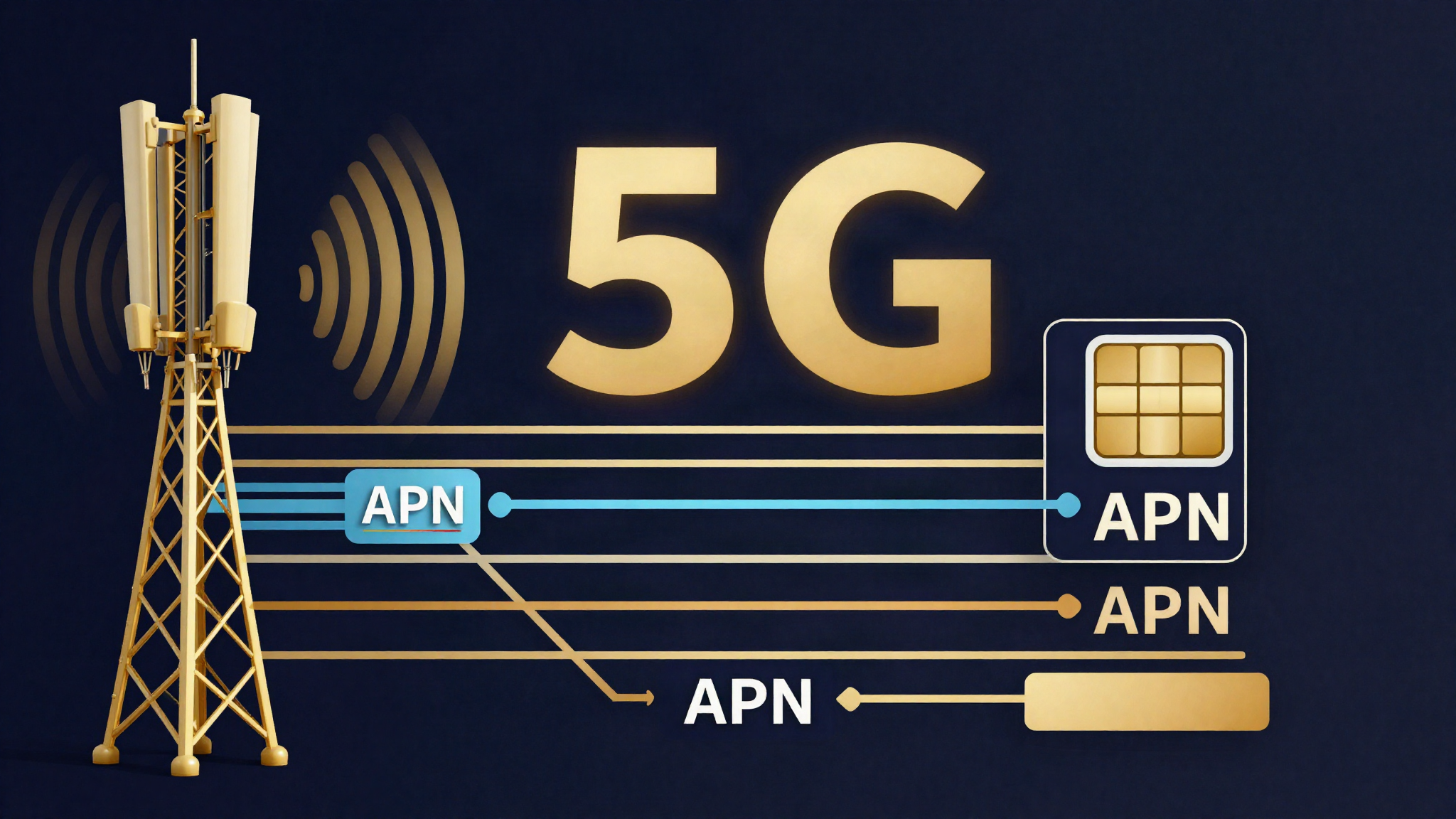
Cellular has long ceased to be an emergency backup. In IoT campaigns, mobile deployments on vehicles and at remote sites, 5G is the primary WAN layer — and the demands on modem control keep growing. Peplink Firmware 8.6.0 answers these demands with an extensive cellular update. If you deploy Peplink 5G Multi-APN, you can now use a single modem chip for multiple logically separated network connections — without a second module and without duplicate SIM contracts for separated traffic classes.
As a Peplink Gold Partner, Ascend GmbH accompanies these cellular deployments from proof of concept to rollout. In this fifth part of our seven-part series on Firmware 8.6.0, we examine all cellular and 5G innovations in detail: Multi-APN, 5G Standalone, IPv6 on cellular, four eSIM profiles per modem as well as the numerous carrier-specific fixes. The previous parts of the series covered the overall overview, SpeedFusion Boost, the security upgrades and the Orbit WAN satellite integration; the following parts cover WireGuard Remote Access and the upgrade guide.
1. Multi-APN — one modem, multiple APNs
The most important cellular innovation in 8.6.0 is Peplink 5G Multi-APN on 5GN modules. Until now, a modem in practice ran with a single active APN connection. Anyone who wanted to distribute different traffic across different APNs — for example management traffic on a private APN and internet traffic on the carrier's public APN — needed multiple modems or complex VLAN-over-cellular constructs.
With Multi-APN, a single 5GN modem establishes multiple simultaneous PDP contexts. Each APN connection receives its own IP address and can be routed independently via policy. This opens up scenarios that were previously only achievable with dual-modem hardware:
- Private APN + public APN in parallel: IoT devices communicate with the control network via the private APN, while firmware updates and telemetry run over the public APN. Both connections use the same radio chip.
- Cost control: the carrier's zero-rated APNs for critical IoT polling can be combined with volume-charged APNs for bulk transfers.
Configuration happens via the APN settings of the cellular interface in Web Admin or InControl. Policy-based control is handled by the proven Peplink routing rules — outbound policies, VLAN tags and SpeedFusion overrides work analogously to physical WAN connections. That means: anyone deploying Multi-APN on a device with a 5GN module gets additional logical WAN interfaces without extra licenses.
Multi-APN is a decisive advantage especially in the IoT environment. Instead of maintaining an expensive dual-modem device with two SIM cards and two contracts, a single modem with one IMSI and multiple APN assignments suffices. OPEX per site drops while the logical separation of data traffic is preserved. For mobile deployments (vehicle fleets, temporary event sites), the switching between SIM slots depending on traffic class is also eliminated.
2. 5G Standalone support and Carrier Aggregation
Firmware 8.6.0 adds 5G Standalone (5G SA) on 5GD modules. In 5G SA mode, the modem connects exclusively via the carrier's 5G core infrastructure (5G Core) — unlike Non-Standalone (NSA), where a 4G LTE core (EPC) serves as the anchor. This is relevant because more and more carriers are building 5G SA networks — especially in industrial belts, at port locations and in private 5G campus networks.
SA availability depends on the network operator and location. Anyone operating a 5GD modem with a German carrier SIM can use SA mode from 8.6.0 as soon as the carrier enables SA on the SIM in use. The benefit: lower latency, network slicing capability and greater bandwidth without 4G fallback.
5G SA is complemented by 5G SA Carrier Aggregation control on 5GK and 5GN modules. Administrators can now enable, disable or steer the specific aggregation mode — i.e. which carrier component carriers are combined. This matters because not all carrier combinations aggregate stably. In practice, unstable CA constellations occur in border regions or during carrier roaming. The new control allows targeted deactivation of problematic CA components without having to reconfigure the entire modem.
In addition, 8.6.0 supports Framed Routing on 5GK and 5GN modules. Framed Routing is essential for private 5G campus networks: the carrier assigns the modem a dynamic IP subnet at each connection setup (framed pool), and Peplink automatically routes this subnet to the LAN. Without Framed Routing, administrators had to manage static IP ranges — error-prone and only limited in scalability. With 8.6.0, the carrier configuration suffices; Peplink handles address assignment automatically. This significantly reduces the administrative burden in private 5G networks.
3. IPv6 on cellular — closing the gap
Firmware 8.6.0 extends IPv6 on cellular to five more module families: 5GD, 5GH, 5GK, 5GN and GLTE-S. Previously, IPv6 was only available on selected modules, which hampered IoT deployments based purely on IPv6-based protocols (MQTT over IPv6, IPv6 telemetry, CoAP). With this extension, Peplink covers the current 5G module generation comprehensively.
Why does this matter? IPv6 on cellular is not merely an academic question. Numerous carriers only assign Carrier-Grade NAT (CGNAT) addresses for IPv4. For machine-to-machine communication (M2M), CGNAT is problematic because inbound connections become impossible. IPv6 eliminates this problem: every modem receives a globally routable address via which a control center can be directly reached. This considerably simplifies the architecture of IoT backbones — without VPN complexity and without port-forwarding constructs.
For practice, this means: anyone booking an IPv6-capable APN with the carrier can use native IPv6 connections from 8.6.0 on 5GD, 5GH, 5GK, 5GN and GLTE-S modules. SpeedFusion tunnels, outbound policies and firewall rules have also been extended for IPv6 — the proven Peplink policies apply without restriction. Anyone migrating their IoT backbone to IPv6 now gets a consistent cellular layer.
4. Four eSIM profiles per modem
Another new feature according to the release notes: support for up to four eSIM profiles per cellular module. Peplink documents no official previous limit; four profiles per modem mean in practice more flexibility for multi-carrier setups.
Use cases:
- Multi-carrier redundancy: example: four profiles for four carriers (e.g. Telekom, Vodafone, O2, roaming partner) on one eSIM — this allows failover between networks, provided the carrier switch happens via profile control.
- Local vs. roaming operation: a local profile for the home site and a roaming profile for international missions. Switching happens via InControl remote configuration.
- Lifecycle management: profiles can be added, changed or deactivated during the device life cycle via remote provisioning — without SIM card swaps.
This function is complemented by a newer GSMA eSIM profile format. Peplink updates profile management to the current GSMA spec format, which is supported by common eSIM provisioning platforms. This facilitates integration into existing M2M management platforms and SM-DP+ servers. Anyone operating their own eSIM management platform can push profiles directly into the Peplink devices.
For fleet operators this means: a single hardware SKU, four profiles, four carriers — remote-controlled. This lowers logistics and warehousing costs because no physical SIM cards have to be swapped on site. In IoT rollouts with hundreds or thousands of sites, this is a decisive scaling advantage.
5. Carrier-specific fixes and improvements
Firmware 8.6.0 contains a wealth of carrier-specific improvements that are decisive in practice:
Configurable 5G signal strength thresholds
Administrators can now configure 5G signal strength thresholds per module. With 8.6.0, administrators set the thresholds themselves, matching the carrier recommendation and the use case. For IoT deployments with critical availability, the threshold can be set conservatively; for bulk transfers with high bandwidth demands it can be more generous.
One-click SMS deletion
The one-click SMS deletion feature looks unremarkable at first glance, but solves a widespread practical problem. Cellular modems accumulate status SMS and carrier notifications in operation — often hundreds over months. With 8.6.0, a single click in the management interface removes all SMS at once — without a manual reset and without a CLI command.
Faster cellular WAN startup after boot
Firmware 8.6.0 optimizes cellular WAN startup after boot. The time from power-on to the first WAN-ready state decreases — especially important after power outages or vehicle restarts. In mobile deployments (logistics, ambulances, construction sites), every second counts until the device is back online. The faster startup shortens the "blind flight" period after a restart.
Carrier-specific stability improvements
Alongside the visible innovations, 8.6.0 contains numerous carrier-specific stability fixes. These include more robust re-registration during network changes, improved handling of carrier attach timeouts and optimized PDP context recovery during brief radio interruptions. According to the release notes, these include adjustments for Yettel Bulgaria, A1 Bulgaria, Orange France, Rakuten Mobile, Verizon and Celona networks — particularly relevant for deployments with frequent network changes and in border regions.
Conclusion
Firmware 8.6.0 delivers a comprehensive package of cellular innovations. If you deploy Peplink 5G Multi-APN, you get an entirely new control layer: one modem for multiple logically separated APN connections, without extra licenses or additional hardware. 5G Standalone is available for 5GD modules, IPv6 on cellular covers five module families, and four eSIM profiles per modem make multi-carrier redundancy remote-controllable. Carrier-specific fixes, configurable signal strength thresholds, one-click SMS deletion and faster cellular WAN startup round out the picture.
For IoT, mobility and enterprise deployments, 8.6.0 is a clear upgrade path. If you run cellular-heavy deployments with Peplink and want to know which modules in your configuration benefit from 5G SA, Multi-APN or IPv6, talk to us. As a Peplink Gold Partner, we accompany you from requirements analysis through hardware design to productive rollout.
Next steps:
- Enquire now about Peplink 5G solutions at Ascend
- Read our article on Peplink 5G retrofits: Why four antenna paths for the hardware side of 5G deployments
Frequently asked questions
Request cellular consulting
Which modules in your configuration benefit from 5G SA, Multi-APN or IPv6? We analyze your cellular deployments and plan the rollout.
Matching Peplink products
Matching hardware directly from the Ascend Shop — availability and prices are shown on the product detail page.

Peplink MAX BR1 Mini 5G
Compact 5G router — ideal for Multi-APN and eSIM setups.
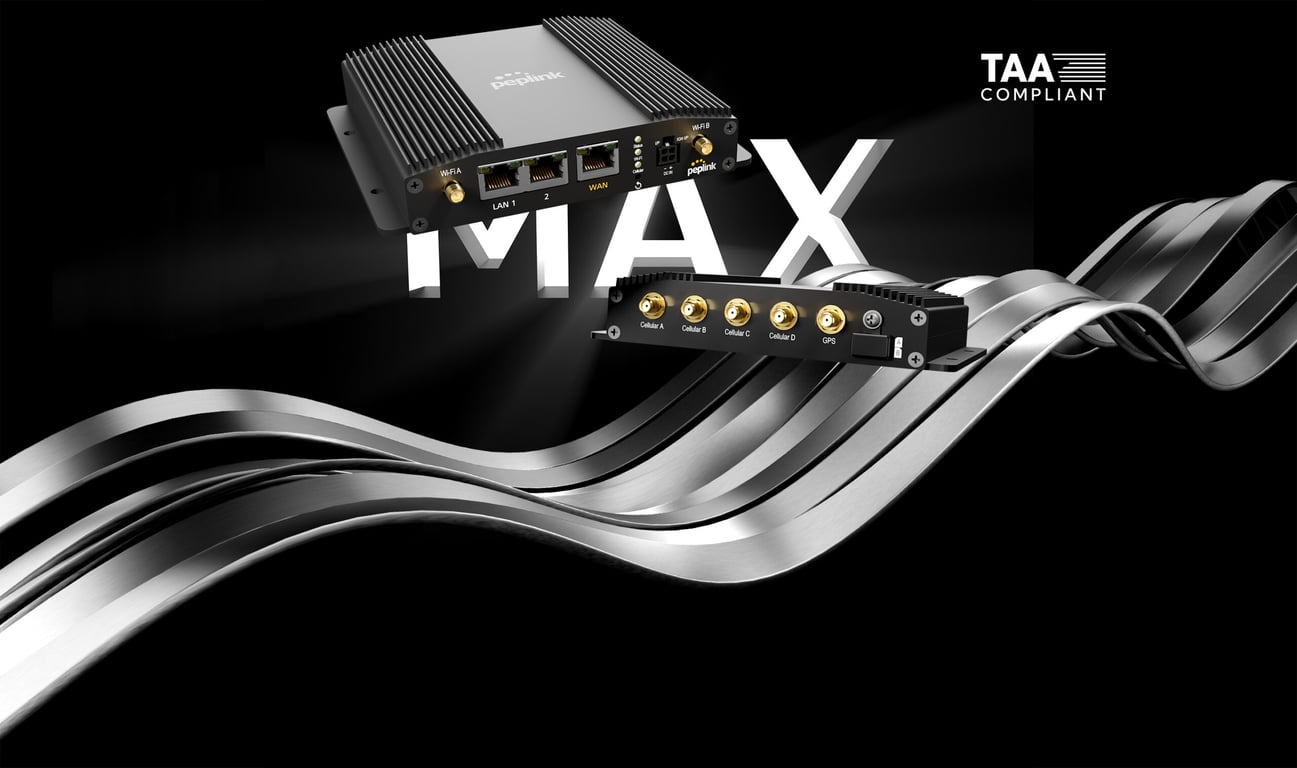
Peplink MAX BR1 Pro 5G
5GK-class 5G module with carrier aggregation control.
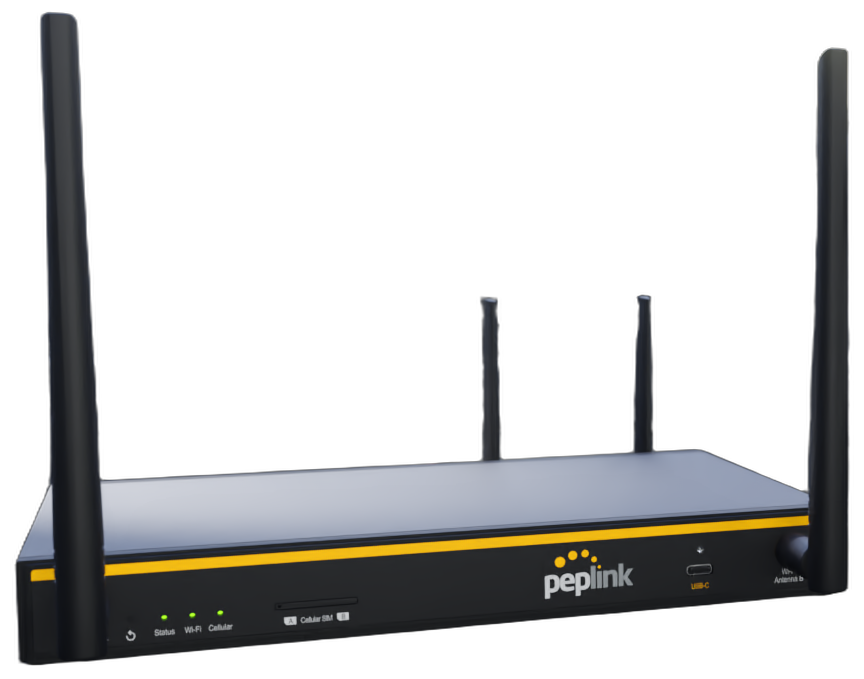
Peplink Balance 310X 5G
5GD module: 5G Standalone from Firmware 8.6.0.
Peplink FlexModule Plus 2x LTEA (CAT-20)
Expansion module for Balance routers with a cellular focus.
Further reading
This article was researched and written with AI support and reviewed before publication by Ascend's Peplink-certified engineers.
Ready for your next project?
Talk to our team about your requirements.
Related posts
Upgrading to Peplink Firmware 8.6.0: The Complete Guide
Peplink upgrade guide for Firmware 8.6.0: staged upgrade paths, FIPS and PSK requirements, certificate modernization, retired models and post-upgrade checklist.

WireGuard on Peplink: Modern VPN Remote Access Arrives with Firmware 8.6.0
Peplink Firmware 8.6.0 brings WireGuard VPN for Remote User Access on all models. Comparison with OpenVPN and L2TP, deployment recommendations and SFC Direct Access.

Orbit WAN: Peplink's New Satellite Integration with Starlink and OneWeb
Peplink Orbit WAN in Firmware 8.6.0 turns Starlink and OneWeb terminals into natively managed WANs — with dish telemetry, tuned health checks and SpeedFusion Boost bonding.